

Close Menu

    Subscribe to Updates

    Get the latest creative news from FooBar about art, design and business.

    What's Hot

    The Woven Skeleton: The Palm Frond Artisans of Kafr Al-Battikh Fend Off a Plastic Tide

    14/05/2026

    The Tragedy of Azbakia and Imam Al-Shafi’i: How Architecture Rewrites Our History

    14/05/2026

    The Sanctuary of Saint Bishoy: A Living Ledger of Egyptian Monasticism

    13/05/2026
    Facebook X (Twitter) Instagram
    Facebook X (Twitter) Instagram
    BabMasrBabMasr
    Subscribe
    • Home
    • Upper Egypt
    • Lower Egypt
    • Greater Cairo
    • Analysis
    • The Guide
    • Videos
    • About
      • Contact us
      • Editorial Policies
      • Anti-Harassment Policy
      • Advertising Policies
    • AR
    BabMasrBabMasr
    Home » “Dreams” of Sayed Darwish Now
    Analysis

    “Dreams” of Sayed Darwish Now

    Abd Elaziz ElsebaeyBy Abd Elaziz Elsebaey03/09/2025Updated:06/03/2026No Comments3 Mins Read0 Views
    Facebook Twitter Pinterest LinkedIn Tumblr Email
    sayd darwish
    sayd darwish
    Share
    Facebook Twitter LinkedIn Pinterest WhatsApp Email

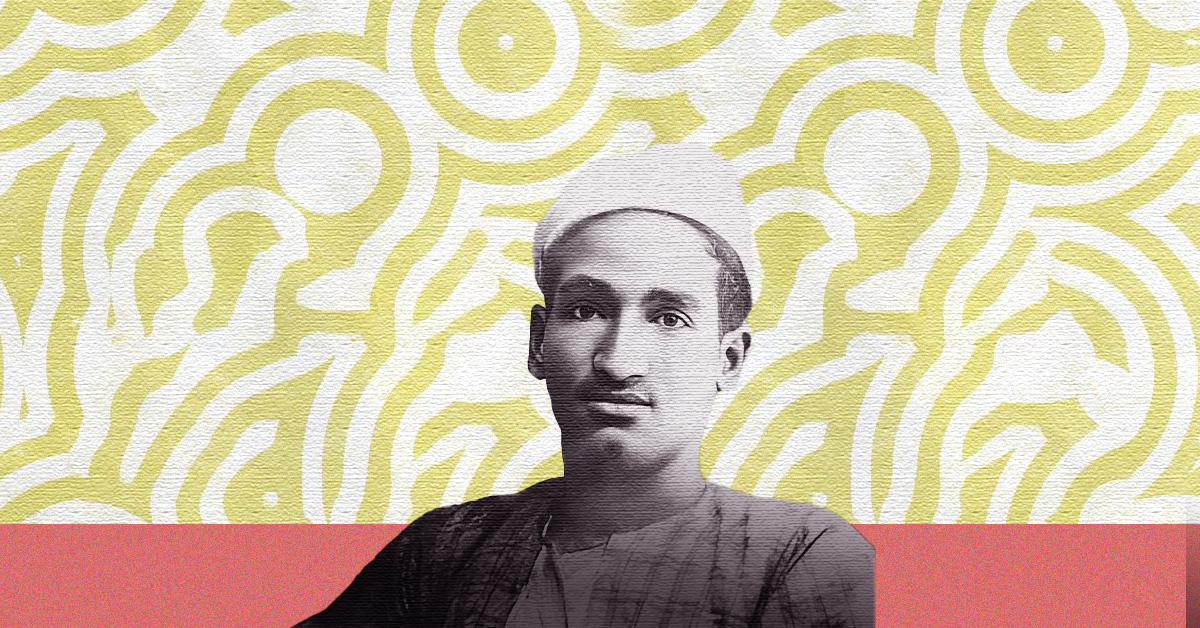
    Sayed Darwish passed away on September 15, 1923, at his sister’s house in Moharram Bey. He died with visions and dreams in his heart. His song, “Bardoun Ya Wanjat… Baladna Kharabat” (Cold, O Wanjat… Our country is ruined), with lyrics about bullets fired at the British High Commissioner, is still remembered today. He is remembered in the 1919 revolution when he rode a horse-drawn carriage with Badi’ Khairi, Naguib al-Rihani, and Hassan Fayek. That day, Sayed Darwish climbed onto the carriage driver’s seat in Abdeen Square and sang: “Egypt, do not be afraid… These are their affairs… How can they say there is no freedom or independence?”

    ***

    Sayed Darwish knew Dr. Ali Hassan’s clinic in Bab al-Jadid, which was the headquarters for national meetings to organize demonstrations and unrest during the 1919 revolution, and he began his activity by composing a number of national songs.

    He traveled to the Levant, emigrated with his loved ones, and returned to sing in the cafes of the Corniche and teach music to amateurs at the Oriental Music Club. He also knew Sheikh Mufrah Mahmoud, a muezzin and reciter at the Ali al-Badawi Mosque in Kom al-Dikka, who taught Sayed Darwish to memorize the Qur’an and then took him to the “Hassan Halawa” school..

    At that time, Sayed Darwish shone in the chanting class, and he once said: “I can compose music.“ He composed ”Ya Ma Sha’ Allah Al-Tuhfajiya… Ahl Al-Latafa wa Al-Mufahmiya” (Oh, God willing, the kind and understanding people) and composed a scene depicting some public scribes on the side of the road, where some farmers came to them to have them write a letter to the Jihad administration and haggled with the public scribe over the fee. Sayyid Darwish still remembers Alexandria, where he was enchanted by the waves and the shores of Alexandria, and loved Jalila and remained flying among the nightingales.

    ***

    And because the night is long… He sang, “As long as the night lasts,” the night of lovers and the night of occupation, and he was freed from “Aman Aman Ya Li” and “Al-Tankit Al-Tarlili,” so he lived with Badi Khairi, and he was a feather on the string, and on paper as well.

    Sayed Darwish sang with the canal workers: “O dearest of my eyes, I myself will go to my country.” And he rejected those who went to the canal to take off their helal and wear ‘balto’ in “kambo,” because the Egyptian must rise, because the homeland calls him, and because the sweet one rose to knead from dawn, and our sustenance is from the Lord. In your restored biography, we know, Uncle Sayed, that your sadness is permanent… permanent, because you are always besieged. They sterilize the melodies, corrupting their meanings, so that they end up saying: “My lips are eating me in your presence,” “Without America, without Europe,” and “The good of our country is not in our hands,” to become something else.

    The sahbajia is gone, as are the community associations that cared for your heritage and those who listened attentively to your wounds. Do you have the right to blame us? You blame us, but our fate is not in our hands. The kum al-dakka that you knew is now nothing but an old café and tall buildings that block the narrow alleys and streets. The music festival that was organized by the official culture department in your memory has disappeared, where the locals used to sing, “Visit me once a year,” and “I am gone and finished.”

    Share. Facebook Twitter Pinterest LinkedIn Tumblr Email
    Previous Article“Reviving Historic Esna” wins the Aga Khan Award for Architecture 2025
    Next Article “Petros Kassab”… Another forgotten house in Suez falls
    Abd Elaziz Elsebaey
    Abd Elaziz Elsebaey

    Related Posts

    The Man Behind the Lens: Youssef Chahine’s Hidden Actor Within

    27/01/2026

    Arab Umm Kulthum vs Egyptian Abdel Wahab: Two Visions of Cultural Identity on Screen

    14/01/2026

    The Translation Problem That’s Distorting Ancient Egyptian History

    25/12/2025

    Comments are closed.

    Recent Posts

    • The Woven Skeleton: The Palm Frond Artisans of Kafr Al-Battikh Fend Off a Plastic Tide
    • The Tragedy of Azbakia and Imam Al-Shafi’i: How Architecture Rewrites Our History
    • The Sanctuary of Saint Bishoy: A Living Ledger of Egyptian Monasticism
    • Shadows Over the Nile: Concrete Construction Spark Criticism Beneath the Temple of Kalabsha
    • The Damanhur Opera House: A Sovereign Union of Italian Elegance and Islamic Heritage

    Recent Comments

    1. Binance美国注册 on An exhibition in Paris reimagines Cleopatra, far from Western narratives
    2. binance "oppna konto on An exhibition in Paris reimagines Cleopatra, far from Western narratives
    3. código de referencia de Binance on Art exhibition documents the first Egyptian Scout postage stamp at the National Museum of Civilization
    4. Binance账户创建 on Between popular religiosity and the benevolence of the Quran, how can beauty be reconnected with “Sayyida Zeinab”?
    5. phoenix game on Theater never dies… Mansoura saves its heritage and restores it as an opera house

    Archives

    • May 2026
    • April 2026
    • March 2026
    • February 2026
    • January 2026
    • December 2025
    • November 2025
    • October 2025
    • September 2025
    • August 2025
    • July 2025
    • June 2025
    • February 2025
    • March 2022
    • January 2021
    • March 2020
    • January 2020

    Categories

    • Analysis
    • Editor's Picks
    • Featured
    • Features
    • Gadgets
    • Greater Cairo
    • Health
    • Lebanon
    • Lifestyle
    • Lifestyle
    • Lower Egypt
    • News Focus
    • Red Sea
    • Relations
    • Technology
    • Travel
    • Travel & Tourism
    • Trending Now
    • Uncategorized
    • Upper Egypt
    • Western Desert
    © 2026 ThemeSphere. Designed by ThemeSphere.
    • Home
    • Lifestyle
    • Relations
    • Travel & Tourism
    • Buy Now

    Type above and press Enter to search. Press Esc to cancel.

    X