


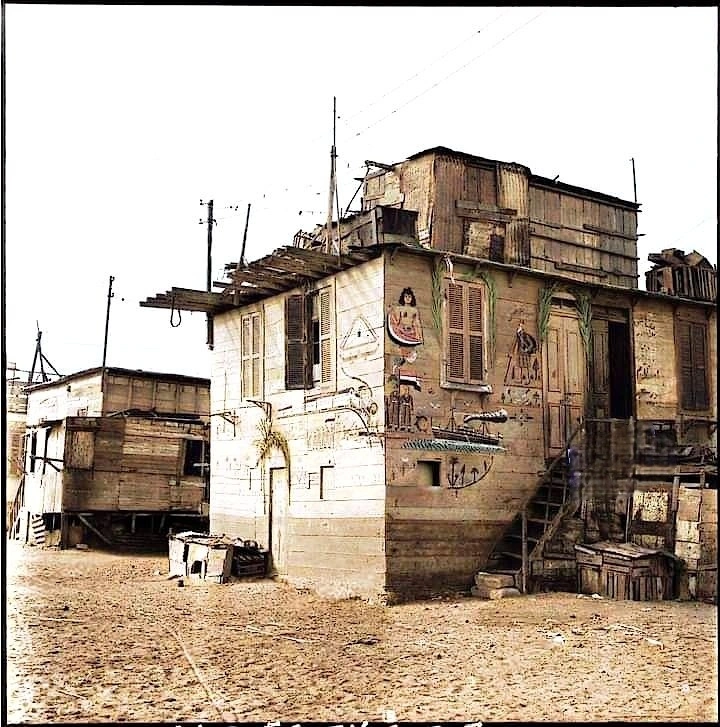
Unearth the haunting legacy of Umm al-Faqir, the brass-wielding folk hero of Port Said. From the napalm-scorched alleys of the 1956 resistance to the fire-breathing rituals of Lake Manzala, explore how a marginalized woman transcended history to become an immortal symbol of Egyptian defiance.
By Osama Kamal
Her name was never merely a title; it was a living chronicle that moved among the people, drifting through narrow alleys and sweeping across boulevards like the salt-heavy scent of the Mediterranean. To approach this legend, I found that memory alone was insufficient. I sought the origin of the thread, which led me to Engineer Mohamed Beyoud. Born in 1965, Beyoud is a preeminent guardian of Port Said’s historiography, specifically the era when the saga of “Umm al-Faqir” (Mother of the Poor) took root within the popular consciousness. As the author of Pages from the History of Port Said (2016) and host of the television program The Memory of Port Said, he serves as a sentinel, protecting the city’s vanishing heritage from the tides of oblivion.
Samara Café: The Sanctuary of Resistance
I met him at the Samara Café in the Sharq district a place that seems to hold the shadows of an entire epoch within its walls. For years, this was the redoubt of the late MP Al-Badri Farghali. Its chairs were once occupied by the titans of the resistance: El-Sayed Assran, who executed the British intelligence officer Williams; Mohamed Hamadallah, who orchestrated the capture of Lieutenant Moorhouse; and Mohamed Mehran, who fought until his eyes were gouged out by occupation forces. There, amidst air thick with inhaled histories, we began to deconstruct the myth of Umm al-Faqir.
The Kitchen Weapon: Felling the Red Devils
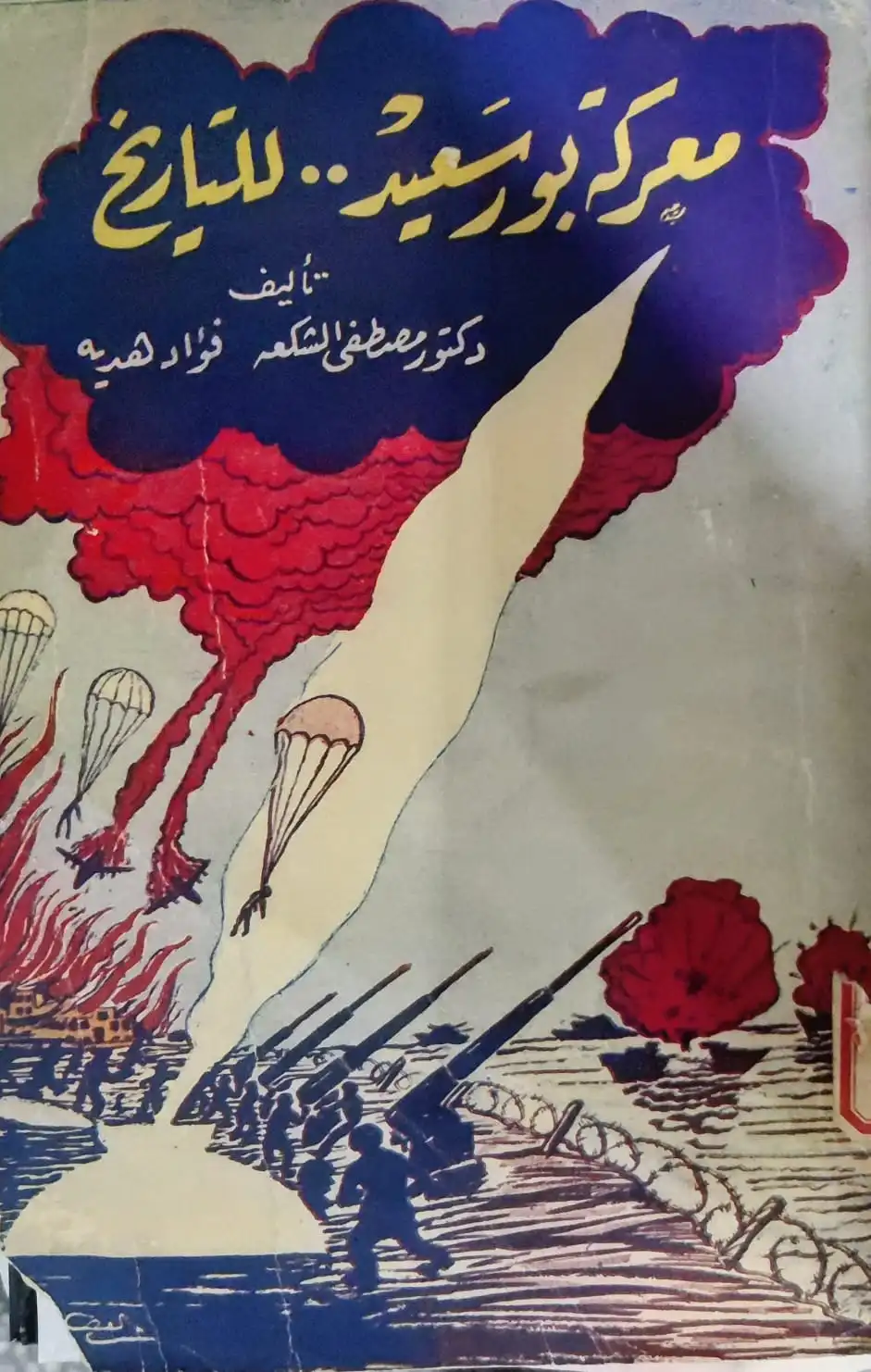
Beyoud asserts that a historian must be anchored to the document, yet Umm al-Faqir, despite her towering presence in oral tradition, is a ghost in the official archives. Her clearest footprint appears only in a 1958 volume, The Battle of Port Said: For History, authored by Dr. Mustafa al-Shakaa and Fouad Hedaya. This work, sanctioned by the state, was written at the very zenith of the events it describes.
Within those pages, her life is distilled into a single, staggering account. As British paratroopers descended near public housing, the local women surged toward them armed with nothing but sticks and blades. Among them was Umm al-Faqir. She reportedly neutralized several soldiers of the British Empire those famously dubbed the “Red Devils” using only a Yad al-Houn (a heavy brass pestle). She would strike the soldiers’ skulls the moment they made landfall, moving from one to the next as they collapsed into the dust, before returning to finish them off. In the original text, the account is sparse and unadorned, devoid of the mythological layers later added by the collective imagination. It is from this singular point that the story began to expand.
The Tug-of-War Between Fact and Folklore
Ibrahim al-Shabrawi, a poet and former social worker born in 1958, views the tale not as a static event, but as a living entity birthed from the landscape. He suggests that Lake Manzala was never mere geography; it was a realm of enchantment. In his view, Umm al-Faqir was the daughter of an environment that intuitively crafts legends.
In the popular memory, however, she assumes a more jagged edge: a Romani woman with a gifted, caustic tongue. Possessing a lexicon of profanity with no ceiling, she lived in a reed shack in the Al-Manakh district on the fringes of the lake, selling her sharp wit to the highest bidder. She was hired to settle neighborhood feuds, to puncture the ego of arrogant officials, or to humiliate political rivals during election cycles with a ferocity that no orator could match.
A Scourge of Rivals, A Shield Against Invaders
One of the most enduring vignettes of her life involves the 1951 parliamentary elections. Hired to oppose the formidable Abdul Rahman Pasha Lutfi, she orchestrated a spectacle of biting satire. She constructed a mock “forest” draped with shabbar (tilapia fish), mounted a donkey backward, and paraded through the streets singing lampoons. This performance is credited with toppling the Pasha, despite his vast philanthropy and his role in erecting one of the city’s most exquisite mosques.
The narrative swells further during the 1956 Tripartite Aggression. Legend says that while napalm reduced the Al-Manakh district to a charred wasteland, her humble shack remained untouched. When paratroopers landed at her doorstep, she emerged unarmed, wielding only her brass pestle to crush their helmets. It is whispered that British doctors were baffled by the nature of the head wounds, and foreign newspapers allegedly marveled at the “kitchen weapons” used by the locals.
Yet, visiting the site today on the edge of Lake Manzala reveals nothing of this drama. The lake has been drained; concrete towers have risen. The landmarks have vanished, as if the earth itself has forgotten the tale.
Umm al-Faqir: The Audible Legend and the Invisible Icon
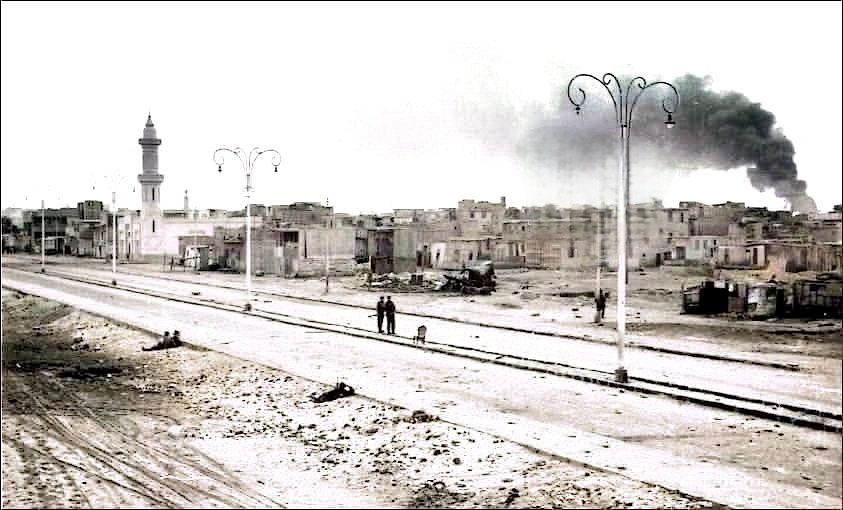
El-Sayed Abadi, a writer and engineer born in 1950, explains that the post-war reconstruction was not a repair, but a total reincarnation. After the fires, President Gamal Abdel Nasser dispatched Minister Abdel Latif al-Baghdadi to oversee a six-month rebirth. Eight residential sectors rose from the ashes of the memory-scorched earth. I questioned the current residents; some had never heard of her, while others repeated the same unverified echoes found in the cafes.
The Mother’s Sacrifice and the President’s Salute
Fares el-Tabei, a young filmmaker and visual storyteller born in 2001, is now reinterpreting this saga through the lens of cinema. His work relies on familial memories passed down from his grandparents. The stories he has gathered are darker: it is said she refused state financial honors and that she personally burned her own son, “Al-Faqir,” after he allegedly informed the British of a resistance weapons cache. This is a story told in hushed tones the hidden face of a woman who resembled no one else.
In her daily life, Umm al-Faqir was a street performer of fire. She would spin cloth balls soaked in fuel, creating whirling spheres of flame before extinguishing them in her mouth. She was so impoverished that her name Mother of the Poor became her destiny.
Yet, it is claimed that President Nasser knew her by sight. During his victory visits every December 23rd, he would wave to her, and she would insist on shaking his hand. Photographs from the era show a woman in a black galabeya standing near the presidential motorcade, the newly built public housing looming in the background.
Between the documents of Beyoud, the poetry of al-Shabrawi, and the visual recreations of el-Tabei, we see Umm al-Faqir as she truly is: a woman who lived on the margins but was elevated to immortality by a city that needed a symbol. She may not have done everything attributed to her, but she gave voice to the soul of Port Said. She remains a solitary line in a book, a lingering voice in the alleys, and a shadow of a place that no longer exists. Whenever the city seeks to remember its own strength, it summons her name. She has never truly left.
