


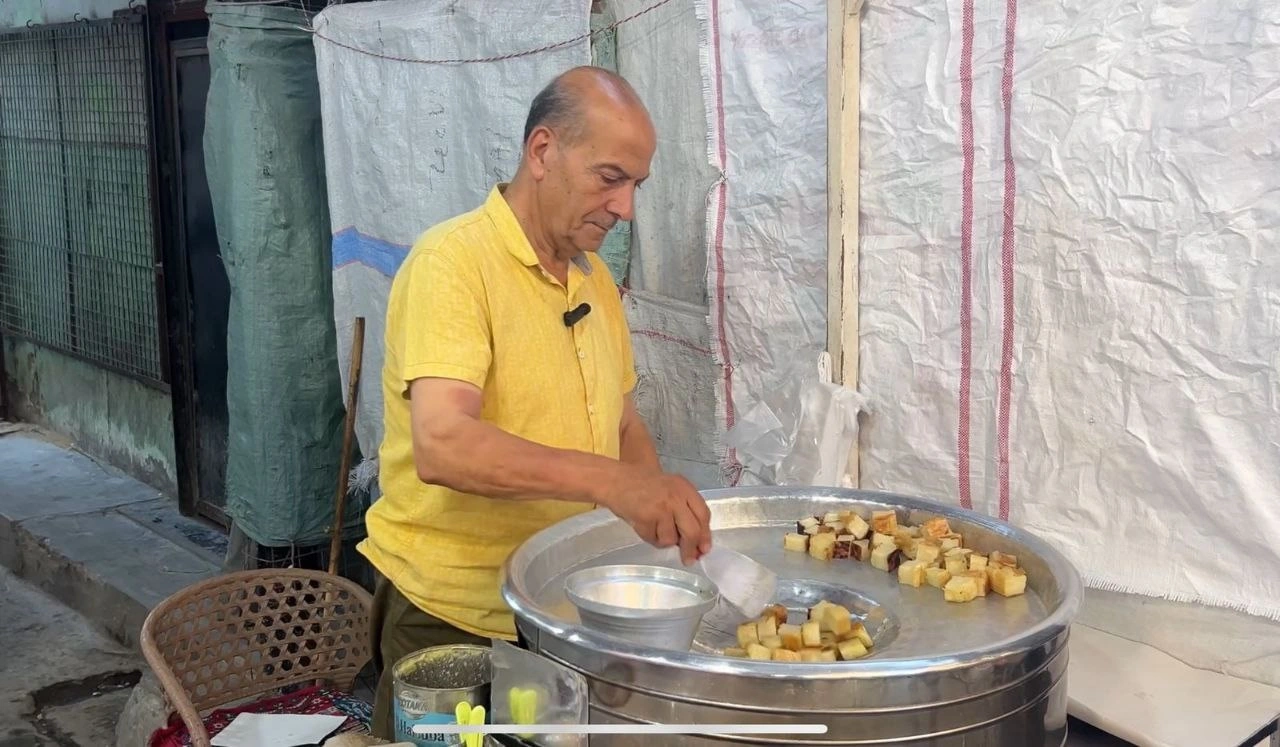
In Al-Hilaliya alley, at the intersection of Al-Hamidi and Al-Gouri streets, the most famous commercial streets in Al-Arab alley, the alley in Port Said governorate, stands Ahmed Al-Saqa, the most famous confectioner in the city. With his cheerful face and smile that reveals his kind heart, he welcomes his customers every day from 3 p.m. to 11 p.m. He sells delicious sweets that are enjoyed by young and old alike.
Uncle Ahmed Al-Saqa is the most famous and oldest confectioner in Port Said
He inherited the profession from his father and has been working in it for more than 50 years. These sweets are native to Port Said and have a long history. They are a traditional treat with a special flavour known only to the city’s residents. Made from flour, semolina and sugar, they are cooked in ghee and are sweet, soft and gelatinous. Everyone who tries them falls in love with them from the first bite.
The most famous samania confectioner in Port Said
74-year-old Ahmed Al-Saqa says, “I have been working in this profession since I finished my military service, which I spent in the Egyptian army during the October 1973 war. I was a soldier and was wounded in the leg during the battle. After I recovered and my family returned from emigration, my father was working in the samania industry, a profession he inherited from my grandfather. He continued to work in it for more than 50 years.”
He adds, “Samania sweets are unique to Port Said and are only known to its residents, even the people of Damietta, the origin of oriental sweets. Thank God, they have achieved widespread fame and are admired and appreciated by many.”
Memories of the good old days
Uncle Ahmed continues, saying, “The old days were full of goodness and blessings, despite the wars that Port Said experienced and witnessed. But kindness filled people’s hearts, and blessings filled homes and streets. The world was different from today, and people were content with what they had, living happily with very little. They were satisfied and loved one another. Now, everyone looks at what others have. They see and work only for their own benefit, and you don’t know why. Some of the love between people has been lost, and the days of goodness and blessings are gone.”
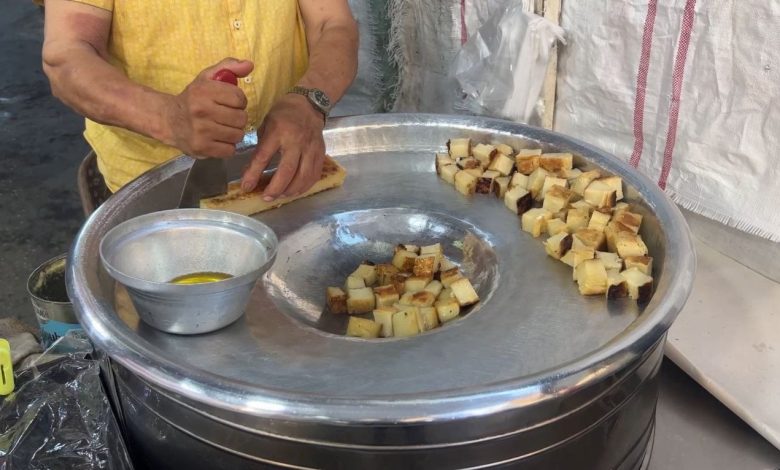
Ahmed Al-Sakka is the most famous and oldest confe
Making and selling ghee
Ahmed recalls the good old days: “Customers would come and ask for a litre or a quarter of a litre of ghee, and when I gave it to them, they would ask me, ‘Where’s the pasta and the harissa? Once I told him I didn’t have any, and he joked, ‘Never mind, I don’t want it. ‘ People used to come and buy more than they needed because they liked the gifts. We gave them to them out of love. Once a customer asked me, ‘Do you have any harissa or pasta? ‘ I told him no, and he joked, ‘Never mind, I don’t want ghee. There was hope and love among the people. The world is as it is, but people’s hearts have changed. They no longer love each other, and everyone only loves themselves. I had to make harissa and pasta alongside the saminiya.
He explained, “Even the streets have changed. A street like Al-Hamidi, where I live, has changed, and the shops themselves have changed. There used to be a fruit shop, a pastry shop, a juice bar, a grocery store, and a local café. But God wants everything to change, except for us. We started this business and we will continue, God willing, to make and sell samniya. We haven’t changed our skin or our work.”
He continued, “Back then, we used to break our fast on Al-Hamidi Street with fava beans, milk, ghee, pasta, talabia, and dates. All of these things are nutritious, unlike today, with indomie, which has ruined the health of children and young people. There were also famous oriental sweet shops that sold ghee, such as Hijazi, Amer, Shaheen, and Cleopatra. Some of them were also famous for selling flatbread, especially morning flatbread for brides.”
The samania industry in Port Said
Ahmed al-Saqa explained that he starts his work in the samania industry every day before dawn, around 3 a.m., and continues until 10 a.m. Then he goes home and comes back to sell samania from 3 p.m. until 11 p.m.
When asked about the secret of his success, longevity and fame in the ghee industry, he says: “Cleanliness is the secret of my success, and no one sees us except God. I like to say that God will improve the situation of everyone, as there are many who have worked in the ghee industry in Port Said and some of them have become famous. But those who come to me and taste my ghee, made with nearly 50 years of experience, can tell the difference in taste. They confirm that it is different. They work in this profession to earn a living like any other, but without the experience and skill that, thank God, I have.”
Passing on experience and helping young people
Ahmed continued: “My father worked in the ghee industry before emigrating. After returning from emigration and the end of the 1973 war, I stayed where I was, helping my father and working in the same profession. We were conscripted into the Egyptian army in the 1973 war, and I was wounded in one of my legs. I returned from the war to stand here making samania and selling it ever since.”
The most famous samania maker in Port Said emphasised that he is willing to help any young person who wants to work in the samania industry. This actually happened when two young men from Alexandria came to him. They asked to learn how to make samnia so they could open a shop there. He not only told them his secret, but also asked them to come to him when he was making it so they could learn the trade hands-on. They stayed with him for five days until they learned the craft and mastered it, then started their own business in their governorate and succeeded.
He concluded by saying, “I hope that Port Said will return to what it used to be. But unfortunately, those days are gone, and we are now in a different era with different people. May God guide them.”
