


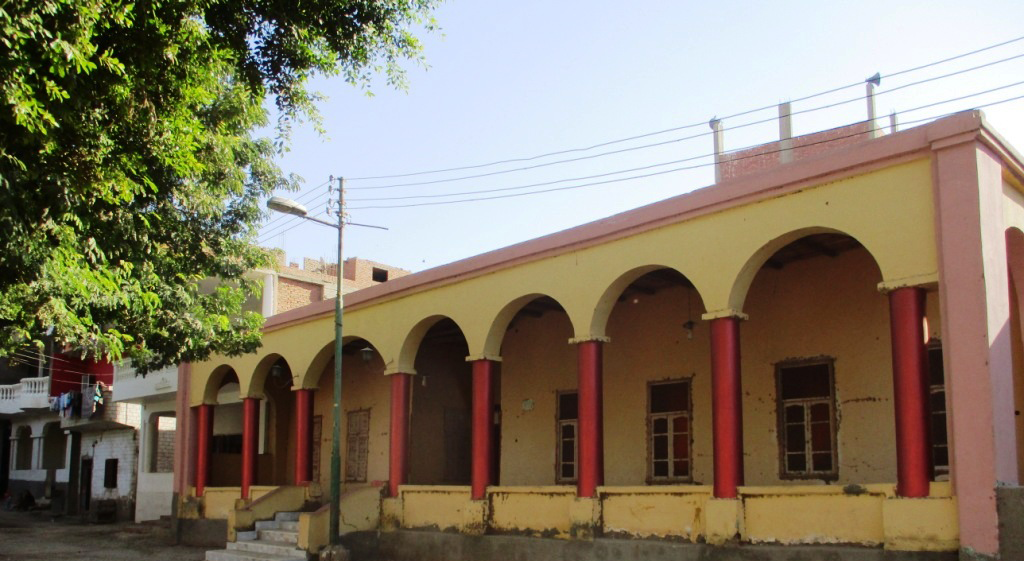
In the villages of Upper Egypt, the family diwan is more than a gathering place—it’s a court, a classroom, and a political stage. During Ramadan, it becomes all of these at once, as families host Quran reciters, settle disputes, and reinforce the bonds that hold tribal society together.
People observe the religious obligations of Ramadan with varying degrees of devotion. Some fast and pray with rigor; others are more lax. But regardless of individual practice, the month holds a place of profound significance in the collective consciousness of Egyptians،nowhere more so than in the villages of Upper Egypt.
There, the reverence for Ramadan’s nights finds expression in a daily ritual: the family diwan gathering.
Weeks before the crescent moon appears, families across the region begin competing to secure the finest Quran reciters for their Ramadan evenings. Some reciters are effectively retained by particular families year after year, bound by tradition and loyalty. The goal is to keep the diwan open throughout the month،a space where neighbors and relatives gather not only to listen to Quranic recitation but to share stories, jokes, and oral histories passed down through generations. These evenings become something more than religious observance. They become happy occasions, moments when social bonds are renewed alongside spiritual ones.
The Iftar Table: Symbolic but Selective
The iftar tables set out in family diwans are largely symbolic. They are prepared, always, ready to receive anyone who might come. But in practice, they are mostly for guests and strangers, ،travelers passing through, visitors from outside the immediate community. Members of the family itself rarely eat there.
This has to do with the nature of tribal culture. In Upper Egypt, one does not simply walk into another family’s diwan to break fast, except on special occasions when a formal invitation has been extended.
After iftar, however, the dynamic shifts. The “Ramadan evening” proper begins, and participation broadens. No family closes itself off. Delegations from each family make the rounds, visiting the diwans of others in the mujab،the cluster of neighboring villages that form a kind of social catchment area. Sometimes they travel farther, to families connected by blood, marriage, or shared interests.
These visits are a tradition of unknown antiquity. No written records document their origin; they are simply part of the fabric of life, passed down through generations. And like all living traditions, they have evolved. Electricity changed them. Television changed them further. But they persist, even if the crowds are thinner than they were decades ago, when the diwan served as the village’s primary source of entertainment and information،a role it continues to play, despite the dazzling competition of satellite television.
The Diwan: Court, School, and Parliament
To understand the Ramadan evening, one must understand the institution that hosts it: the family diwan.
The diwan is one of the most vital institutions in Upper Egyptian society. The word itself carries political weight. Historically, it referred to the sultan’s court, the basic units of government and administration, the place where matters of state were debated and judgments rendered.
Families today inscribe the word proudly on their diwan entrances،buildings that often stand out architecturally from the surrounding homes. Some go further, adding the word “general” to create phrases like “General Diwan of the [X] Family.” The echo of official state terminology،”General Diwan of [X] Governorate”, ،is unmistakable. It positions the family as something akin to a parallel authority, a counterpart to the local government center.
Architecturally, the diwan typically consists of two sections. The upper section comprises two rooms connected by a corridor, with a wide anteroom. This is the space reserved for reciters and honored guests. The lower section is an open courtyard that can accommodate large numbers and houses ancillary facilities: a kitchen, bathrooms, and other utilities.
The Family as a Political Unit
The word “diwan” signals what the family, in this context, really is: a political unit.
The diwan is the family’s headquarters. Here, during election season, strategies are devised, and alliances negotiated،whether for parliament, the shura council, or local councils.
The diwan is the courtroom. Here, internal family disputes are aired and resolved. Here, when conflicts arise with other families, representatives gather to negotiate terms.
The diwan is the school. Here, children and young people absorb the unwritten code of customs and traditions, listening to their elders’ stories and following their discussions of everything from marriage arrangements to land disputes.
The diwan is the coffeehouse, predating the arrival of actual coffeehouses in the villages. It is the social club for families that have no other. It is the wedding hall, the funeral tent, the place where honoured guests are received.
The diwan is a symbol of honor, a measure of a family’s standing and worth. It is the tribal equivalent of the royal court or the presidential palace. And just as kings once hosted Ramadan evenings in their palaces, bringing in the finest reciters and spreading iftar tables for the needy, the families of Upper Egypt do the same in their diwans،affirming their place in the social order, reinforcing the ties that hold their world together, without diminishing by one iota the genuine religious feeling that animates the month.
