


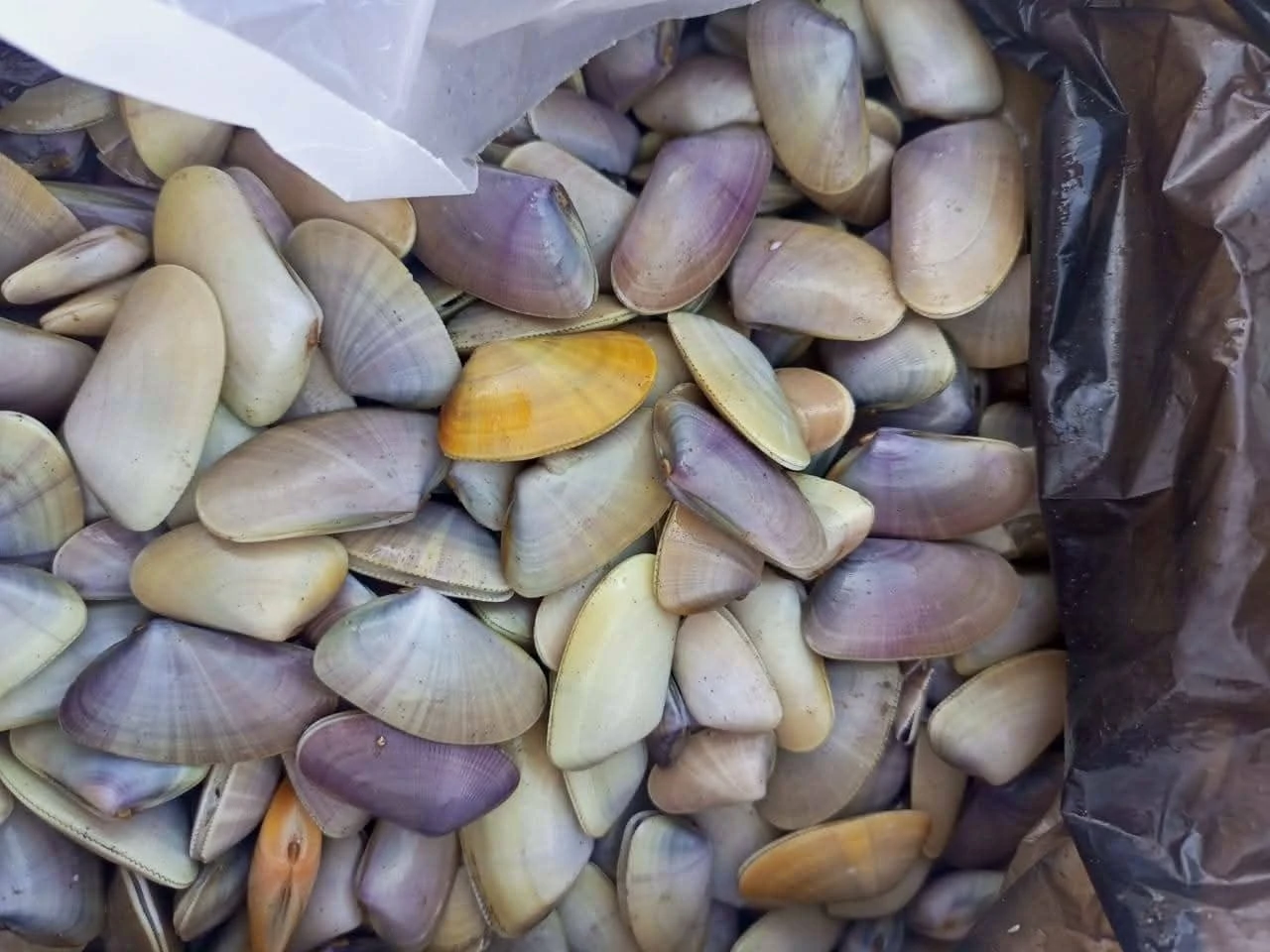
Port Said’s culinary soul, tracing the vanishing heritage of Um al-Khulul through the lens of traditional fishermen, folk art, and the rhythmic melodies of the Simsimiyya.
By Osama Kamal
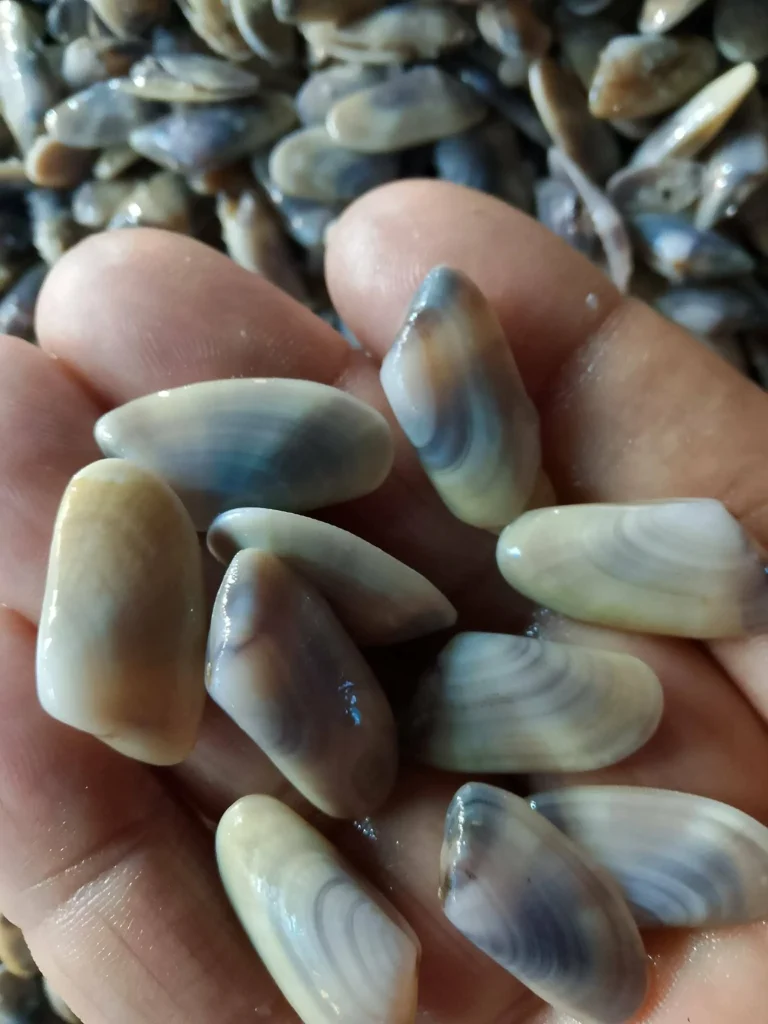
For long, storied years, the Um al-Khulul (wedge clams) was an eternal guest at the Port Said table. A local breakfast was deemed incomplete without its presence, nestled alongside bowls of fava beans, falafel, aged cheese, Mish (fermented salty cheese), honey, and red tahini. Despite its diminutive size, it possessed a mysterious, almost miraculous power to sharpen the appetite; locals spoke of it simply as something that “opens the soul to food.”
Then, inch by inch, it retreated from the home. It vanished as intimate things often depart from ancient cities: without clamor, and without a final goodbye. Other dishes claimed their place at the table, yet the Um al-Khulul remained anchored in the collective memory, shimmering there like a distant nostalgia that refuses to dim. And so, I went in search of it.
An Ancient Craft Resisting Oblivion
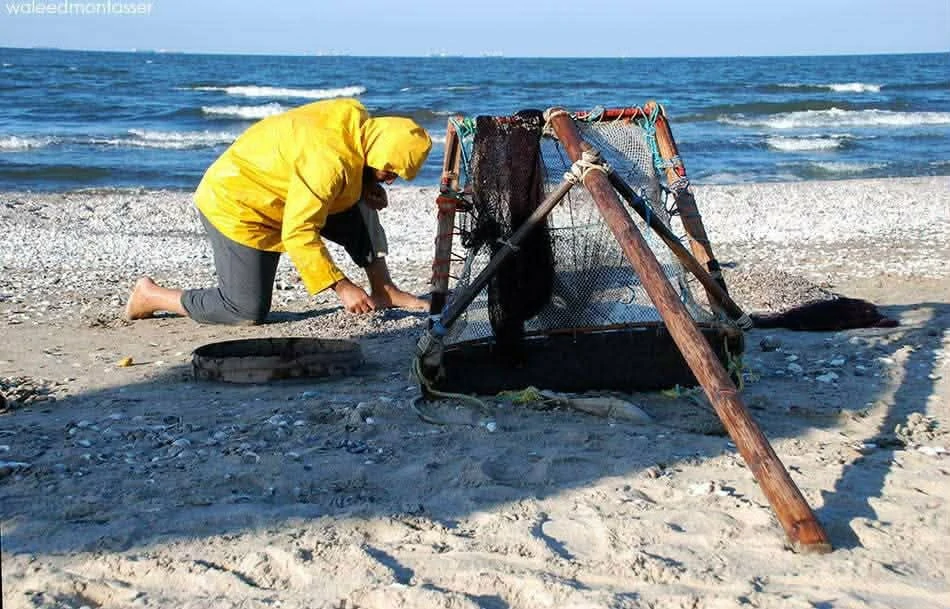
On the westernmost fringes of Port Said, near the El Gamil district where the urban sprawl thins and the sea expands—the remnants of an ancient vocation still resist the creep of oblivion. There, I met Uncle Mohamed al-Kenany, one of the eldest hunters of Um al-Khulul and Baklowiz (larger sea clams). He stood near the water’s edge, his features mirroring the sea itself: silent, vast, and etched with the passage of years.
He recounted the days when the Khulul vendor was an essential thread in the city’s tapestry. The fisherman would rise before the dawn, strap his tools to a bicycle, and head toward the Mediterranean. There, he would wade into the brine, standing amidst the surf, using only his feet and his intuition to locate the Um al-Khulul hiding within the soft sands. It was never merely a trade; it was an ancestral wisdom passed down through generations—a deep intimacy with the tides, the currents, and the secret places where sustenance hides. “Sometimes we are a breath away from the shore,” Uncle Mohamed said, gesturing toward the horizon, “and other times we wade fifty meters into the deep. The sea has a language, and only those who have spent a lifetime within it can truly understand it.”
Fava Beans, Falafel, and the Harvest of the Sands
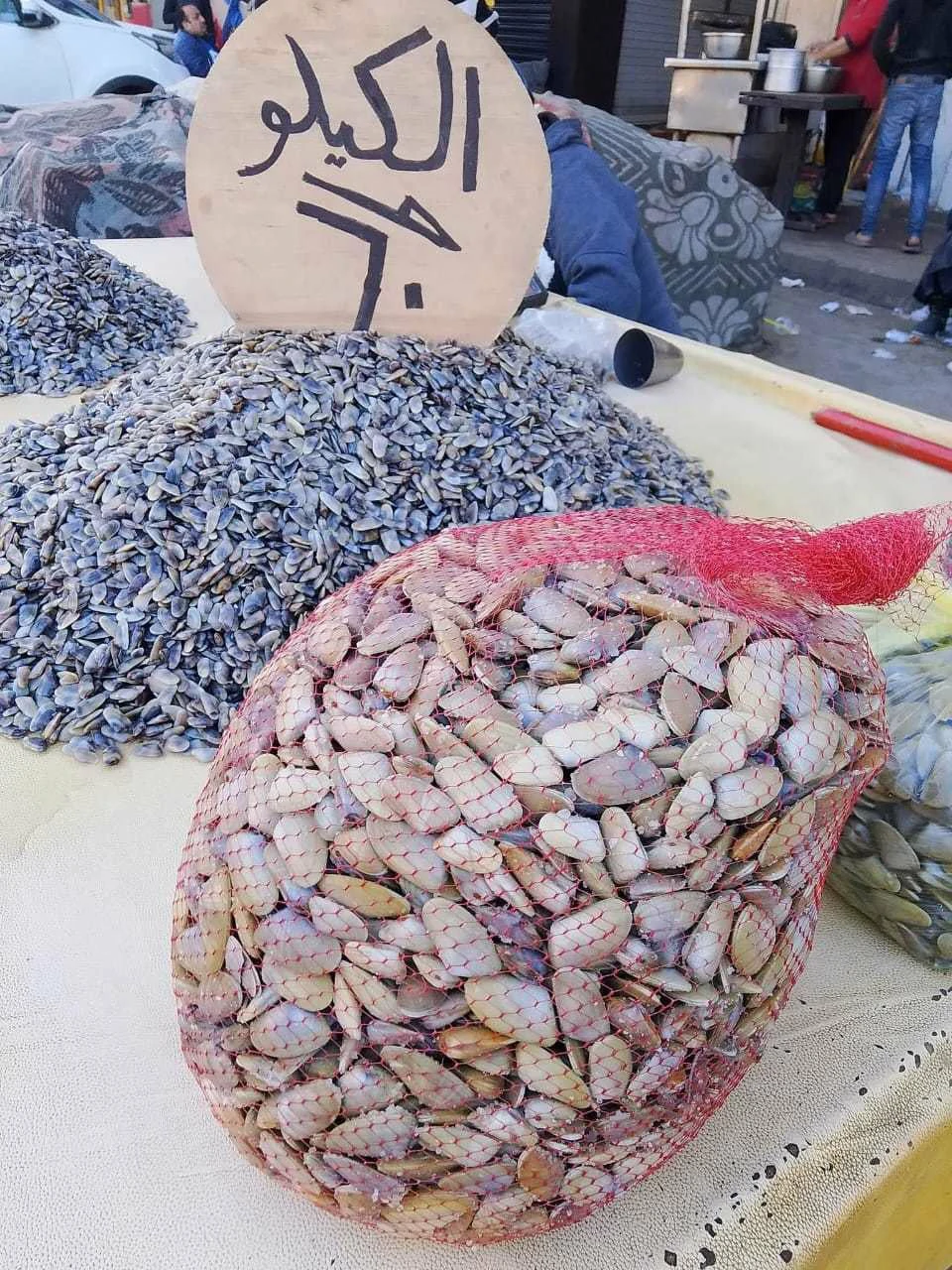
Following the catch, the fisherman sits upon the shore, a large sieve by his side to distinguish the Um al-Khulul from the Baklowiz, discarding empty shells and marine debris. Then begins the preparation for market. Some patrons prefer them Hadeq (heavily salted), while others seek the Helw Malh (lightly brined) or Noss Sawa (par-cooked) varieties. Every palate has its preference; every household has its ritual.
The man then loads his bounty onto his bicycle and strikes out into the streets and narrow alleys of Port Said. His voice rises toward the Trassina (ornate wooden balconies) and shutters: “Khulul ya Ghaliza!” (Plump clams for sale!). The scene was so ubiquitous it became part of the city’s soul. The vendor would often anchor himself beside the fava bean and falafel shops, allowing residents to procure their entire breakfast in a single stop: a steaming bowl of beans, crisp falafel, and a portion of fresh Um al-Khulul.
The Wedge Clams in the Visual Memory
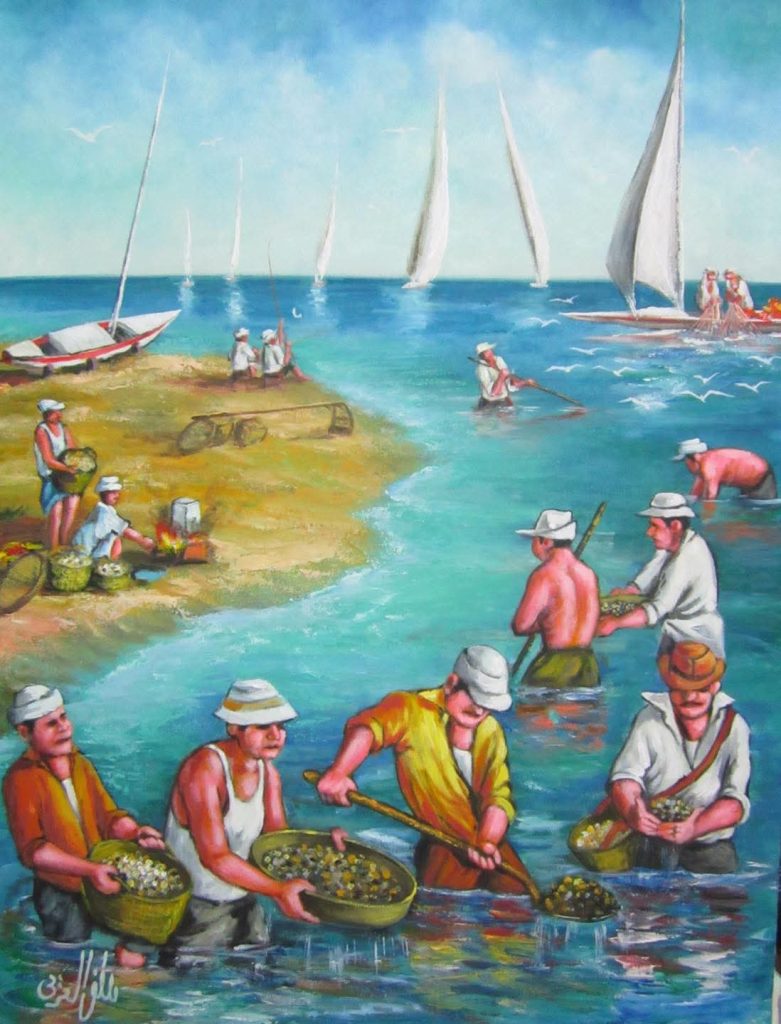
As I traced the journey from the sea to the mind, I was drawn to the canvases of the late Port Said artist Mustafa al-Azabi. He documented the minutiae of old Port Said life across seventy-three paintings, as if he feared the city might succumb to amnesia.
There, I met Mohsen al-Azabi, the artist’s son, who spoke of the famous painting “The Hunter and Vendor of Um al-Khulul” as if opening a window onto a vanished epoch.
He explained that his father did not merely paint people; he painted the sanctity of daily ritual. In the painting, the vendor clutches an empty Koz (a traditional tin mug) used as a standard measure, ensuring he sold with “a single conscience,” as the old folk used to say. He would fill the tin to the brim before pouring the clams into a paper cone, while a young girl waits, holding a metal plate for her share.
A Visual Testament to the Fisherman’s Life
Mohsen al-Azabi noted that his father was meticulous in depicting the sorting process; how the fishermen sat immediately after the catch, large sieves beside them, separating the wedge clams from the crabs and discarding empty shells. The process was not as simple as an outsider might imagine; it required an expert eye to distinguish the prime specimens from dozens of similar marine shapes.
The painting, as Mohsen described it, serves as a visual document confirming everything Uncle Mohamed al-Kenany recounted about this ancient world a world that begins with the first threads of dawn and continues until just before noon, the zenith of the hunting hours.
He added that his father was captivated by the communal nature of the profession; men standing shoulder to shoulder in the water, a family bound by the sea and the search for a living. Even the silence between them held a specific intimacy found only in these hallowed, old-world trades.
The Rise and Fall of the Fisherman’s Monuments
Perhaps the city itself attempted, in a rare moment of gratitude, to repay these men who spent their lives between salt and water. In 2008, the Port Said governorate established the “Fishermen’s Square” near the Launch housing in the Al-Manakh district. Two statues were erected there: one of an Um al-Khulul hunter and another of a Tarraha (cast-net) fisherman. It was an attempt by the city to preserve the memory of its humble sons in a work by Dr. El-Sayed El-Qammash.
The statue of the Um al-Khulul hunter stood looking toward the west of the city, toward the sea from which his livelihood, his stories, and his very life emerged as if eternally awaiting the return of the boats at daybreak. But the square did not survive the cruelty of time. In the early days of the January 25th Revolution in 2011, the statues were burned and demolished by vandals. That work of art, which expressed the sincere relationship between the people of Port Said and the sea that always gave more than it took, vanished.
Port Said, however, does not only store its memory in images, but in song. I sought the story of the most famous Simsimiyya (traditional lyre) song dedicated to the Um al-Khulul, penned by the late great poet Kamel Eid.
Poetry Inspired by the Salt of the Earth
Kamel Eid recounted that the poem “Fresh and Fine, O Um al-Khulul” was born one night during his usual walk with his mentor, the poet Helmy El-Saei. They were walking toward El-Saei’s home near the famous Cinema Misr after a weekly seminar when they encountered a Khulul vendor. El-Saei suggested they buy two paper cones.
Eid says they parted ways, but upon returning home, he found himself repeating to his wife, for no apparent reason: “Fresh and fine, O Um al-Khulul.” The phrase swirled within him all night until the poem emerged in its entirety from its closed shells. He wrote: “Fresh and fine, O Um al-Khulul… Sweet and fine, O Um al-Khulul… No hook required, Ne’ma… I caught you from the soft sand… Cheap in price but rich in taste… Oh, how sweet you are.” It was not merely a fleeting folk song; over time, it became a key to the city’s soul.
The Dance of the Wedge Clams
When the National Folk Arts Troupe presented the “Dance of the Um al-Khulul,” the song entered the collective memory of all Egyptians. It also served as the debut for artists Moshira Ismail and Aida Reyad.
In a curious turn of history, when the troupe decided to perform the piece in 1972, they commissioned the lyrics from a Simsimiyya artist known as “Al-Dash,” unaware that a complete poetic text already existed by Kamel Eid. But Eid would not rest until his name was permanently wedded to the song. Now, it is impossible to mention one without the other, as if the poem became part of his biography, or as if the sea itself had signed it in his name.
The Lyre and the Shell
Perhaps the poem of the Um al-Khulul was the final and most beautiful thing the Simsimiyya ever composed about this small mollusk, following a long lineage of folk songs celebrating its flavor and its link to the old days of Port Said. In those times, people possessed a refined “mood” for both listening and eating. They listened to Umm Kulthum and Abdel Wahab, yet they also knew how to grant breakfast its full ritual. Food was not merely the end of hunger; it was a moment of spirit.
While the trade of selling Khulul and Baklowiz was never a lucrative one barely covering a family’s daily needs it was a dignified life lived with contentment. Today, everything has shifted. The price of Baklowiz has soared, and those who work within the trade live lives vastly different from the past.
Many Names, Diverse Shores
Uncle Mohamed told me one final thing: every coastal city has its own name for the bounty. In Ismailia, it is Um al-Khulul; in Alexandria, it is known as Gandofli; while the name Baklowiz reigns supreme in Port Said. Their varieties differ by shape, color, and texture. There is the Balty, small and smooth with a blackish tint. There is the Arayes (The Brides), larger, smooth, and red, common in Port Said and Ismailia. Then there is the Saba’a, rough-textured and multicolored. The hunters know the best time to seek them is from the first light of dawn until eleven in the morning, and they are more plentiful in summer than in winter.
I listened to Uncle Mohamed while the sea before us continued its ancient rhythm, as if it had never changed. The sea that gave the city its sustenance, its songs, its salt, and its small stories.
O sea, how many things have emerged from your depths only to vanish, while you remain the sole witness to all. Or as the poet said: “The sea is one, but the fish are many colors.” From you lived the simple fishermen who knew that livelihood requires patience, and a heart that does not fear the waves. Looking out at the distant water, Uncle Mohamed seemed the last speaker of an ancient tongue that few truly understand anymore.
