


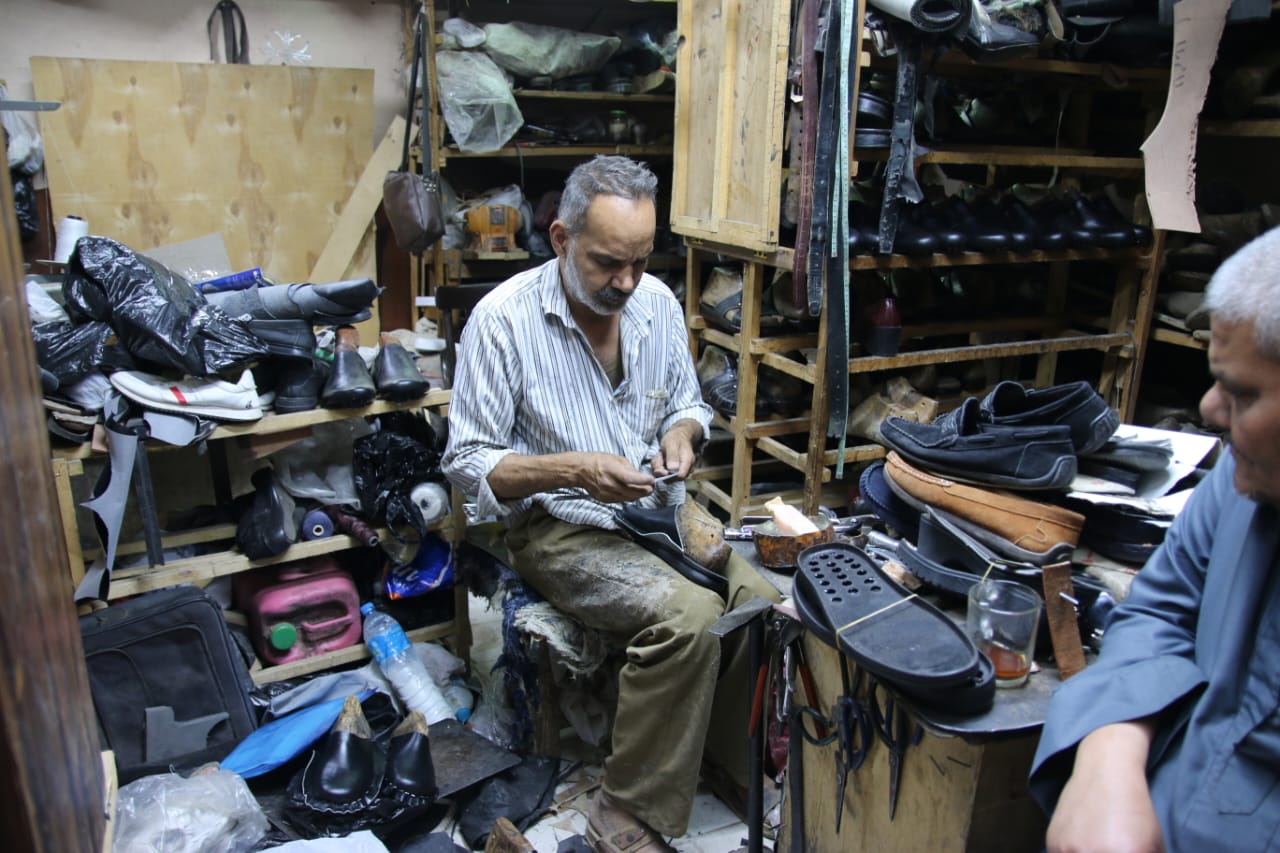
Luxor’s traditional cobblers struggle to preserve the ancient craft of handmade leatherwork against the rising tide of modern fashion and mass production.
By Amany Khairy
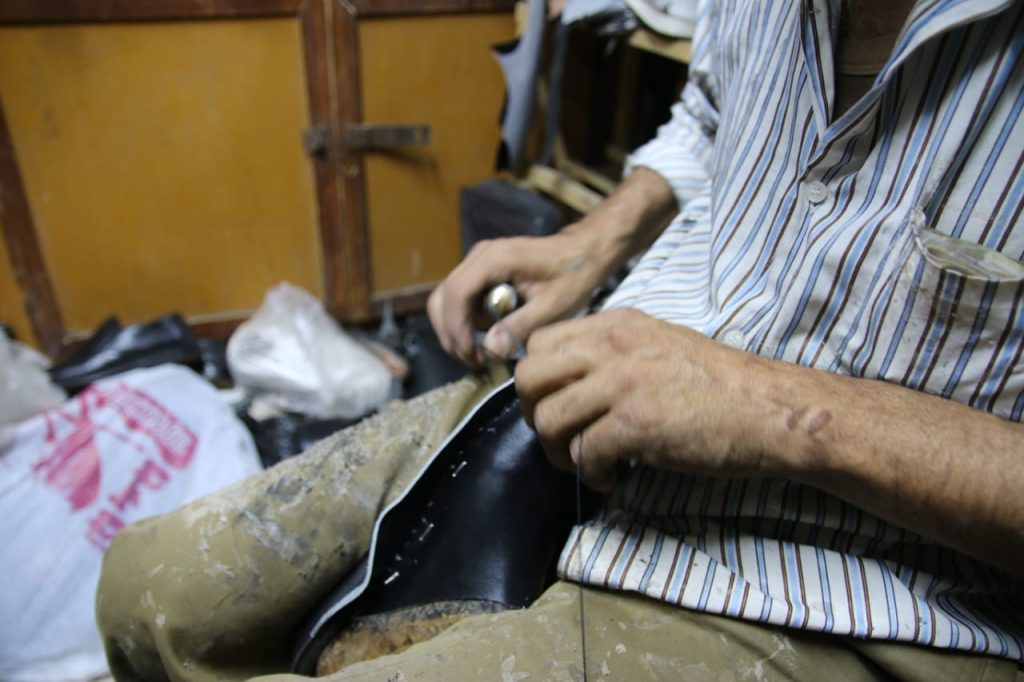
Deep within the labyrinthine passages of Luxor’s Market Street, nestled in modest workshops where the pungent, earthy scent of raw leather mingles with the cacophony of daily commerce, the Iskafi (traditional cobbler) continues his ancient dialogue with needle and hide. Here, a craft handed down through generations remains anchored against the relentless encroachment of mass-produced footwear and shifting contemporary tastes. These small ateliers resist obsolescence, preserving the soul of a traditional trade that has lost none of its luster, remaining an indelible part of the city’s collective memory and folk heritage.
The Art of the Hide: From Cairo’s Arteries to Luxor’s Hands
Hany Hanin Yacoub, 47, presides over a workshop meticulously divided into three sanctuaries of labor: one dedicated to the creation of bespoke shoes and shabashib (traditional slides), another for the surgical repair of footwear, and a third for the restoration of bags of every conceivable geometry. Inheriting the mantle from his father and grandfather before him, Yacoub has operated his own independent space since 2014.
“The life of a cobbler is a good one, rich with technical nuances,” Hany reflects. “Yet, most of the youth today shun it; they have an appetite for easier paths. Anyone seeking to truly master this craft requires no less than four or five years of devotion to reach the zenith of the trade.”
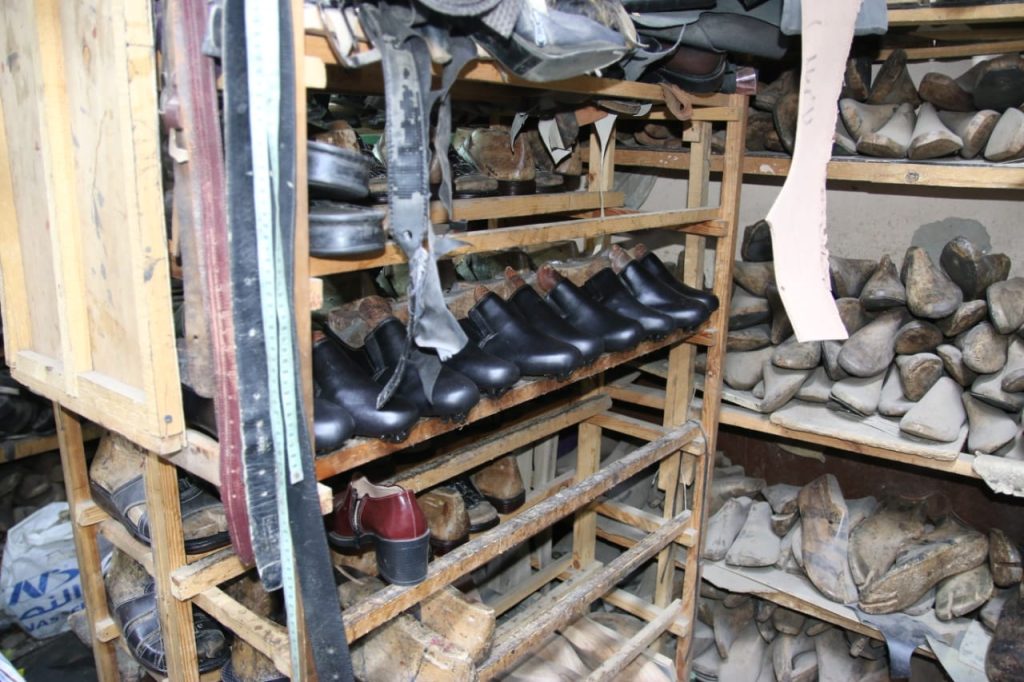
Hany procures his leathers from the historic quarters of Cairo, specifically Bab al-Shaariya and al-Ruwa’i. He maintains a constant rhythm of communication with merchants there to select specific grades and quantities, which are then dispatched to him. Discussing his process, he notes: “I work with three primary dyes: black, brown, and olive, with the occasional request for grey. The genesis of a shoe begins with preparing the upper, followed by stretching it over the qaleb (wooden last), removing the tacks, then sanding and painting. The final stage involves pressing and hand-stitching.” This labor of love demands two hours of uninterrupted concentration for a single pair.
Regarding his materials, he explains that leather is purchased by the foot, measured by surface area rather than length. He typically employs bovine, camel, or buffalo hides, which offer a medium price point accessible to his clientele. While more decadent, high-priced leathers exist, demand for them is sparse. His inventory is a pragmatic reflection of his workshop’s pulse.
Shifting Desires and the Resilience of Custom Craft
When it comes to bespoke tailoring, Hany observes a generational divide. The youth largely gravitate toward ready-made shoes and sneakers, leaving the demand for custom work to women and those requiring larger sizes (size 45 and above) that are rarely stocked in commercial boutiques. His expertise also extends to crafting specialized footwear for people with disabilities.
He attributes the waning demand to a seismic shift in aesthetic preferences. Young people now pursue “modern” silhouettes that the hand-tooling process cannot easily replicate, while retail stores offer a kaleidoscope of designs that mirror these fleeting trends. Despite this decline in custom orders, Hany remains steadfast. His day begins at half-past ten in the morning and does not conclude until nine at night.
A Legacy Forged in the Schoolroom
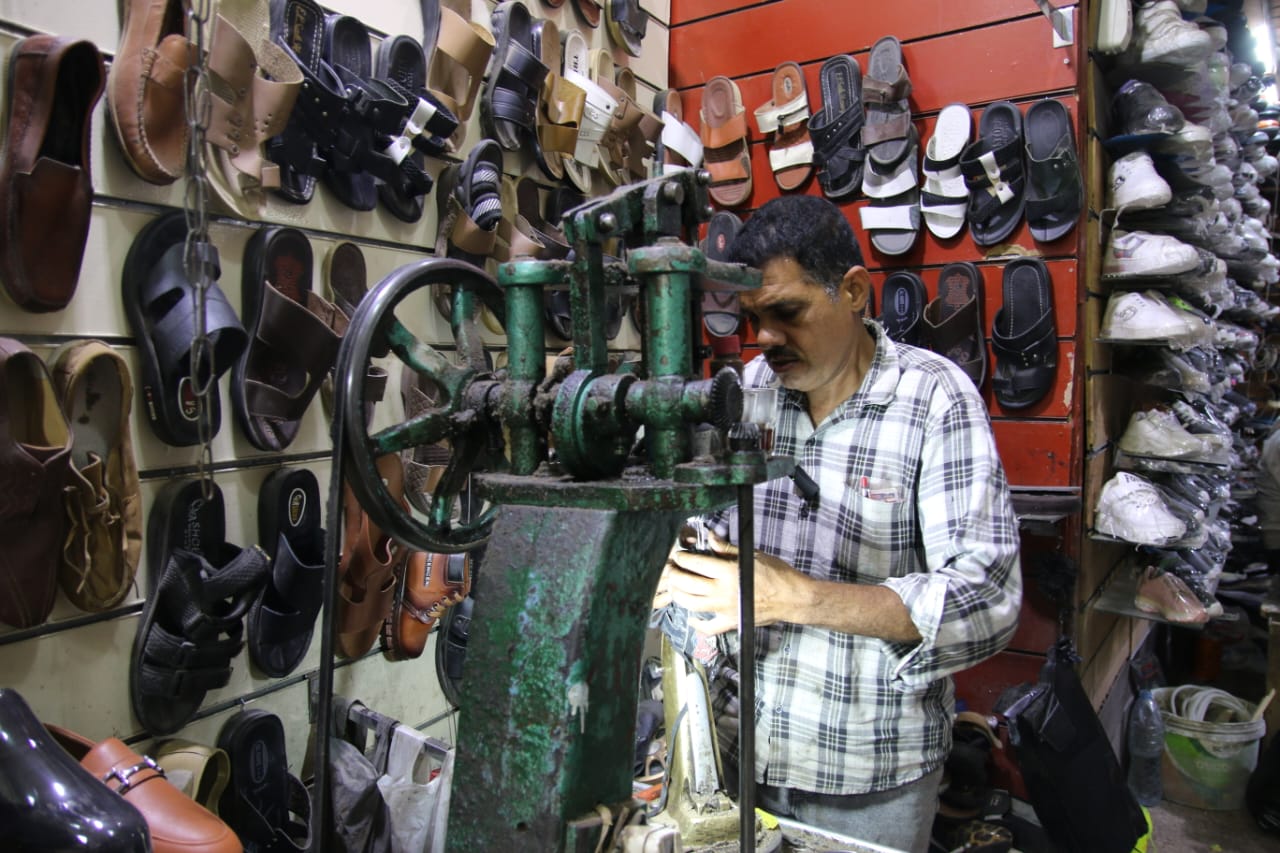
Rifaat Mounir has spent two decades at the workbench. “I began this journey in primary school,” he recalls. “I would attend my lessons in the morning, return home to change my clothes, and immediately head to the workshop. Even my holidays were spent here.”
Mounir’s initiation began with manual repair, a method he prizes for its precision. He eventually mastered the heavy machinery that proves superior for the structural integrity of bags.
Working alongside him in his well-known Market Street shop is his middle son, Bishoy, a mechanical engineering student. “We thank God,” Mounir says with a quiet sense of fulfillment. “This profession has provided for us and kept us sheltered. It taught me the virtues of discipline and patience, and through it, I have met the spectrum of humanity, both the good and the bad.”
The Weight of Rising Costs
Addressing the recent economic climate, Mounir notes that the price of raw materials has doubled. Despite this, he resists passing the full burden onto his patrons. He charges between 15 and 20 Egyptian pounds for a repair nearly 10 pounds less than neighboring shops in a bid to maintain loyalty. “Why should I overcharge?” he asks. “There is a blessing in the small amount that is not found in the large. Thank God, customers seek out clean, honest work. People travel to us from as far as Qena and Qus.”
Nadia Abdullah, waiting outside for her bag to be finished, confirms this devotion. A loyal customer for over six years despite living far from the city center, she frequents the shop for its rare combination of artisanal excellence and modest pricing.
New Hands in an Old Trade
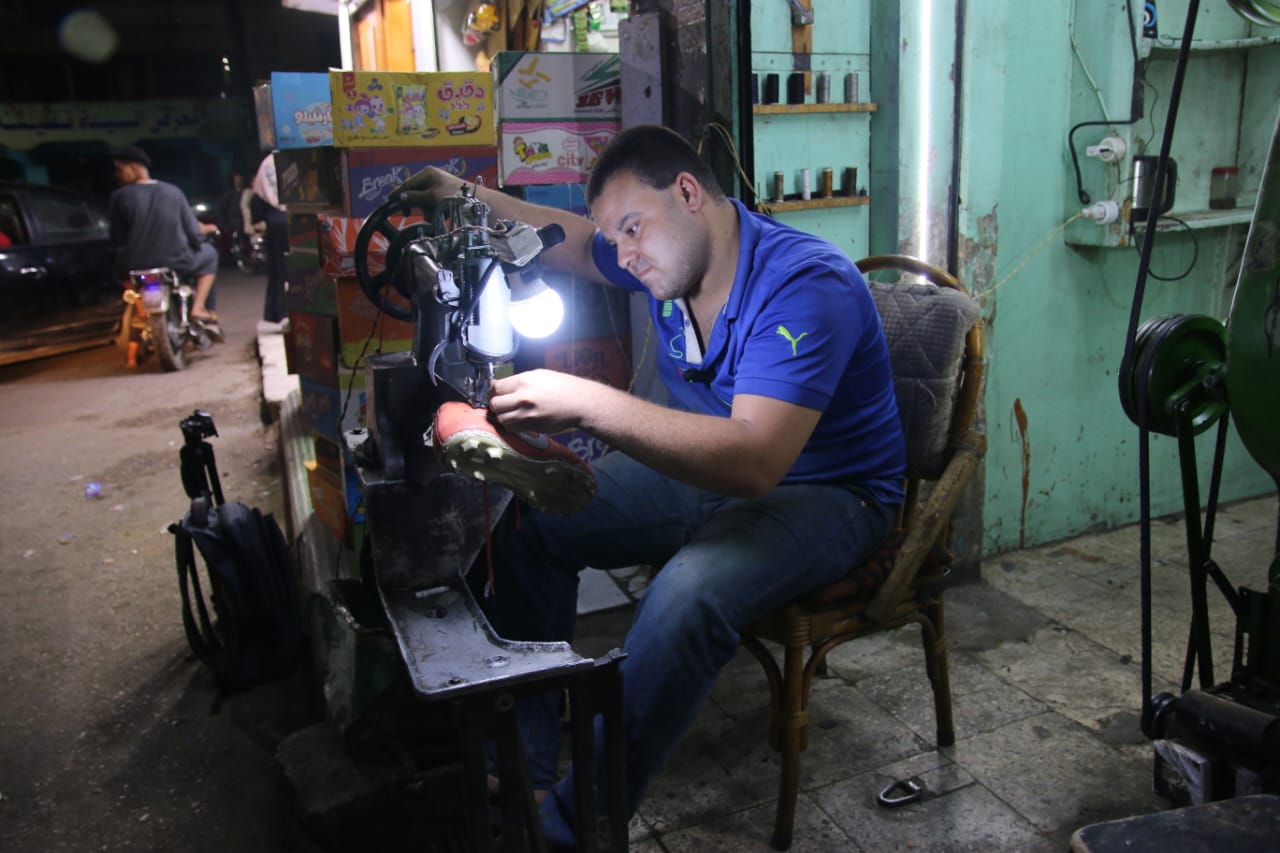
Antonios “Tony” Gerges, 27, found his calling a decade ago after completing his diploma. He learned the secrets of the trade from his neighbor, Am (Uncle) Ishaq, before opening his own space and cultivating a dedicated following.
“After finishing school, I found no opportunities,” Tony explains. “I didn’t hesitate for long because I have a natural affinity for fixing what is broken, especially leather and bags. I absorbed the craft quickly; it is now my sole livelihood, and my brother has joined me.” Despite moving between several shops due to expiring leases, Tony has successfully built a clientele that spans Luxor’s urban center and its outlying villages.
Tony’s shop houses two specialized machines: one with a delicate needle for intricate finery, and another with a heavy needle for the robust task of repairing soles. He employs a variety of threads, from silk to linen, allowing the material to be dictated by the piece itself and the specific desires of the customer.
