


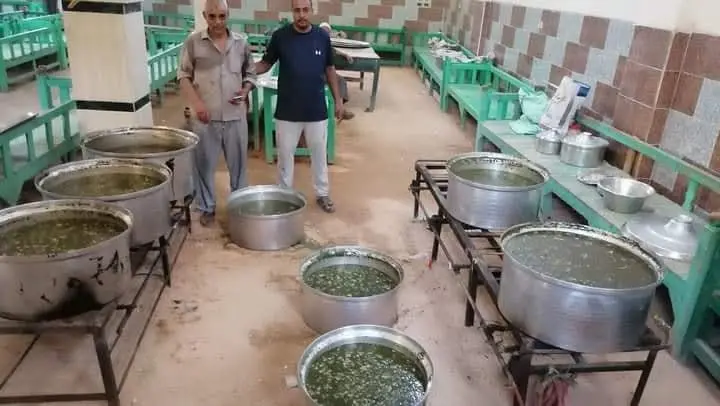
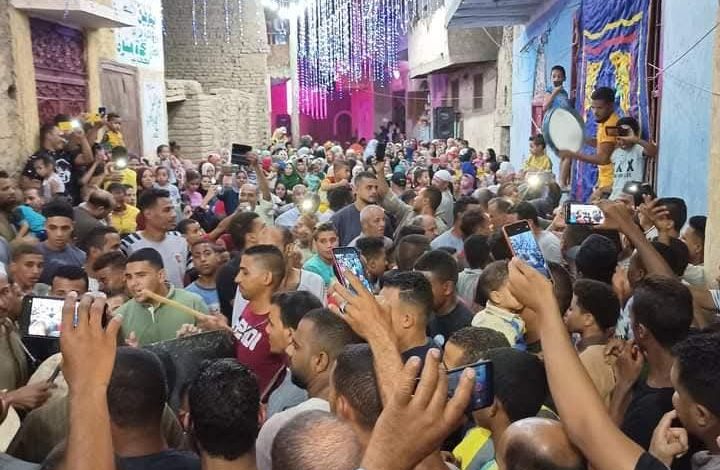
There, in southern Luxor, specifically in Naga al-Aqarba, the scene is renewed every year on the night of the Prophet’s birthday, where the locals gather in a unique celebration that differs from any other celebrations in Upper Egypt. Men, women, and children gather on both sides of the roads and in front of houses to eat a meal of “dry molokhia,” which has transformed from a simple food into an annual ritual with special symbolism. This simple, popular meal has become a symbol of joy, togetherness, and blessing, a tradition that has been passed down for more than a hundred years. The people of Al-Naj’a are keen to keep it alive as an integral part of their identity and collective memory.
A tradition passed down through the generations
Hajj Abdulrahim al-Jamal, one of the elders of al-Naj’a, says: “We inherited this tradition from our ancestors. Every year on the Prophet’s birthday, they would make molokhia nasha in large pots and distribute the meat with it to everyone. The idea is that every household gets its share and enjoys it with its family, but gathering in the square has a special flavor, bringing us together in love and blessing. As for why they chose dried molokhia specifically, we don’t know, but we found our elders doing this for more than 100 years.”
He adds that the locals are keen to continue this tradition no matter what the circumstances, considering that molokhia is not just food, but a symbol of social solidarity and communication between generations, as grandchildren learn the secret of the ritual from their grandparents, keeping the tradition alive in everyone’s hearts.
Setting the table
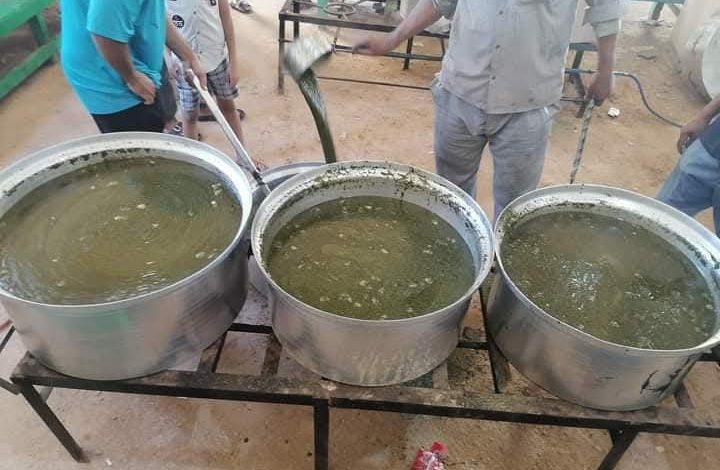
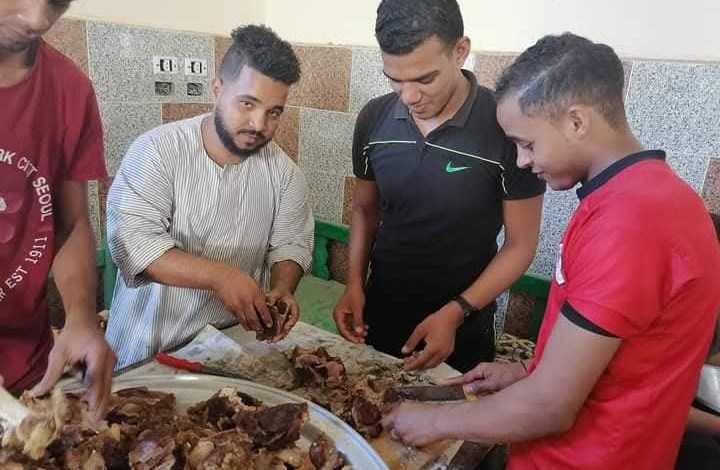
Chef Mahmoud Metwally, the banquet chef, says that preparations begin early in the morning as the final night approaches. The young men of the village slaughter one or more calves, then set about cleaning and preparing the dried molokhia, washing the rice, and preparing the cumin. The huge pots, which can number up to ten or twelve, are placed in the diwan or the village’s event hall, where the aroma of molokhia mixed with meat attracts locals and guests alike.
Sayed Hassani, one of the participants in the cooking, emphasizes: “Molokhia here is not just a dish, it is a celebration. We prepare it in large quantities so that there is enough for everyone, and we make sure that it tastes the same as we have always known it to taste. We consider ourselves servants to our families and guests on this night. Why did they choose molokhia in particular? We don’t know, but we found our ancestors making it a long time ago.”
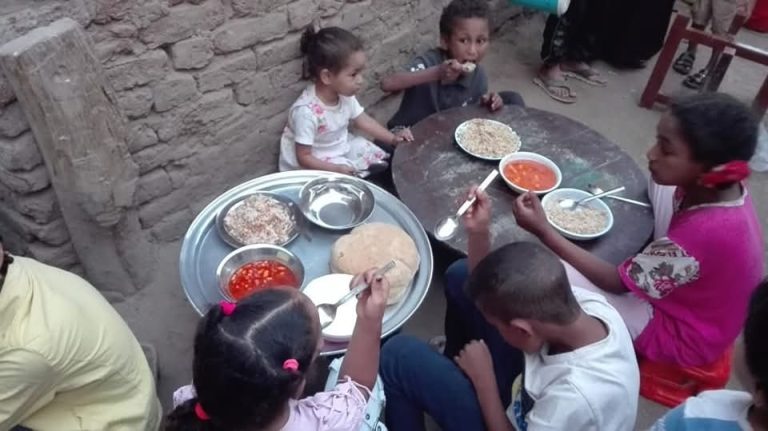
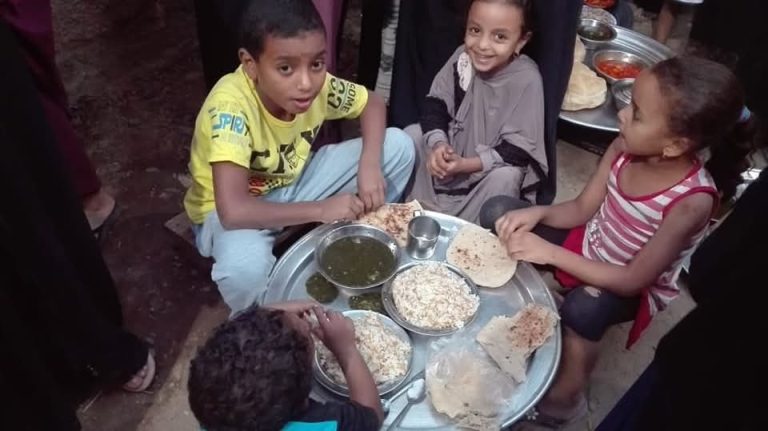
As the sun sets, the most beautiful scene begins: men, women, and children come out of their homes carrying plates and cups, heading to the square where the giant pots are. They sit on the ground in a spontaneous, joyful gathering, waiting to be served molokhia and meat.
Joy and generosity
Sahar Farid Metwally, one of the village women, says: “The children look forward to it all year long. Tonight is a special occasion. We take the molokhia home and eat it together, but first we have to share in the square and sit among the people.”
The scene is not limited to the children of the village, but also includes guests from neighboring villages. The locals consider the “molokhia feast” to be open to all visitors, reflecting the generosity of the people of Upper Egypt and their tradition of honoring guests.
After the meal… praise and remembrance
After the meals have been distributed and the locals have returned to their homes, circles of religious chanting and singing begin in the square, with the singers reciting poems in praise of the Prophet. Young and old gather in circles, their voices rising in supplication, while the ululations of women can be heard in the distance.
Young man Faraj Muhammad Ahmad says, “We consider this night to be more than just eating and drinking; it is a spiritual night. After we distribute the molokhia and return the food to our homes, we sit and listen to the madahin and participate in the remembrance. The atmosphere is full of light and blessings.”
A social and spiritual ritual
The molokhia feast in Naga al-Aqarba is a unique example of the connection between food and religious and social rituals in Upper Egypt. Molokhia is no longer just a dish.
It has become a symbol of a collective celebration that blends the spiritual and the social. This tradition reflects the cohesion of the local community and its ability to preserve its customs amid the changes of time.
A celebration that defies time
Despite the passing of years and changing lifestyles, the people of Naga al-Aqarba still adhere to this custom. Every year, on the anniversary of the Prophet’s birthday, the scene is renewed as if time had stopped at the moment of the first feast held by their ancestors.
Hajj Jaber Ibrahim Muhammad says, “Molokhia reminds us of our origins and our deceased relatives. We are determined to teach our children this tradition so that it will continue after us. It’s not just a dish… it’s the blessing of the Prophet.”
An impressive image
At the end of the night, as the children disperse into the streets carrying their pots full of molokhia, the square remains a witness to an extraordinary scene, where simplicity intertwines with joy, and generosity with spirituality, as a small village on the banks of Luxor writes a distinctive page in the memory of the Prophet’s birthday.
While all of Egypt’s villages witness various celebrations, the “molokhia feast” in Naga al-Aqarba remains a landmark, making molokhia more than just food. It is a sacred folk ritual that unites hearts in love for the Prophet.