


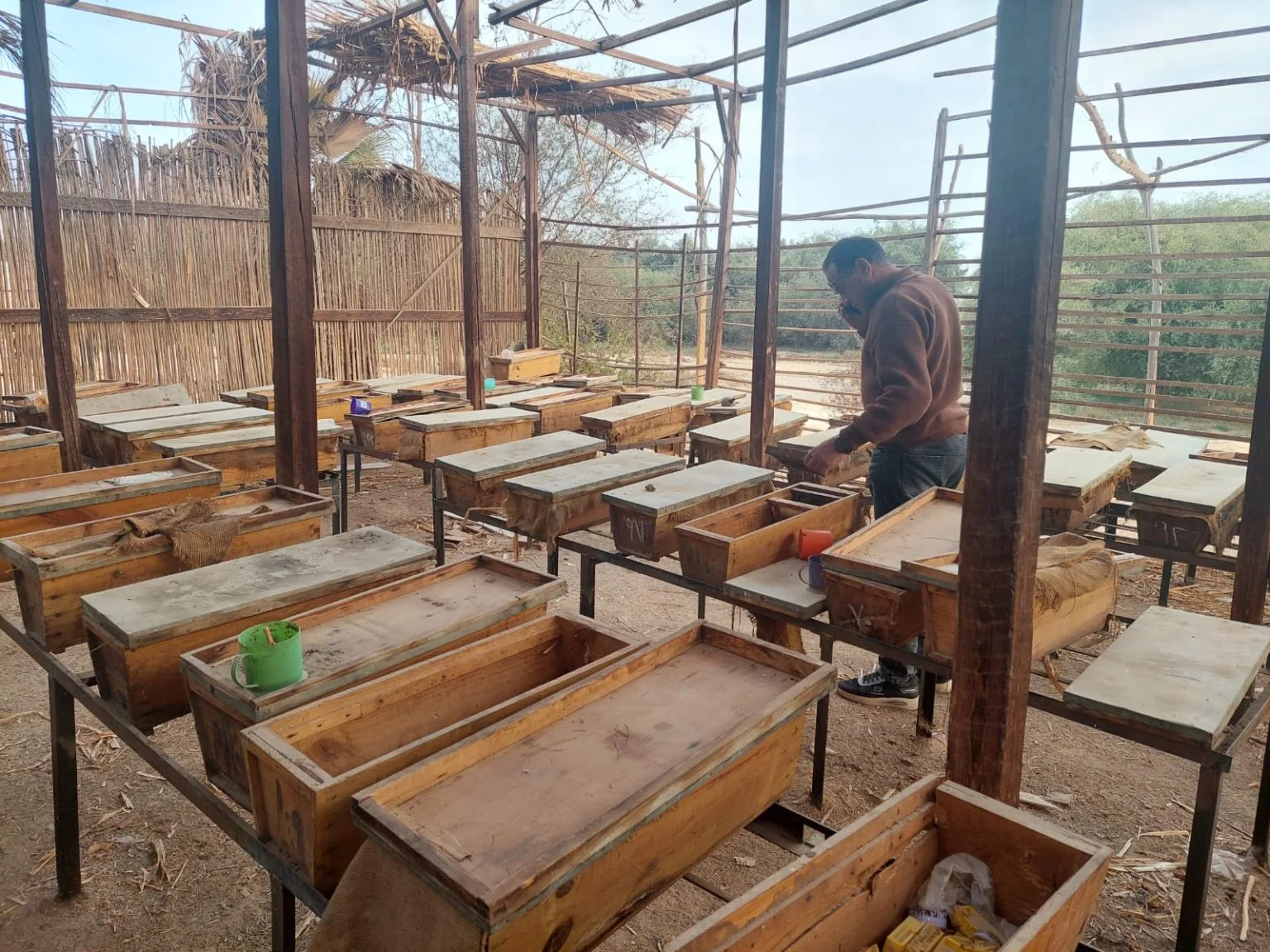
Deep in Egypt’s Eastern Desert, a rare strain of bees mentioned on the walls of Queen Hatshepsut’s temple is drawing global scientific attention. Learn why researchers from Germany and beyond are studying the “Pharaonic bee” and its remarkable resilience.
In the heart of Egypt’s Eastern Desert, within the boundaries of the Wadi Assiuti Protectorate in Assiut Governorate, lives one of the rarest bee strains in the world: the pure Pharaonic bee. Its roots trace back to ancient Egyptian civilisation. It is depicted on the walls of the Deir el-Bahari temple of Queen Hatshepsut. And today, it has become the focus of international scientific interest due to its unique genetic and environmental characteristics.
A Strain Dating to the Dawn of Civilisation
Dr Ibrahim Mahmoud Ahmed Nafadi, professor in the Department of Botany and Microbiology at Assiut University’s Faculty of Science and director of the Wadi Assiuti Protectorate, explains the significance of these insects.
“The pure Pharaonic bee, known as the Egyptian native bee, Apis mellifera lamarckii,is among the oldest bee strains known to humans,” he tells Bab Masr. “In ancient times, it lived in mountains and trees before the ancient Egyptians succeeded in domesticating it. The Pharaohs designed cylindrical mud hives made from clay and straw, an innovation that was the first of its kind in the history of beekeeping. It represented a civilizational leap in how humans interacted with these tiny creatures.”
Today, this rare strain exists nowhere else in Egypt except within the boundaries of the protectorate,a fact that has placed it at the centre of attention for researchers and scientific institutions worldwide. Nafadi notes that the protectorate regularly receives researchers from various countries, led by Germany, who come to study the physiological and genetic characteristics of this strain amid global climate change.
International Documentarians Capture an Assiut Treasure
According to Nafadi, global interest in this strain has translated into documentary work. Because of its exceptional characteristics, the Pharaonic bee has attracted researchers from around the world. A specialised team from German television produced a documentary film titled “The Great Bees on the Great Nile,” which explored the journey of the Pharaonic bee within the Wadi Assiuti Protectorate. The film aired on German television and remains available on YouTube.
Among the most important characteristics of the Pharaonic bee, the protectorate director explains, is its remarkable ability to adapt to harsh climatic conditions. It can withstand extremely high temperatures as well as very low ones. It is also capable of collecting nectar from distances of up to twelve kilometers.
Nafadi draws a contrast between this ancient strain and the imported varieties now common in Egypt, such as the Italian Carniolan bee, which produces abundantly but lacks the same level of environmental adaptability.
Global Scientific and Genetic Interest
The interest of foreign researchers is not limited to studying the strain itself, Nafadi adds. It extends to attempting to harness its distinctive genes by cross-breeding it with high-producing European strains. The goal is to develop new hybrids that combine abundant production with the resilience to withstand climate change.
The Egyptian state has taken a keen interest in preserving this rare strain. Nafadi notes that directives have been issued from the presidency to the governor of Assiut and the ministers of environment and agriculture, emphasising the need to make every possible effort to protect the ancient Pharaonic bee and prevent its extinction.
A project has been implemented to plant approximately one thousand sidr trees (also known as nabq) within the protectorate. These trees serve as the primary natural foraging ground for the Pharaonic bee, ensuring a sustainable food source for the rare strain.
From Mud Hives to Wooden Frames
The protectorate director explains that in ancient times, the Pharaonic bee lived in cylindrical mud hives approximately one meter long and ten to fifteen centimetres wide. The ancient Egyptians would transport these hives by boat on the Nile, searching for areas rich in nectar.
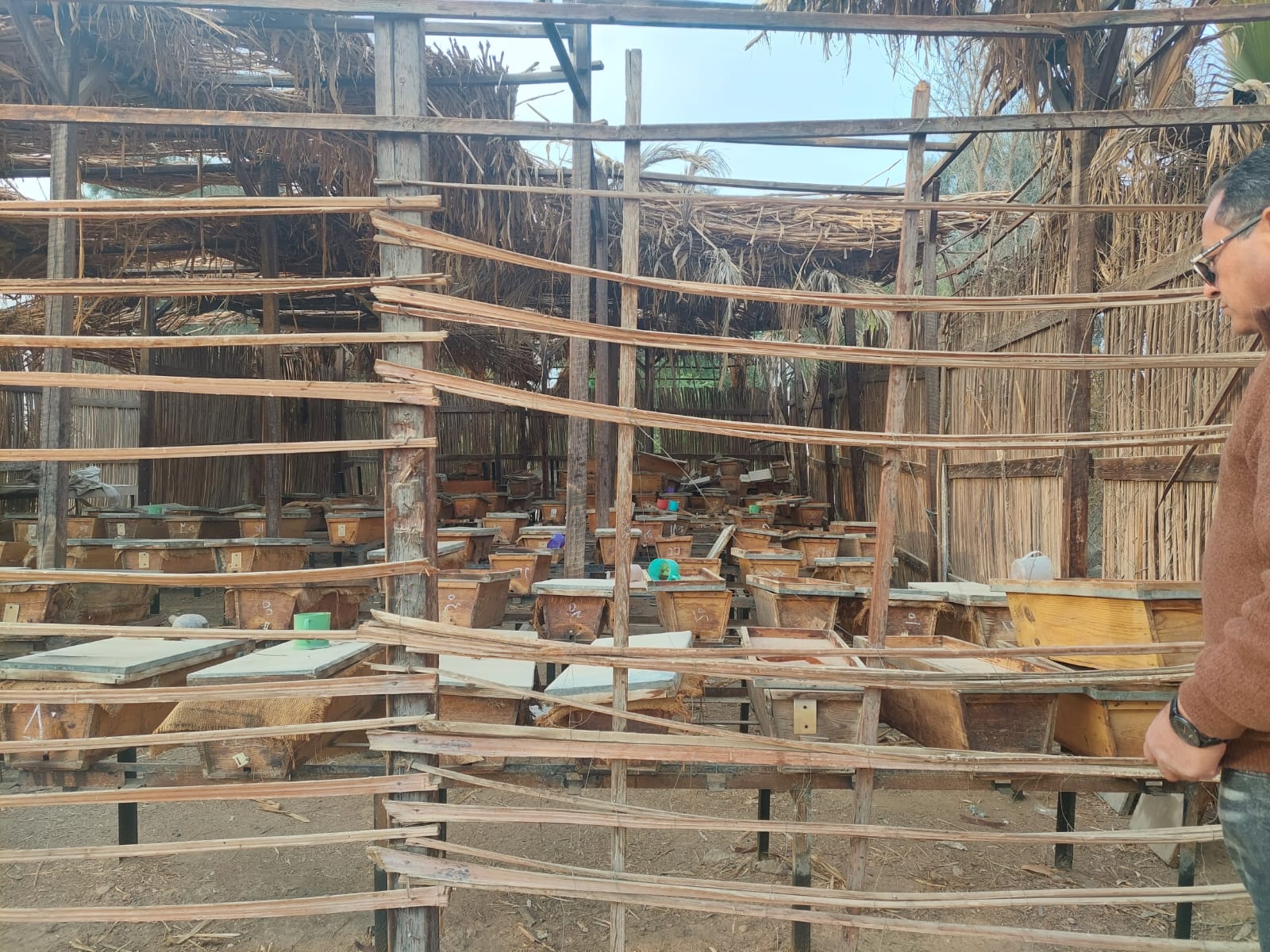
Today, those traditional hives have been replaced by modern wooden frames and boxes that meet health and safety standards, while still allowing the bees to build comb in their natural way. The Pharaonic bee is characterised by its small size and dark color, and it lives in small hives. Other strains, by contrast, live in large wooden boxes—such as Indian-style boxes—into which empty wooden frames are placed for the bees to fill with natural wax.
Natural Wax and Mountain Honey
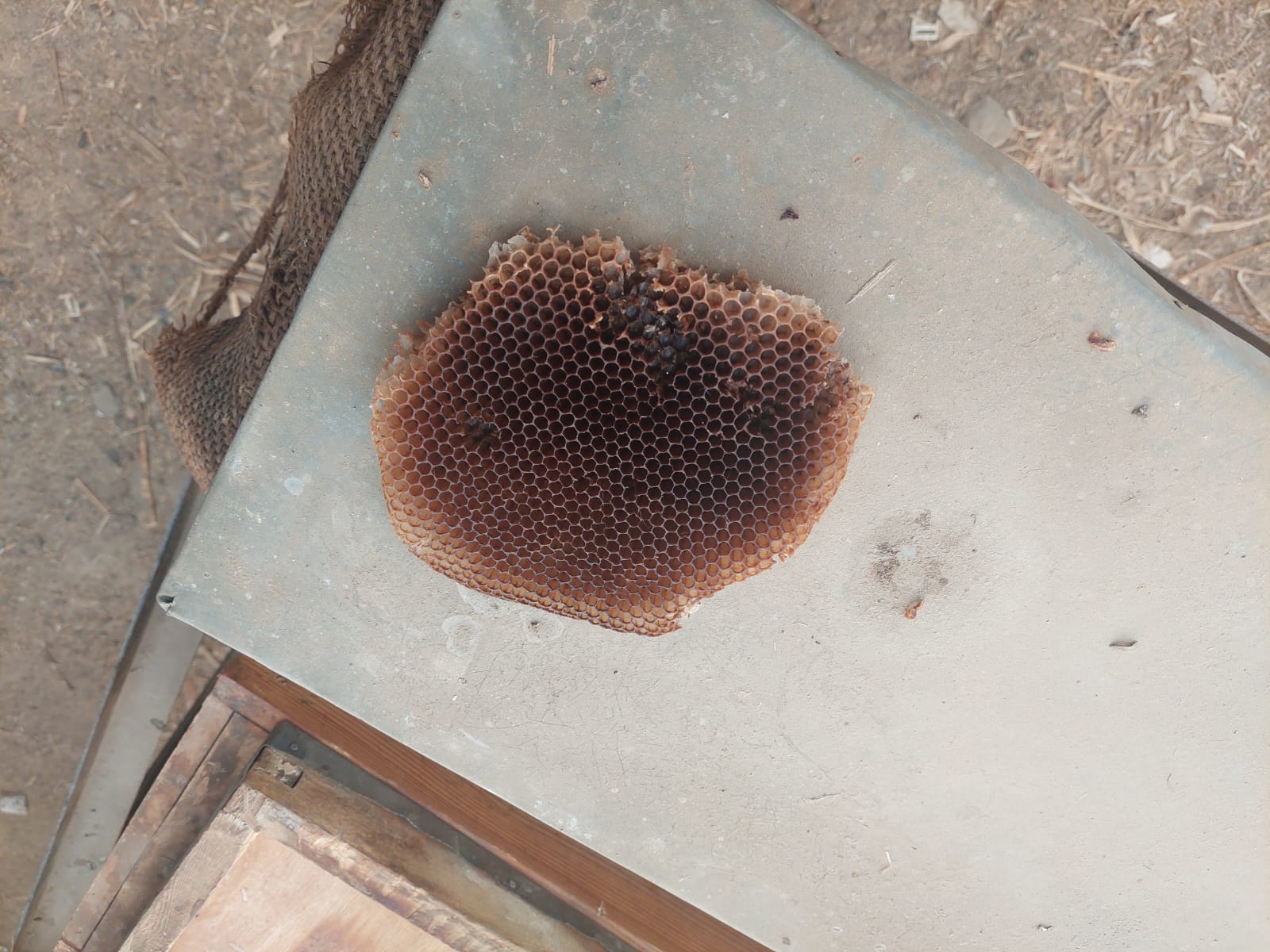
Nafadi emphasises that the Pharaonic bee produces pure, natural wax without any human intervention. This sets it apart from other strains, which are often given pre-made wax foundations and focus solely on honey production.
The honey and wax produced by the Pharaonic bee are used therapeutically for treating sinus issues, respiratory conditions, lung problems, stomach ailments, and colon disorders. The benefits are considerable. The Pharaonic bee exerts significant effort to produce its natural wax. An empty frame is placed in the wooden box, and the bees fill it with wax, honey, and cells, nourishing themselves from the sidr trees.
Six Products, Multiple Benefits
Nafadi notes that the Pharaonic bee produces six primary products: honey, wax, pollen, royal jelly, bee venom, and propolis. Bee venom, he points out, contains sixty-six medically active compounds. It is used to strengthen immunity, treat inflammation, relieve joint and spinal pain, address headaches, and manage thyroid enlargement.
The use of Pharaonic bee products in treatment is not a modern development, he continues. It dates back to ancient Egyptian civilisation. The ancient Egyptians documented beekeeping and honey production on the walls of Queen Hatshepsut’s temple at Deir el-Bahari. Honey discovered in the tomb of Tutankhamun, more than 3,500 years old, was still edible, a fact that astonished researchers worldwide and underscores the greatness of this “golden liquid,” which in ancient times was reserved for the elite.
Royal jelly, he adds, is among the most concentrated bee products in terms of proteins, fats, and enzymes. It plays an effective role in cell regeneration, improving nervous system function, treating arteriosclerosis, enhancing fertility in women, and delaying the effects of ageing. These properties make it a subject of intense interest among researchers globally.
Diseases Threaten Pharaonic Bee Colonies in Assiut
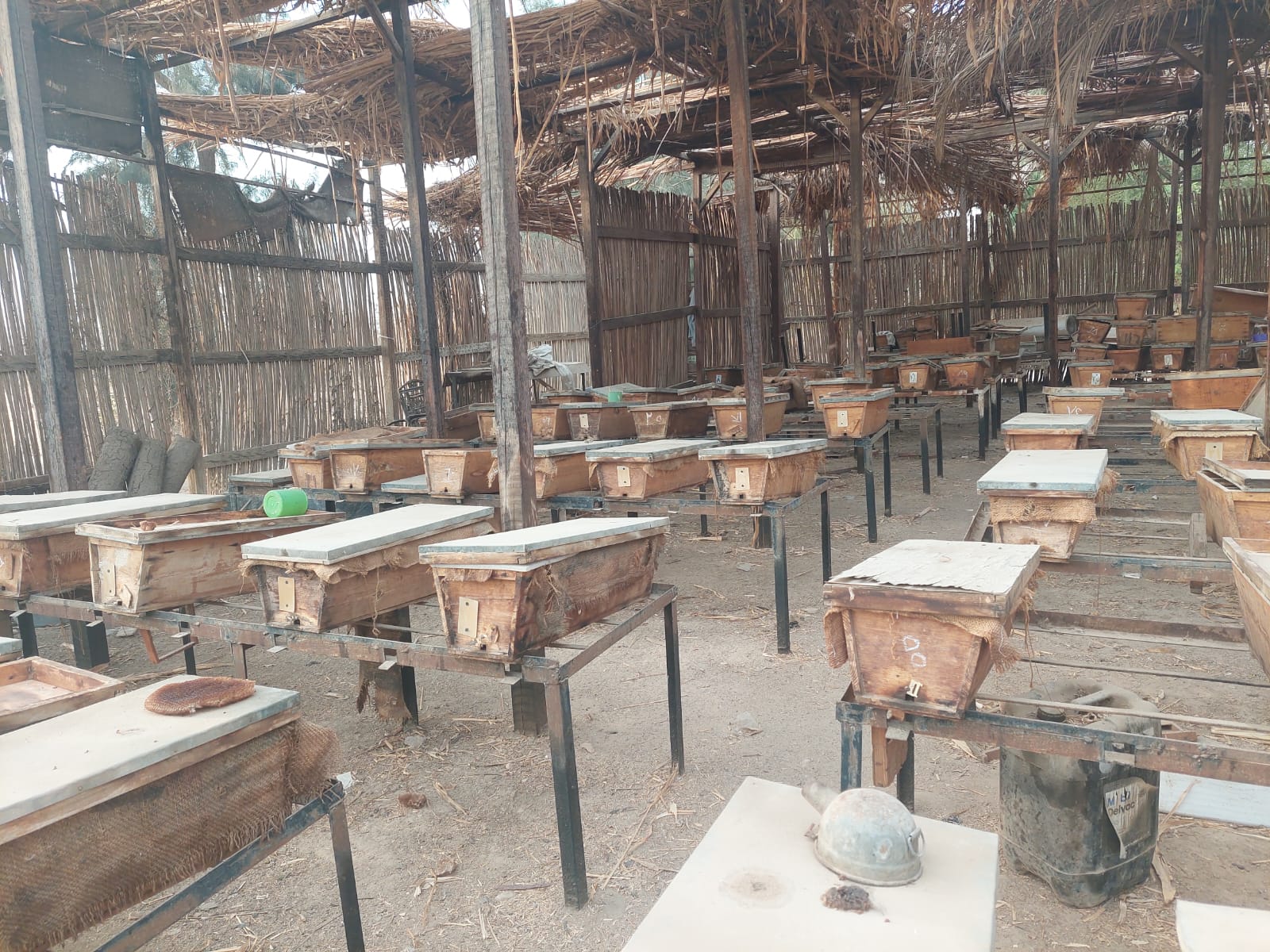
Ibrahim Nafadi explains that the apiary began its activity with twenty bee colonies. It gradually expanded to reach 160 colonies, but disease outbreaks caused numbers to decline to around 100 colonies, and later to seventy-five.
The apiary is currently under the supervision of a project affiliated with the National Research Centre in Dokki, represented by its research division, which oversees eighty colonies. Despite these efforts, honey production remains limited due to the colonies’ infection with a type of fungal disease known as “foulbrood.” Research and treatment efforts are ongoing to contain the disease and increase Pharaonic bee colony numbers in the coming period.
Nafadi added that production at the apiary is expected to improve gradually, with honey eventually being offered for sale within the Wadi Assiuti Protectorate.
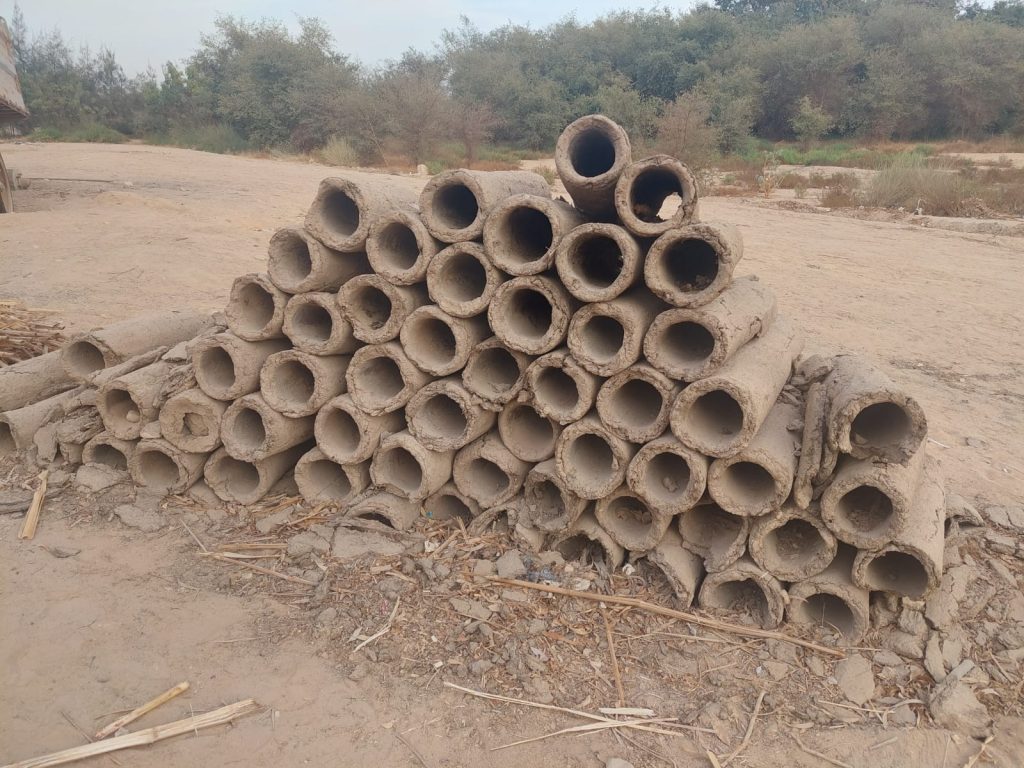
Cylindrical clay hives like those used by ancient Egyptians to domesticate bees. Photo: Jasmine Mehna
Decline of Native Egyptian Bee Populations
According to statistics from agricultural research centers across Egypt tracking native Egyptian bee colony numbers, there has been a significant and continuous decline.
In 1981-1982, the number of native Egyptian bee colonies stood at 314,598. By 1986-1987, that number had fallen to 226,722. The decline continued, reaching 182,262 colonies in 1990-1991, and 156,855 in 1991-1992.
Despite this national trend, Assiut Governorate still ranks first among Egypt’s governorates in terms of native Egyptian bee colony numbers. However, the decline within Assiut itself has been steep. Statistics tracking native Egyptian bee colonies in the governorate from 1986 through 2002 tell a story of a treasured genetic resource under pressure—and of the urgent need to protect what remains.
