


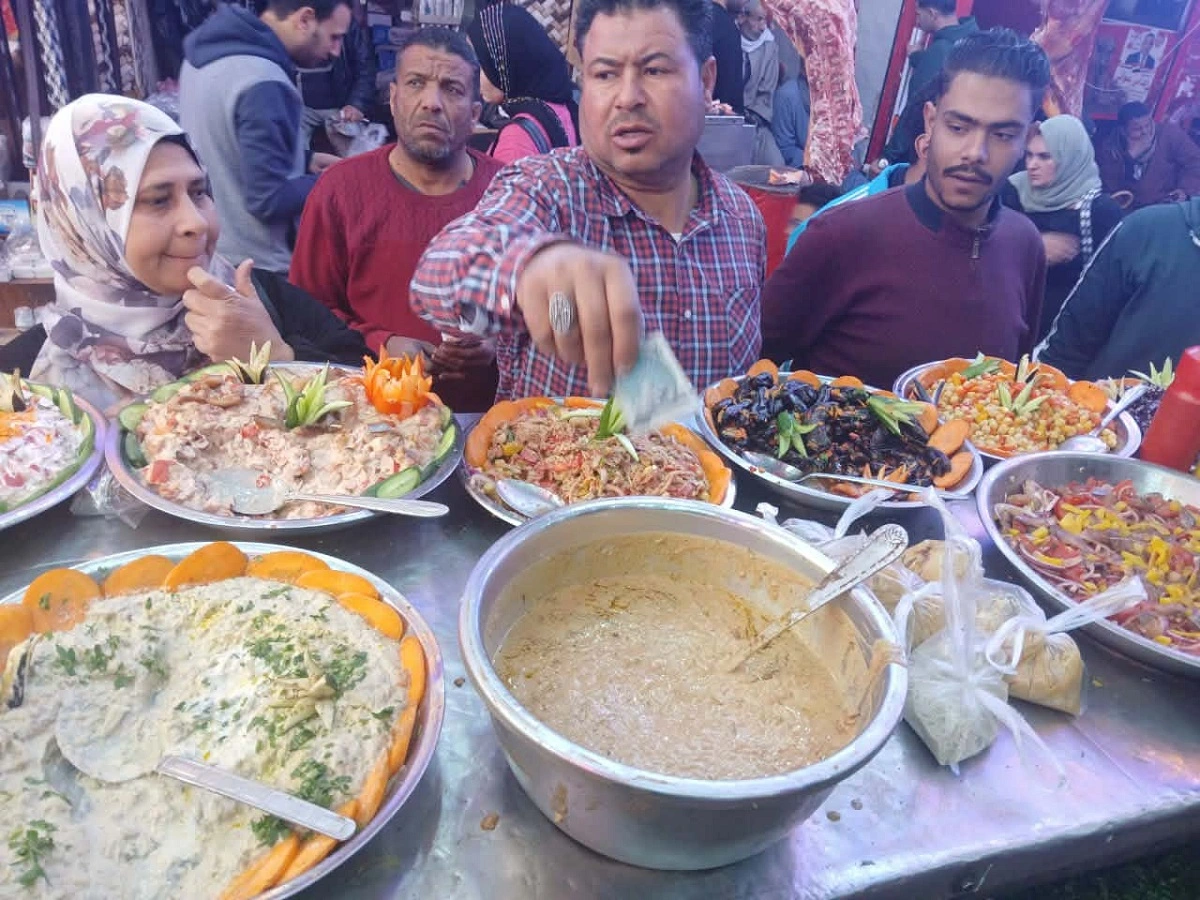
In a narrow alley off Damanhour’s Clock Square, a family has been perfecting the same dish for four generations. Hebash, a tangy, spicy blend of tomatoes, tahini, and secret spices, has become a Ramadan staple and a source of local pride.
By Mahmoud Dueir
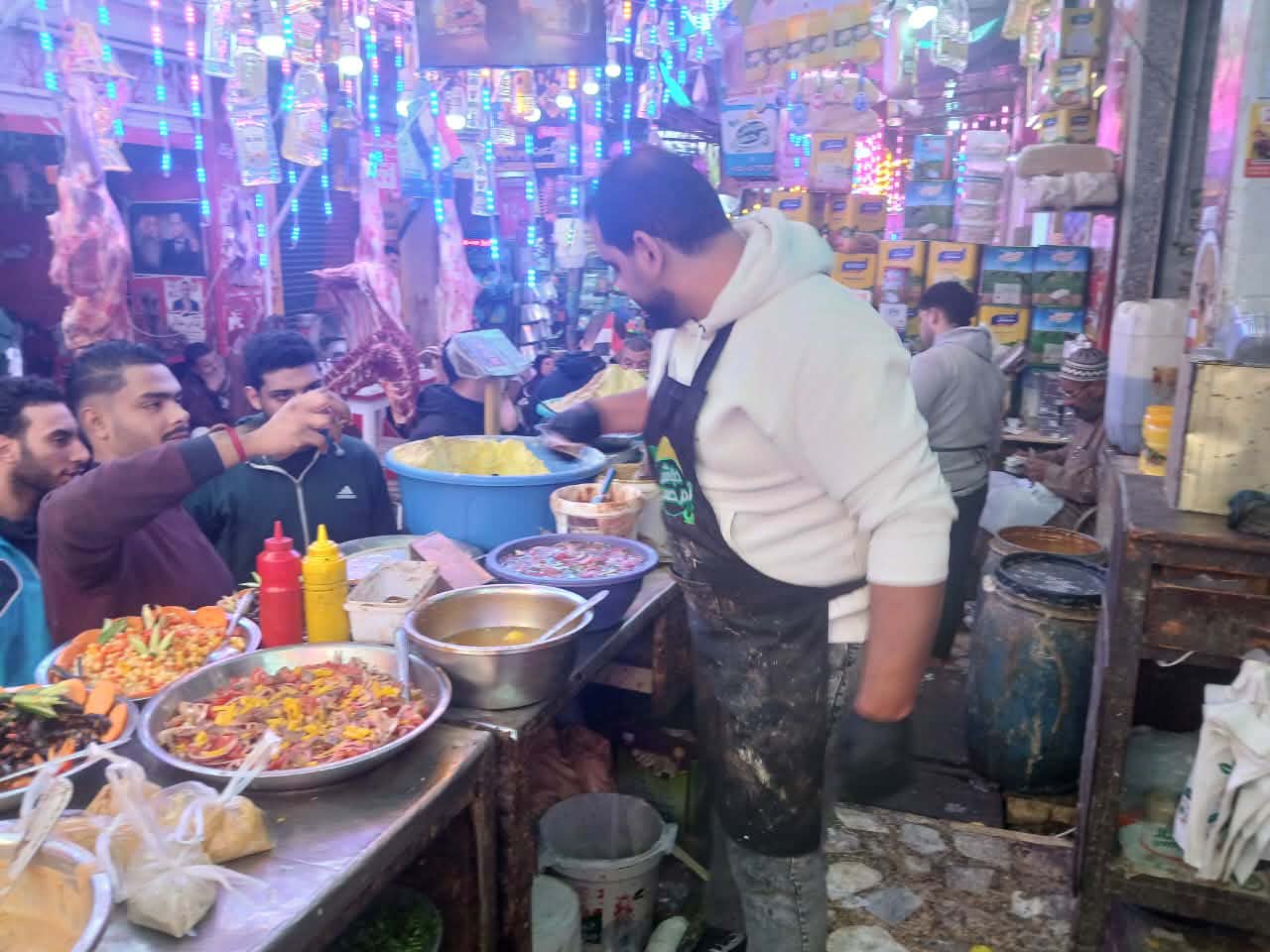
Just steps from Damanhour’s Clock Square, the beating heart of this Nile Delta city, your feet will lead you to a long, narrow alley. Locals call it “Feseekh Street”, named for the salted fermented fish sold in its shops, though you won’t find that name on any map. Cars don’t venture in here. This passage is reserved for pedestrians and shoppers, for people on foot, moving slowly, taking in the scene.
During Ramadan, the alley transforms. The scent of the holy month hangs in the air. Lights twinkle overhead. And from every direction, the voice of the legendary munshid Sheikh Al-Naqshabandi spills from shop speakers, his religious chants mingling with the sounds of commerce and conversation.
On either side of the alley, long-established shops sell feseekh and umm al-khulul,a pickled vegetable mix that is another local speciality. But if you follow the crowds, if you push through the lines of waiting customers, you’ll find yourself facing a different kind of institution: the shops serving Damanhour’s quintessential street food, the dish that defines this city’s Ramadan tables.
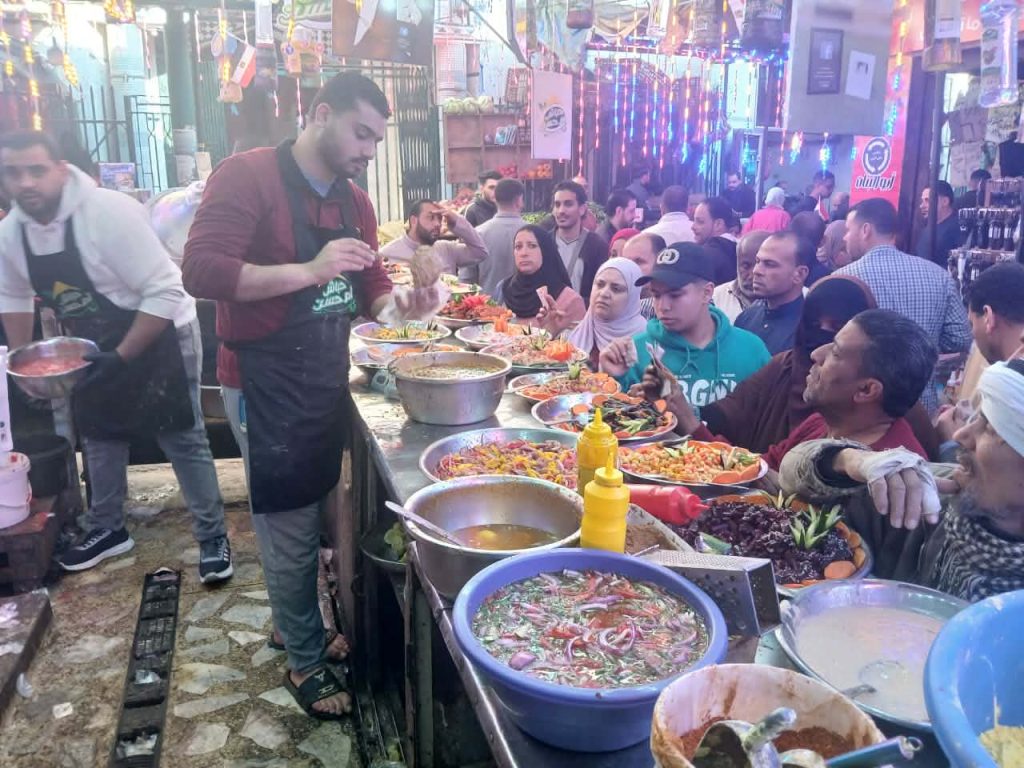
Its name is hebash. And the place to find it is a shop called “Hagga Um Hassan”, a name that has become a registered trademark in all but law.
Hebash: More Than Food, an Identity
Street food is never just about filling the stomach. It’s a component of identity, a collective experience that binds communities together. When the people of a city gather around a shared culinary tradition, they gain something intangible: a sense of familiarity with one another, a quiet understanding, a marker of distinction from other places.
In Damanhour and the surrounding towns of Beheira Governorate, hebash marks Ramadan. It appears on both iftar and suhur tables across the city, enjoyed by the vast majority of households. For some, it’s a condiment,a tangy, spicy accompaniment alongside vegetable salads or tahini. But for those with tighter budgets, hebash often takes center stage, a main dish in its own right,affordable, nourishing, and satisfying.
This accessibility has fueled its spread. What might have remained a niche local speciality has become a fixture in homes and in the famous restaurants that line the alley, especially those specialising in Egypt’s other great street foods: foul and taameya.
A Family Legacy Spanning 100 Years
Hag Ahmed El-Gamal traces his family’s connection to hebash back more than a century. “My late grandfather created this dish over a hundred years ago,” he says. “He was the first to make it.”
In its earliest form, hebash was simple: tahini mixed with vinegar and water. Then, tomatoes were added. Later came garlic and fresh herbs. The recipe passed from grandfather to father, from father to son, and now to grandsons.
Mohamed El-Gamal, the family’s fourth-generation hebash maker and the chef behind the famous “Hagga Um Hassan” shop, punctuates his conversation with a signature phrase: “The most important thing? Send blessings upon the Prophet. I am the fourth generation.”
The recipe, he explains, began with his great-grandfather, who would hollow out tomatoes and stuff them with a secret blend of spices and tahini. The core formula,a powdered spice mix the family calls “hebash powder,” remains a closely guarded secret. Each generation has added its own touch: white tahini, a hint of nutmeg.
What Goes Into Hebash
The essential ingredients are garlic, vinegar, lemon, cumin, spices, and chilli. Fresh parsley,or a mix of parsley and dill, provides the green element. Cilantro, celery, and arugula are strictly forbidden. A splash of hot oil, made from local chilli peppers, finishes the dish.
Mohamed recently started importing a special blend of Indian spices for $200 to refine the product and maintain its distinctive character. His customers come from every social stratum in Damanhour—and from beyond. People travel from cities across Egypt to buy hebash from the original shop on Feseekh Street. It has become, he insists, one of the markers of his city’s identity, a source of its fame.
“Hebash is the fourth pyramid of Egyptian street food,” Mohamed declares, “alongside foul, koshari, and mulukhiya. It deserves all the attention it gets.”
From Condiment to Main Course
Where does hebash belong on the table? For Mohamed, it straddles categories. It’s a condiment, yes, but for some families it becomes a meal in itself,nutritious, filling, and affordable. Demand spikes during Ramadan, but hebash is eaten year-round.
Hagga Um Hassan, Mohamed’s mother and the woman whose name adorns the shop, describes hebash as “one of the dishes closest to the people of Damanhour.” The original recipe, she confirms, came from the family patriarch, who taught it to his grandchildren and children. From there, it spread until it became the most famous dish on the local table.
In Damanhour, a proper meal, what locals call a harsha, includes hebash alongside foul, taameya, fried eggplant, and pickled vegetables. The dish pairs with everything: meat, fish, whatever’s being served. This versatility is what makes it a main course in its own right.
Customers from Every Class, Every City
Mohamed’s customer base cuts across class lines. The price helps: a kilo of hebash costs 120 Egyptian pounds, with smaller containers starting at just 10 pounds. This accessibility means just about everyone can afford it.
He’s resisted opening branches outside Damanhour. His customers, he explains, prefer to buy from the original shop on Feseekh Street. The experience matters,the alley, the crowd, the history.
As for the famous restaurants in Damanhour that serve hebash alongside their other offerings, they all source it from Hagga Um Hassan. Some prefer to buy the spice mix raw, finishing the preparation in their own kitchens. But the base, the secret, the family recipe,that comes from one place.
