

Close Menu

    Subscribe to Updates

    Get the latest creative news from FooBar about art, design and business.

    What's Hot

    The Woven Skeleton: The Palm Frond Artisans of Kafr Al-Battikh Fend Off a Plastic Tide

    14/05/2026

    The Tragedy of Azbakia and Imam Al-Shafi’i: How Architecture Rewrites Our History

    14/05/2026

    The Sanctuary of Saint Bishoy: A Living Ledger of Egyptian Monasticism

    13/05/2026
    Facebook X (Twitter) Instagram
    Facebook X (Twitter) Instagram
    BabMasrBabMasr
    Subscribe
    • Home
    • Upper Egypt
    • Lower Egypt
    • Greater Cairo
    • Analysis
    • The Guide
    • Videos
    • About
      • Contact us
      • Editorial Policies
      • Anti-Harassment Policy
      • Advertising Policies
    • AR
    BabMasrBabMasr
    Home » King Farouk’s farm in Tafnis: an agricultural legacy transformed into a productive treasure in Upper Egypt
    Upper Egypt

    King Farouk’s farm in Tafnis: an agricultural legacy transformed into a productive treasure in Upper Egypt

    Abo Elhasan Abd ElsattarBy Abo Elhasan Abd Elsattar24/06/2025Updated:06/03/2026No Comments4 Mins Read0 Views
    Facebook Twitter Pinterest LinkedIn Tumblr Email
    King Farouks farm
    King Farouks farm
    Share
    Facebook Twitter LinkedIn Pinterest WhatsApp Email

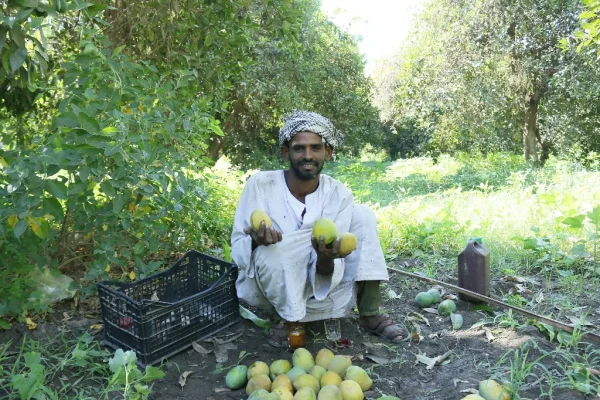
    King Farouk’s Farm in the village of Tafnis al-Mata’ana, south of the city of Esna in the governorate of Luxor, is one of the oldest and most famous farms in Upper Egypt. It covers an area of 65 acres and grows a variety of crops, including citrus fruits, dates, and mangoes. Mangoes are one of the farm’s most famous crops, grown on an area of approximately 25 acres and producing multiple high-quality varieties.

    The farm was established in 1932 during the reign of King Farouk. At that time, it was owned by the royal family, until it became the property of the Ministry of Agriculture after the July 1952 revolution, becoming part of the Agricultural Research Center. Since then, the farm has been managed according to precise scientific mechanisms. Its produce is sold annually at public auctions held for traders wishing to buy the crop in bulk.

    High quality despite climate change

    Engineer Al-Hussein Youssef, an engineer at the Al-Mataana orchard, says that the farm comprises about 45 acres of citrus trees and 5 acres planted with palm trees. In addition, there are 25 acres planted with mangoes. The mango harvest usually begins on June 20 each year, when early varieties such as Indian, Fonse and Ormans are picked. Other varieties follow in succession.

    Youssef emphasizes that the mangoes produced by the farm are distinguished by their high quality and distinctive sweet taste. This is due to irrigation with fresh Nile water, which reduces the salinity of the soil. This is in comparison to desert farms that rely on groundwater with high salinity.

    The farm carries out regular pest control and organized fertilization programs. Despite these efforts, climate change in recent years has had a significant impact on production. Sudden changes in temperature during the growing season have led to a drop in production of up to a quarter. This has brought the total quantity to between 120 and 150 tons per year, depending on weather conditions.
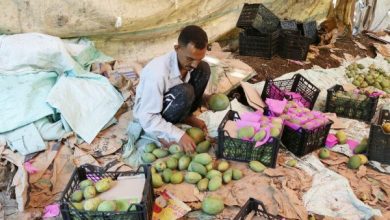
    Mango harvest at King Farouk's farm
    Mango harvest at King Farouk’s farm
    Historical reputation and position in local and global markets

    For his part, engineer Ezzat Mohamed Abu Al-Majd, the farm’s deputy manager, pointed out that there are mango trees on the farm that are over 90 years old and still bear fruit today. These are old local varieties that were planted when the farm was established. Modern foreign varieties were also introduced and cultivated in 2012 to increase diversity and improve productivity.

    He pointed out that a team of engineers specializing in pest control and quality contributes to maintaining crop quality and increasing its market value, with this year’s mango crop reaching a value of around 5.6 million pounds at auction.
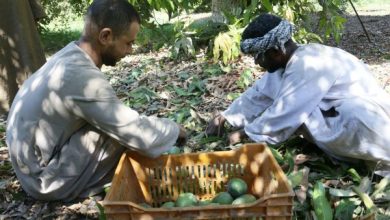
    Mango harvest at King Farouk's farm
    Mango harvest at King Farouk’s farm

    The owner of this year’s crop confirms that King Farouk Farm mangoes are among the finest mangoes on the market, due to their distinctive taste and the long life of the trees, which gives them an unmatched flavor. The best varieties are exported abroad, benefiting from their well-known historical reputation and production quality.

    He adds: “The mangoes we buy from Tafnis Farm are in high demand in the local market, and we find them popular with major traders in Cairo and Alexandria because they are large and have a natural sweet taste that is not found in mangoes from desert areas. We export some shipments to Gulf countries, especially Saudi Arabia and the United Arab Emirates, and the shipping documents state that they come from King Farouk’s farm, which in itself increases their value.”

    Read also

    “Walking Together”: When Children and Grandmothers Dance Together in Luxor

    The Luxor Antiquities Controversy: Who Has the Final Say in Distinguishing Between Authentic and Fake?

    Amphorae and Archaeological Evidence: New Details on the Excavation of Antiquities Beneath the Children’s Culture Palace in Luxor

    Share. Facebook Twitter Pinterest LinkedIn Tumblr Email
    Previous ArticleArt exhibition documents the first Egyptian Scout postage stamp at the National Museum of Civilization
    Next Article The Sultan Hussein Building in Alexandria: From Cotton Merchant’s Headquarters to Art Exhibition Center and Museum
    Abo Elhasan Abd Elsattar
    Abo Elhasan Abd Elsattar

    Related Posts

    The Sanctuary of Saint Bishoy: A Living Ledger of Egyptian Monasticism

    13/05/2026

    Shadows Over the Nile: Concrete Construction Spark Criticism Beneath the Temple of Kalabsha

    13/05/2026

    The Last Cobblers of Luxor: A Craft Contesting the Modern Tide

    10/05/2026

    Comments are closed.

    Recent Posts

    • The Woven Skeleton: The Palm Frond Artisans of Kafr Al-Battikh Fend Off a Plastic Tide
    • The Tragedy of Azbakia and Imam Al-Shafi’i: How Architecture Rewrites Our History
    • The Sanctuary of Saint Bishoy: A Living Ledger of Egyptian Monasticism
    • Shadows Over the Nile: Concrete Construction Spark Criticism Beneath the Temple of Kalabsha
    • The Damanhur Opera House: A Sovereign Union of Italian Elegance and Islamic Heritage

    Recent Comments

    1. Binance美国注册 on An exhibition in Paris reimagines Cleopatra, far from Western narratives
    2. binance "oppna konto on An exhibition in Paris reimagines Cleopatra, far from Western narratives
    3. código de referencia de Binance on Art exhibition documents the first Egyptian Scout postage stamp at the National Museum of Civilization
    4. Binance账户创建 on Between popular religiosity and the benevolence of the Quran, how can beauty be reconnected with “Sayyida Zeinab”?
    5. phoenix game on Theater never dies… Mansoura saves its heritage and restores it as an opera house

    Archives

    • May 2026
    • April 2026
    • March 2026
    • February 2026
    • January 2026
    • December 2025
    • November 2025
    • October 2025
    • September 2025
    • August 2025
    • July 2025
    • June 2025
    • February 2025
    • March 2022
    • January 2021
    • March 2020
    • January 2020

    Categories

    • Analysis
    • Editor's Picks
    • Featured
    • Features
    • Gadgets
    • Greater Cairo
    • Health
    • Lebanon
    • Lifestyle
    • Lifestyle
    • Lower Egypt
    • News Focus
    • Red Sea
    • Relations
    • Technology
    • Travel
    • Travel & Tourism
    • Trending Now
    • Uncategorized
    • Upper Egypt
    • Western Desert
    © 2026 ThemeSphere. Designed by ThemeSphere.
    • Home
    • Lifestyle
    • Relations
    • Travel & Tourism
    • Buy Now

    Type above and press Enter to search. Press Esc to cancel.

    X