


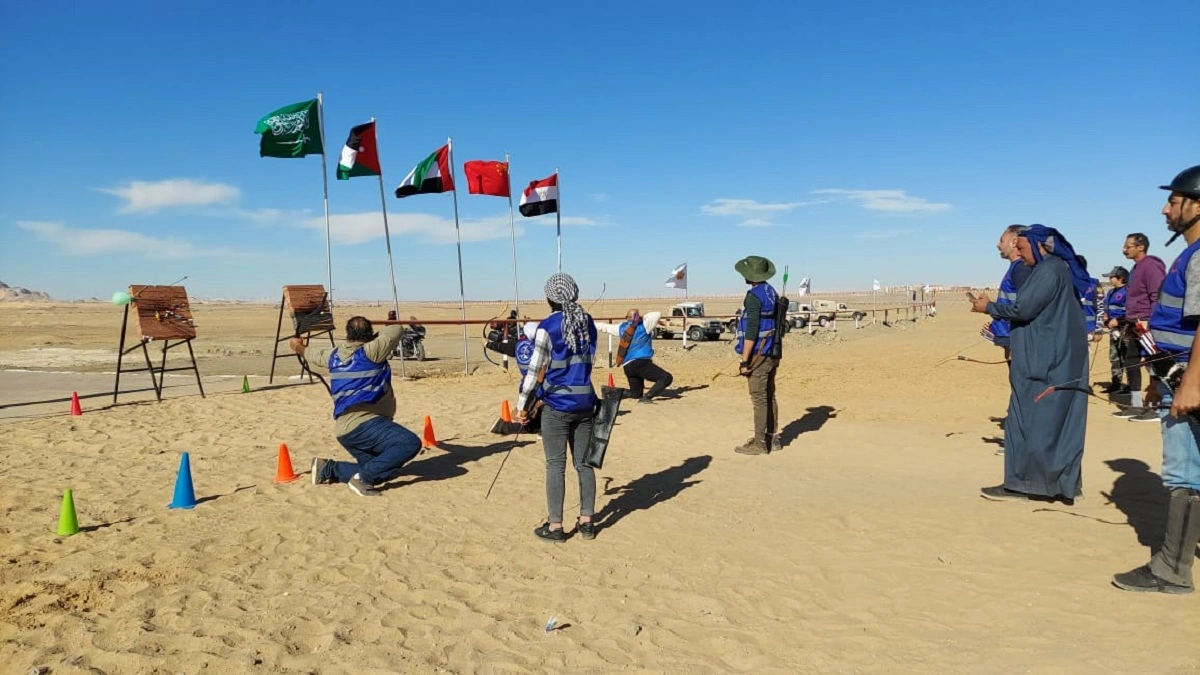
Discover how three Arab archery experts from Egypt, Jordan, and Kuwait are reviving the ancient art of Mamluk archery, transforming historical manuscripts into a modern competitive sport with international standards.
A unique sporting and cultural movement is emerging across the Arab world, one that goes beyond traditional competition to reconnect with historical identity. Three elite archery experts are leading an ambitious mission: bringing the art of Mamluk archery out of ancient manuscripts and into the modern sporting arena, complete with rigorous international standards.
Bab Masr spoke with the leaders of this alliance, Captain Sayed Al-Shoura from Egypt, Mahmoud Al-Qalyubi from Jordan, and Hani Al-Qassam from Kuwait,about their efforts to revive this centuries-old discipline and train a new generation of archers in techniques that date back 700 years.
Sayed Al-Shoura: Building Egypt’s Archery Foundation
Sayed Al-Shoura, founder of traditional Arab archery in Egypt, serves as both an international coach and referee, and holds the position of official commissioner for the World Archery Federation (WAF). He explains that the revival wasn’t accidental; it answered a genuine cultural need.
“We’ve inherited a rich history in horsemanship and archery, but for too long it stayed locked away in museums,” Al-Shoura says. “Our job now is to bring that history to life as something young people can practice every day. This isn’t some folkloric show; it’s a demanding sport that requires serious physical fitness, sharp mental focus, and strong character.”
Setting International Standards
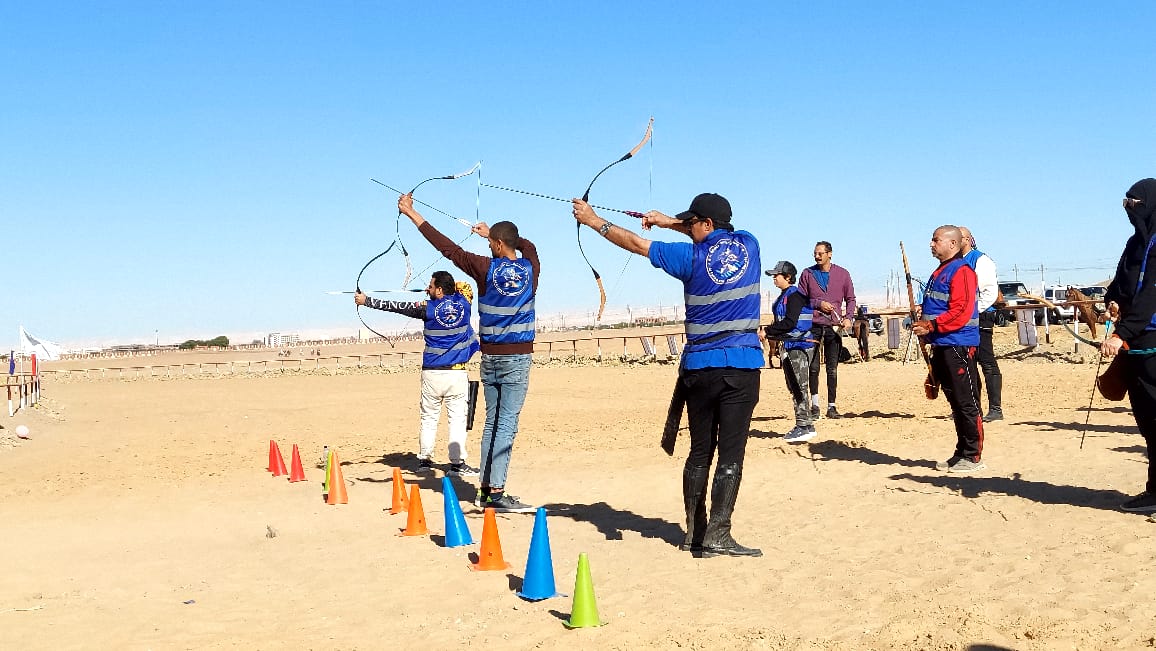
Egypt has built a solid foundation of archers and trainers certified to international standards for traditional archery. As federation commissioner, Al-Shoura is working to bring Egyptian archers into global championships while establishing safety regulations that preserve the heritage spirit. His goal is straightforward: put an Egyptian national team on the world stage at the World Championships for Heritage Sports.
What Makes Heritage Archery Different
The technical difference is striking, Al-Shoura explains. Heritage archery is 90% about the archer and only 10% about the bow, while modern Olympic archery leans heavily on technological aids built into the equipment. “That’s where the real challenge comes in,it’s just you, your bow, and your target. No sights, no stabilisers, no electronic aids. It forces you to discover capabilities you didn’t know you had.”
Mahmoud Al-Qalyubi: Treating Archery as an Exact Science
Captain Mahmoud Al-Qalyubi founded the Mamluk Archery Academy in Jordan with a scholar’s mindset. He approaches archery as an exact science, drawing on ancient Mamluk texts and treating it as a precious heritage that demands preservation.
“When you read manuscripts like ‘Ghunyat al-Tullab’ (The Students’ Provision in Knowledge of Archery), you find incredibly precise descriptions of every muscle involved in shooting and exactly how it moves,” Al-Qalyubi explains. “What we’re doing at the academy is taking that ancient science and applying it to modern bodies.”
The Thumb Draw: An Eastern Signature
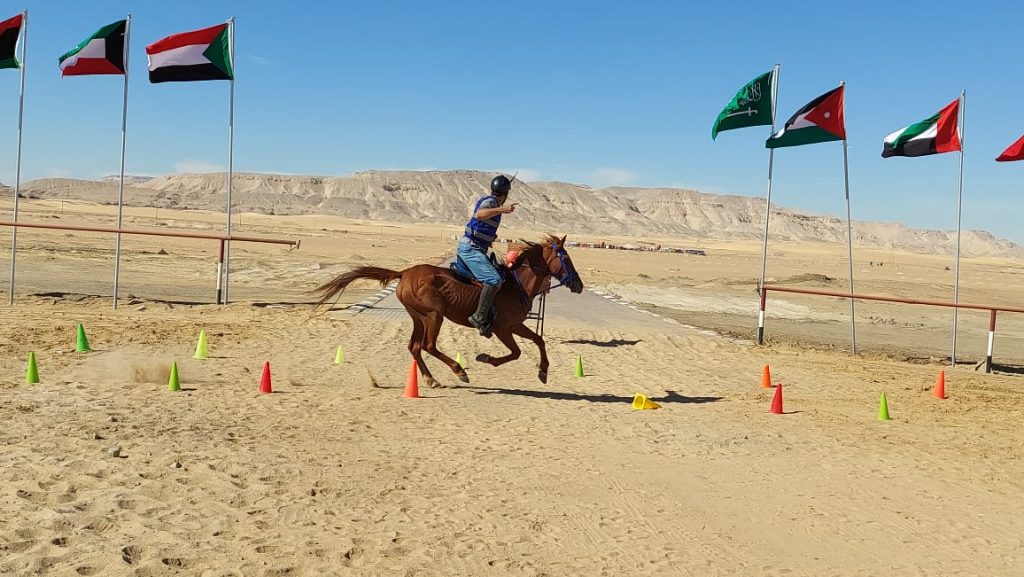
Al-Qalyubi is particularly enthusiastic about the thumb ring technique, which distinguishes Eastern and Mamluk archery from Western traditions. “Western archers shoot with three fingers. We use only the thumb, protected by a ring made from bone or leather. This technique allows for remarkable speed when nocking and releasing arrows; it’s what allowed Arab horsemen to shoot from horseback at full gallop.”
Cooperation between Egypt, Jordan, and Kuwait is essential, he stresses, to create unified training methods and terminology. “We don’t want different interpretations scattered across the region. Our aim is a single Arab school with a clear, scientific curriculum that everyone follows.”
Hani Al-Qassam: Embodying the Knight’s Spirit
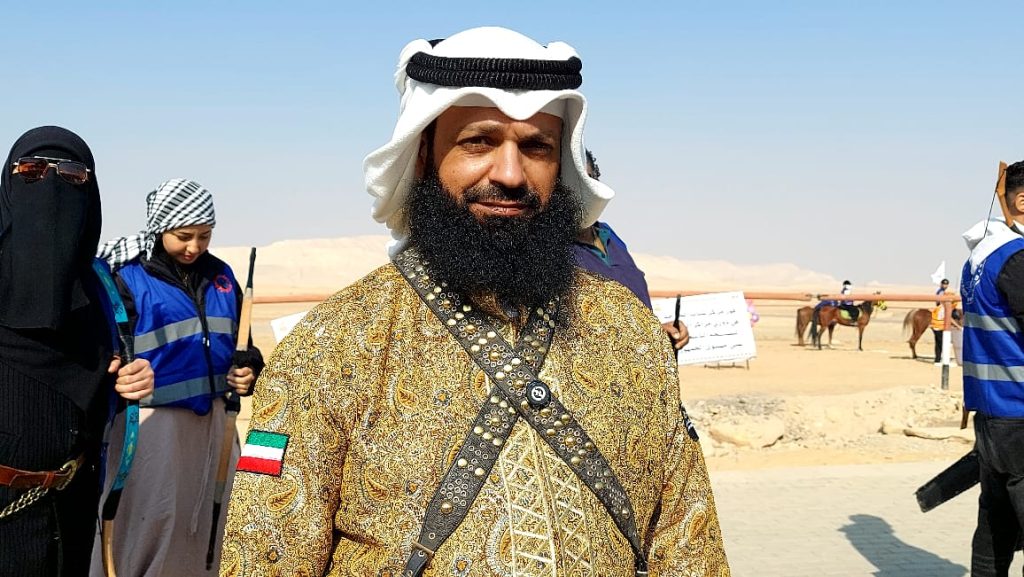
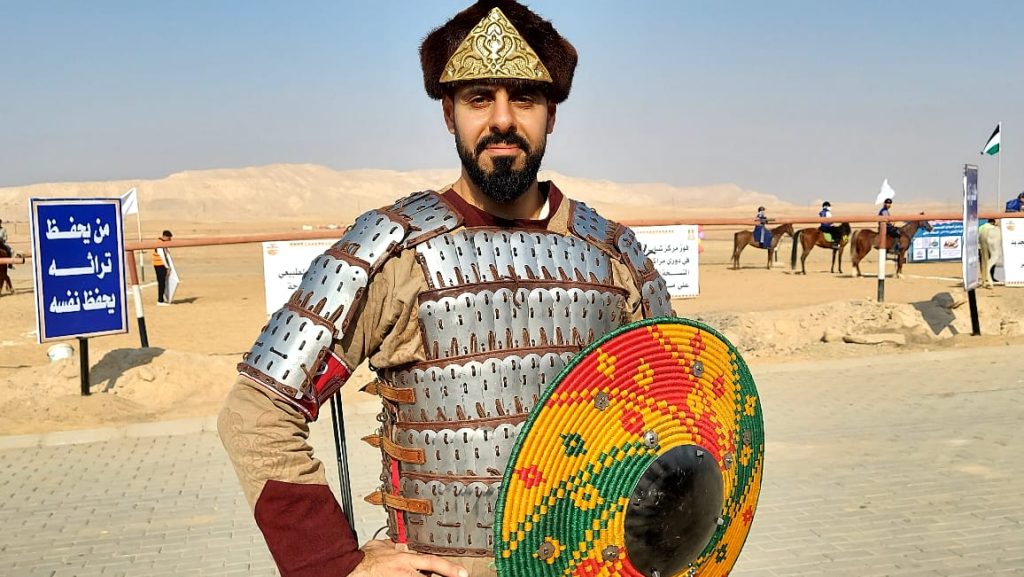
Captain Hani Al-Qassam, an international coach and referee from Kuwait, believes the sport’s spiritual and visual elements are just as important as technical skill. Traditional attire and equipment aren’t optional; they’re integral to the practice.
“You can’t fully practice this archery without immersing yourself in the historical mindset,” Al-Qassam says. “When I put on Mamluk or traditional Arab clothing, I’m not playing dress-up. It’s part of the psychological preparation. The flowing garments, leather belts, and decorated quiver put you in a frame of mind where you feel the weight of dignity and responsibility. You’re not just holding a bow. You’re carrying the legacy of an entire civilisation.”
Beyond Bullseyes: Teaching Character
For Al-Qassam, archery ethics matter as much as accuracy. “Judging isn’t just about counting points on a target. We evaluate how archers carry themselves, their stance, breathing, how they treat their opponents, and whether they remain composed under pressure. This is a school of character before it’s a competitive sport. We’re teaching young people patience, resilience, and emotional control.”
He’s seeing growing interest, especially in the Gulf states and Egypt, where young people are discovering both a connection to their heritage and a challenging alternative to mainstream sports.
The Mamluk Composite Bow: Medieval Engineering Marvel
Captain Mohamed Hamdy, Secretary-General of the Egyptian Committee for Traditional Archery and Heritage Games, explains why the bow itself deserves attention. The composite Mamluk bow represents sophisticated medieval engineering.
“This was the cutting-edge combat technology of its time,” Hamdy explains. “It starts with a wooden core, usually maple, with buffalo horn laminated to the belly side to handle compression. The back gets a layer of animal sinew to resist tension. Everything’s bonded with natural fish glue. This layered construction stores massive amounts of energy and launches arrows faster than much larger simple wooden bows ever could.”
Looking Ahead: A Heritage Olympics
The four leaders share an ambition that reaches well beyond local training programs. Al-Shoura is already working on plans for Arab and international championships, with professional standards that could see Mamluk archery join the global Heritage Sports Olympics.
“Our message is simple,” Al-Shoura says. “Heritage isn’t something we just talk about from the past—it’s something we live in the present. When a young Egyptian or Arab picks up that bow, draws the string, and releases the arrow, they’re making a statement: we’re a people who honour our history and draw strength from it to build our future. This sport brings us together and reminds us that hitting your target requires a steady hand and clear vision.in archery and in life.”