


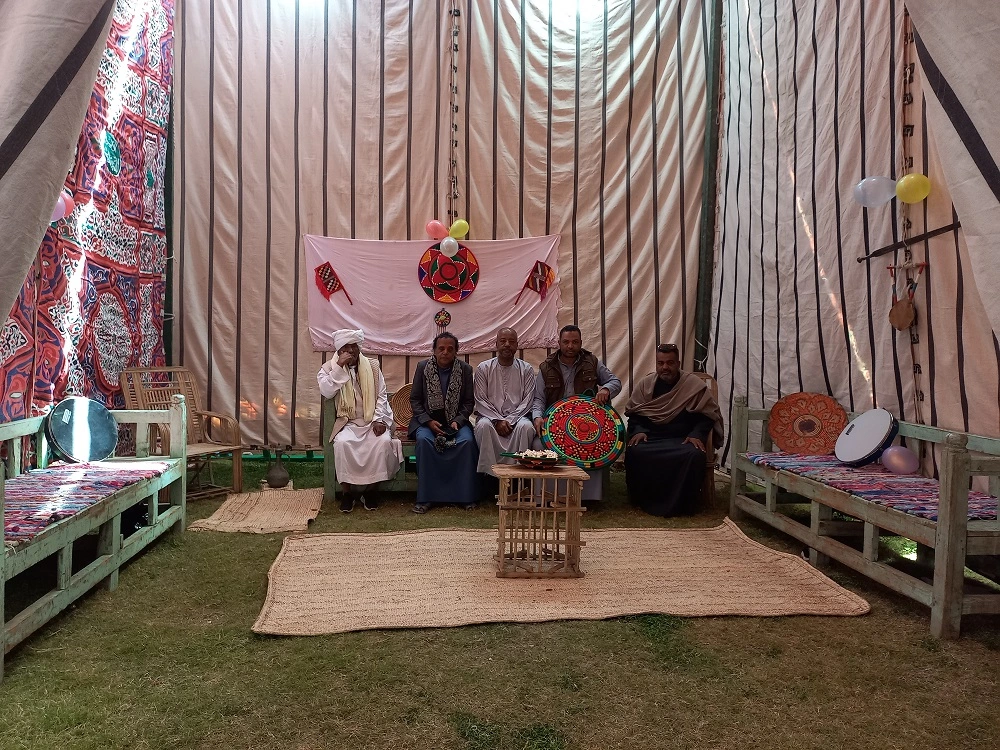
The Dendera Cultural Conference in Qena showcased three days of Nubian heritage, from traditional cuisine and crafts to music and folk games, celebrating the concept of neighbourliness and cultural preservation.
For three days, the village of Dendera in Qena Governorate became a window into authentic Nubian culture. The Dendera Cultural Conference, held under the theme of “Neighborliness” (Al-Jiwar), brought together traditional Nubian cuisine, music, attire, and folk games alongside dialogue sessions exploring culture, arts, and community bonds. Attendees witnessed firsthand how Nubian identity is carefully preserved and passed down through generations.
Opening Ceremonies and Dialogue
Hashem Al-Dandarawy opened the conference with a welcome address emphasising that neighbourliness creates sentimental bonds not just shared walls. A series of distinguished speakers followed, including Qena Deputy Governor Hazem Omar discussing neighbourliness in human life, Hisham Abouzeid (Luxor Deputy Governor and President of South Valley University), and Anba Bimen, Bishop of Qus and Naqada, who spoke on choosing good neighbours. Dr Omar El-Shobaky, political thinker and professor of political science, addressed human development and capacity building, while Akram El-Qassas, Chairman of the Board at Al-Youm Al-Sabea, discussed the culture and creative renewal of southern Egypt.
The conference featured dialogue sessions titled “Neighbourliness in Literature and Arts,” with presentations from Dr Ahmed Abdel Aal, Professor of Philosophy at New Valley University, and Abdullah Abdel Salam, journalist at Al-Masry Al-Youm. Dr Ahmed Moussa Badawi, Professor of Sociology, explored the roots of neighbourly relations among ancient Egyptians, while Reverend Baskharon, Deputy of the Evangelical Bishopric of Qena, Luxor, and the Red Sea, discussed how heritage propels communities toward progress through neighbourliness.
Cultural Activities and Heritage Games
The three-day event included drawing and theatre workshops for children, poetry gatherings with poets from different regions, and traditional games like “Al-Marmah” and stick-fighting (Al-Hatab) circles. Players from neighbouring countries participated in these heritage games that reflect Qena’s cultural identity.
Bringing Nubian Heritage to Dendera
The Al-Ashraf Charity Foundation and the Abu Handal Community Development Association travelled from the village of Nasr al-Nuba in Egypt’s far south, bringing their mission of transmitting authentic Nubian heritage and identity across generations. The Nubian exhibition offered a comprehensive look at Nubian culture, from hospitality traditions to daily life and living customs.
The Art of Nubian Hospitality
Mohamed Gaber Abdullah from Nasr al-Nuba described his first experience at the Dendera conference. “Nubian hospitality is unmatched; it’s an integral part of who we are,” he explains. “We preserve this heritage carefully, and hospitality comes first.”
The hospitality ritual begins with offering popcorn and dates on a large platter made from palm fronds called “Al-Karaj,” derived from the Nubian word “Kar,” meaning “come here”—literally an invitation to be welcomed. Guest rooms are adorned with palm frond mats (Al-Barsh) covering portions of the floor. A cover for the Al-Karaj, called “Al-Shor” in Nubian, is also crafted from palm materials. Traditional drinks include “Al-Abreeq,” made from flour and herbs to nourish the body, especially after fasting.
“Palm fronds make up 90% of Nubian products, with the rest made from Nile silt,” Abdullah notes. “We make the ‘Dokah,’ a rounded tool for baking daily Nubian bread called ‘Al-Kabed.’ There’s also thin bread called ‘Al-Garaya.'”
Preserving Traditions Across Generations
Mohamed Al-Dafa, another Nubian participant, talked about their broader mission. “Our goal in every participation is preserving Nubian heritage and passing it to future generations in every aspect. We still maintain the traditions of weddings, funerals, and Ramadan rituals, including the collective Iftar where men carry food trays into the street to break their fast together with traditional drinks.”
Nubian artistic traditions remain vibrant as well. “We haven’t forgotten Nubian art,the wedding procession (Zaffa) performed with traditional goatskin drums (Al-Daff), ‘Al-Arageed’ songs, and Nubian dance. Newlyweds walk to their marital home on foot as part of the ‘bridal palanquin’ ceremonies,” Al-Dafa explains.
Traditional Nubian Cuisine and Cooking Methods
Mona Mahrous, participating in the Nubian exhibition, highlighted the variety of traditional dishes. These include the thick “Al-Kabed” bread eaten with cooked meals and the lighter “Aish Al-Garaya” for lighter fare.
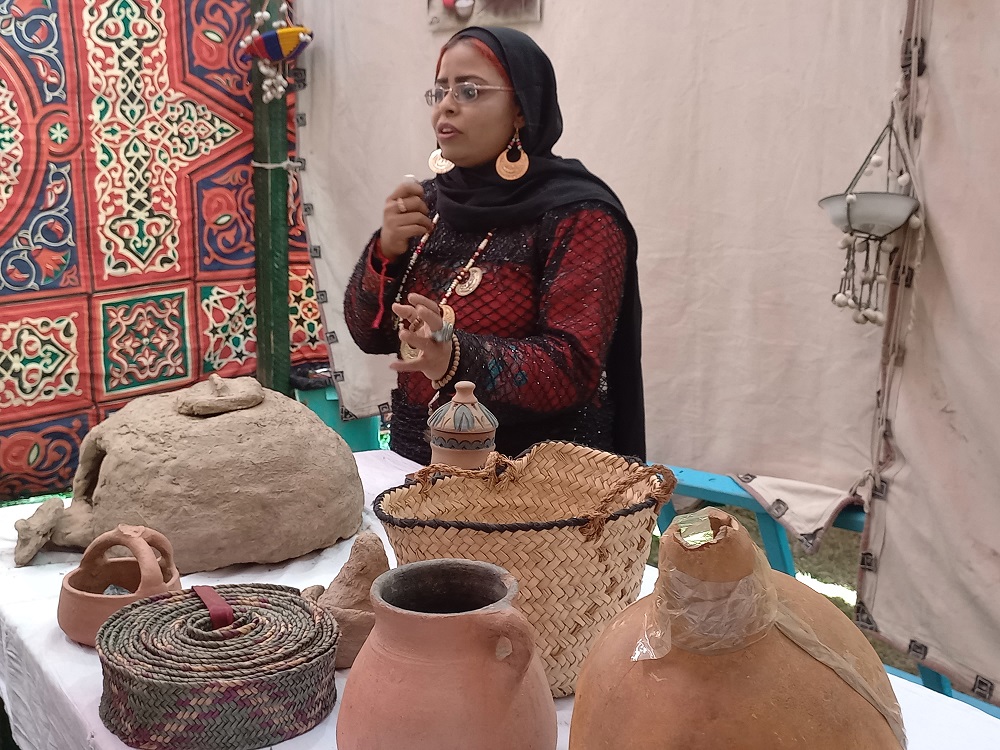
“Baking happened in ‘Al-Dokah’ ovens, originally clay pans, later converted to metal, used before natural gas and modern stoves existed. These ovens were fueled by palm waste,” Mahrous explains.
Kitchen Tools and Storage
The Nubian exhibition displayed numerous clay pots used for cooking in these traditional ovens, alongside palm frond baskets (Al-Qoffaf) used for storing vegetables and shopping items, all handmade by Nubian women. The exhibition also featured the Nubian food hanger (Al-Mashaliya), historically used to suspend food in the middle of the kitchen to preserve it in the air and prevent spoilage. The Mashaliya takes various shapes from palm fronds, decorated with Nile shells, wool threads, or palm leaves.
Also on display was the churn (Al-Khaddada) made from dried, hollowed-out bottle gourds, used for storing milk to make cheese and clarified butter. The Nubian grinder (Al-Mifraka) differs from Upper Egyptian grinders with its two pointed ends, designed for grinding “Al-Itr,” a dish similar to molokhia but made from parsley and fennel.
Ramadan Beverages and Palm Crafts
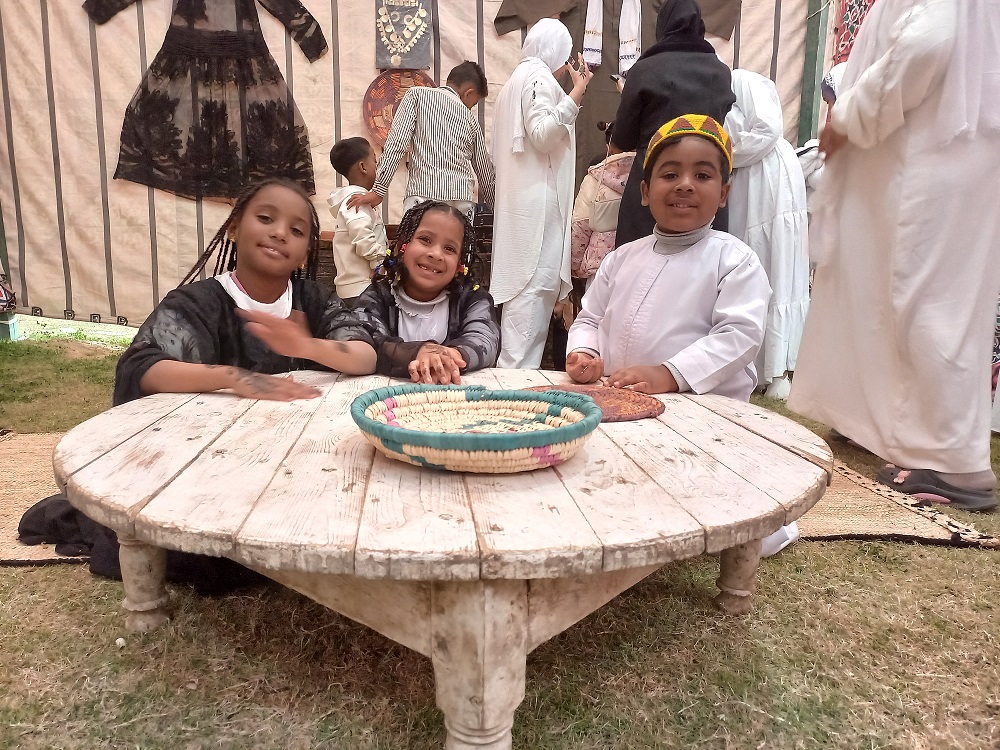
Mahrous described “Al-Abreeq,” a drink made from light bread that serves as the main beverage during Ramadan, alongside cold hibiscus tea grown locally. The exhibition showcased various products made from palm fronds and leaves, decorated with colours and Nubian embroidery, all expressing ancient Nubian folk heritage that has evolved through interaction with other cultures while influencing neighbouring regions.
Traditional Nubian Attire
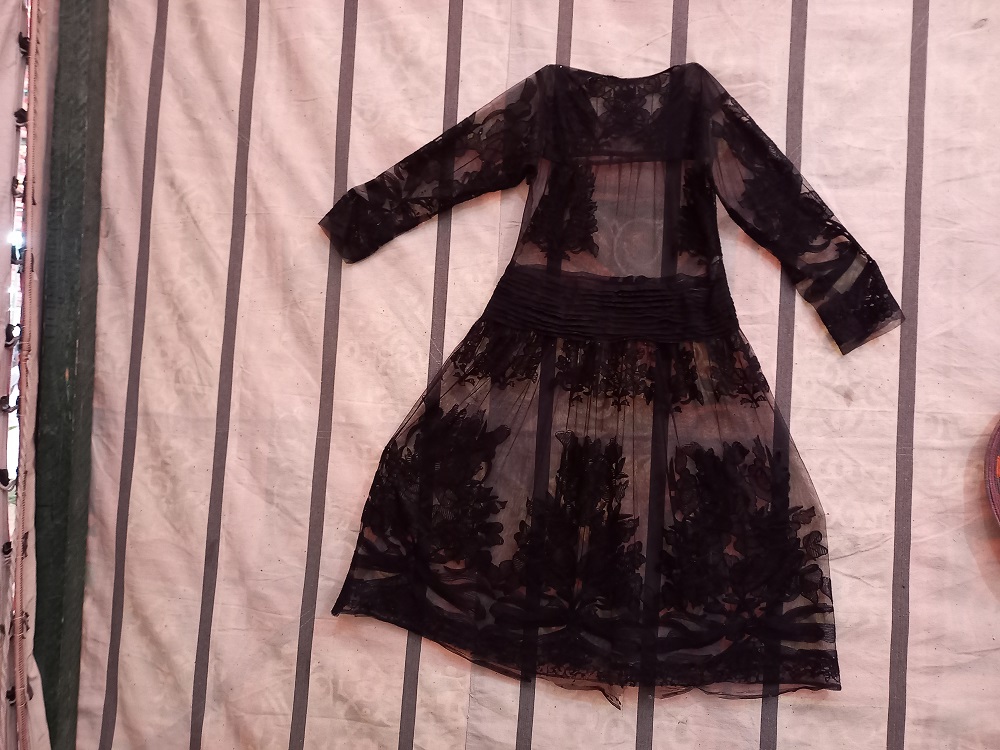
The exhibition included traditional Nubian clothing, represented by the “Al-Gargar” for women—a transparent black dress painted with light leaves reflecting the transparency of the Nile—and the white Nubian gown (galabiya), worn over the “Al-Iraqi,” a long, light white undershirt.
Through these three days of celebration, the Dendera Cultural Conference demonstrated how Nubian communities maintain their cultural identity while embracing the spirit of neighbourliness that defines their heritage.