


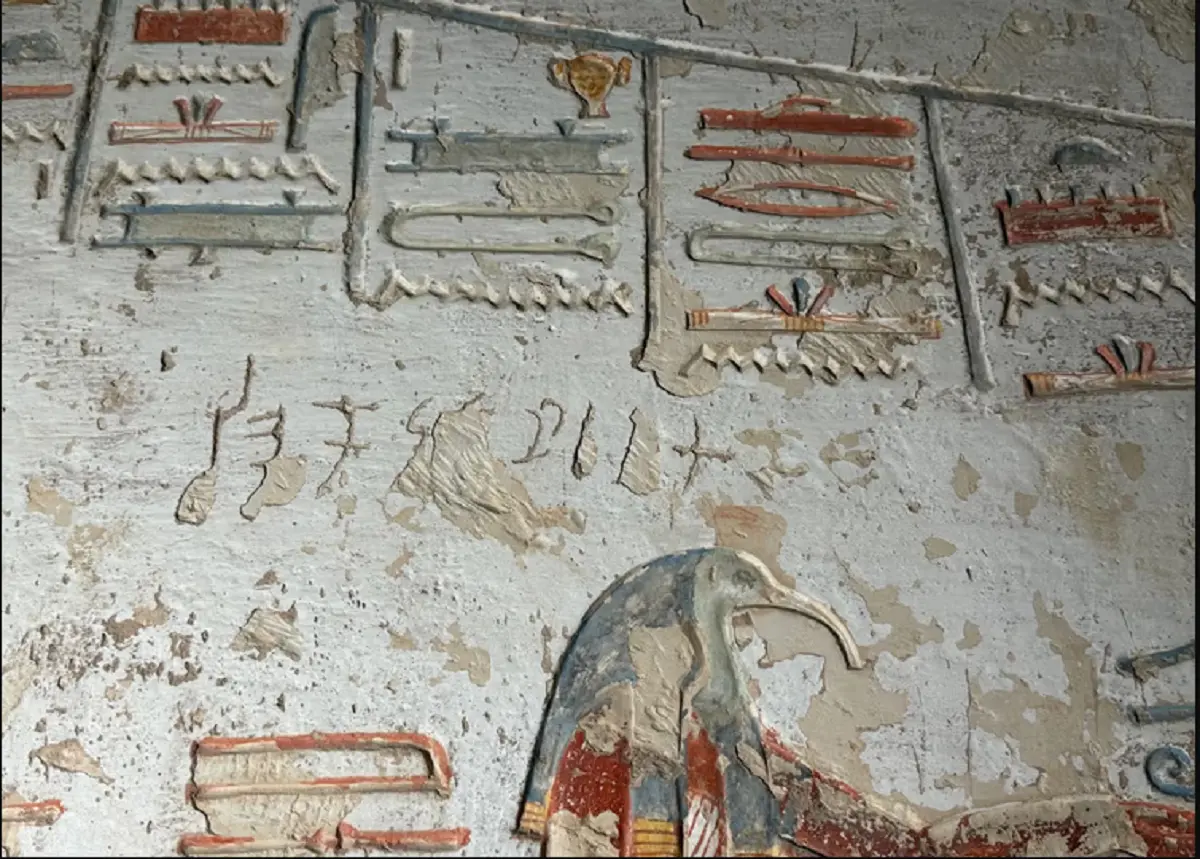
Deep in Egypt’s Valley of the Kings, researchers have discovered nearly 30 ancient Indian inscriptions, including the phrase “I came, and I saw.” The finding revises our understanding of trade, travel, and tourism between India and Egypt 2,000 years ago.
Deep within the royal tombs of Egypt’s Valley of the Kings, on walls that have stood for more than three thousand years, a different kind of history has been hiding in plain sight.
Nearly thirty inscriptions in ancient Indian languages, Tamil, Brahmi, Prakrit, and Sanskrit, have been identified on the walls of six tombs in the famed Theban necropolis. Dating between the first and third centuries CE, they offer compelling evidence that visitors from the Indian subcontinent travelled to Egypt during the Roman period, leaving their names behind in a tradition that feels strikingly familiar to anyone who has visited a tourist site today.
Among them, one name appears again and again: Sekkai Koran. And alongside it, a phrase that echoes across cultures and millennia: “I came and I saw.”
A Landmark Discovery
The discovery, announced by researchers Charlotte Schmid of the French School of Asian Studies and Ingo Strauch of the University of Lausanne, represents a significant expansion of what we know about ancient contacts between India and Egypt.
According to The Hindu, the inscriptions provide new insights into trade connections among ancient Tamil Nadu, other parts of India, and the Roman Empire as it expanded into Egypt. The findings were presented at the International Conference of Tamil Epigraphy in Chennai, southern India.
Egyptologist Steve Harvey told The Art Newspaper that the inscriptions had likely gone unnoticed for so long simply because few researchers possessed the necessary linguistic expertise. “A small number of researchers specializing in Indian languages tend to study inscriptions in Egypt,” he explained. “Greek and Aramaic inscriptions, by contrast, have been studied for a long time.”
From the Indus to the Nile
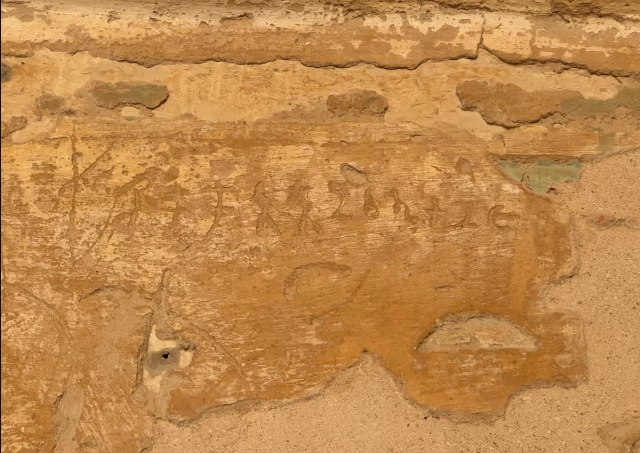
The researchers identified the inscriptions as originating from several regions of the Indian subcontinent. Most are written in Tamil-Brahmi, an ancient script related to modern Tamil.
The study suggests that people from the Tamil region were not merely engaged in maritime trade with Egypt. They travelled inland, reaching the Nile Valley and leaving their names alongside the Greek and Latin inscriptions already present in the tombs.
This practice, the researchers note, appears to have been a tradition among visitors,a way of marking their presence in sacred and significant spaces. The Indian visitors to Egypt were participating in a custom of “tourist inscription” that was widespread in the ancient world.
Trade, Wealth, and Luxury
Egypt’s connections with India were not new in the Roman period. The country had been linked to the Achaemenid Persian Empire since the sixth century BCE and maintained extensive trade relations with the Indian subcontinent.
By the first century BCE, the Roman poet Horace could refer to India and Egypt in his poems as synonymous with wealth and luxury. The port of Berenice (also known as Berenike) on Egypt’s Red Sea coast was one of the most active harbors between the third century BCE and the sixth century CE. Founded by King Ptolemy II, it served as a strategic link in the trade network connecting Europe, Africa, and Asia with the Mediterranean world via the Red Sea and the Indian Ocean.
Through Berenice passed shipments of pepper, semi-precious stones, fine textiles, and ivory, arriving from India, Sri Lanka, and Arabia. Until this discovery, however, concrete evidence that Indian visitors traveled beyond the coast and into the Nile Valley had been lacking.
“I Came and I Saw”
Among the most striking finds is the repeated appearance of the name Sekkai Koran, which occurs eight times across five different Egyptian tombs, making it the most prominent name recorded in Tamil. It appears high on interior walls and near entrances,visible, intentional placements.
According to India’s Tamil Guardian, the ancient visitors did not stop at writing their names. They also inscribed the phrase “I came and I saw”,a sentiment that echoes the famous Latin veni, vidi, vici but expressed here in a distinctly Indian voice.
Other Tamil names identified include Kupan, Katan, and Kiran,all documented in ancient Tamil inscriptions from southern India.
Decoding the Name
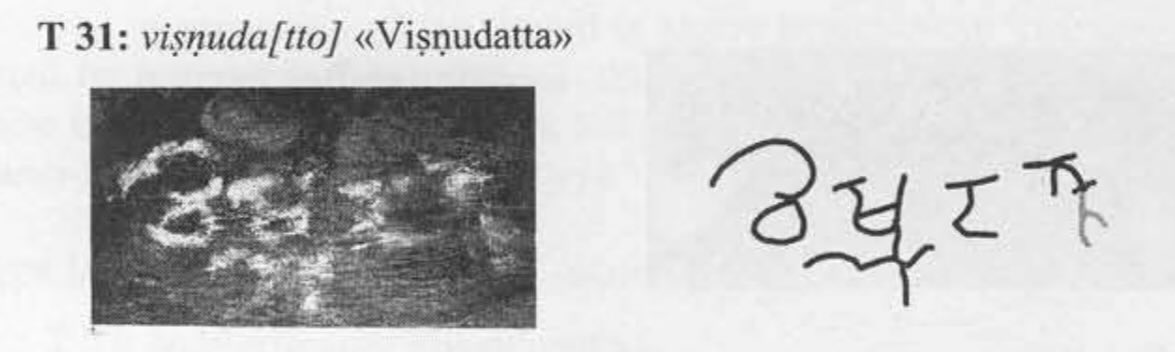
Schmid’s analysis of the name Sekkai Koran reveals layers of linguistic and cultural significance. The first element, Sekkai, may relate to the Sanskrit word śikhā, meaning crest or crown, an unusual component for a personal name.
Koran, by contrast, is a Tamil name with martial associations. Its roots lie in words connected to combat, derived from koṟṟam, a term denoting victory and killing. The name also connects to Korravai, the goddess of war worshipped by the Chera dynasty, and to Koravan, a word meaning king.
The name appears in other Egyptian archaeological contexts as well. Koran turns up as Korsapoman in an inscription on pottery fragments discovered at Berenice, the Red Sea port that served as Egypt’s gateway to the Indian Ocean world.
Why This Matters
The significance of these repeated inscriptions extends beyond linguistics. According to the research paper, similar rock inscriptions exist on ancient walls in the Indus Valley. But those, archaeologists have warned, are threatened by the planned Diamer-Bhasha Dam, whose reservoir is expected to flood the region between 2028 and 2029, submerging two thousand years of inscriptions left by traders, monks, and soldiers.
For a long time, such informal inscriptions, the ancient equivalent of “I was here”, received little scholarly attention. Researchers focused on the texts of kings and priests, not the scratchings of ordinary travellers. But as Strauch and Schmid’s work demonstrates, these personal records offer a window into the minds of “ordinary” Indians across history, not just the elite.
A Human Impulse Across Millennia
In his 2016 book Indian Inscriptions from the Cave of Hoq in Sumatra, Strauch explored the worlds of ancient Indian travellers through analysis of nearly 250 texts and drawings left by visitors from across the ancient world, Greeks, Palmyrenes, Aksumites, Arabs, and a large contingent of Indians.
The inscriptions included occupational titles: navika (sailor), vani (merchant), acharya (teacher). The Sanskrit texts date to the early centuries CE and were not limited to Brahmins or aristocratic elites—they were far more widespread.
These words, Strauch notes, were carved by the light of flickering lamps, after arduous sea and land journeys. He interprets them as a simple human act repeated across the ages: leaving a mark that says, “I passed through here.”
Religious Impulses and Pilgrim Traces
Similar impulses, often with a religious character, appear elsewhere along ancient trade routes. Travellers departing from Chatial on the upper Indus left more than a thousand inscriptions, many in Brahmi script, along the Karakoram Highway. These include drawings and scenes from Buddhist Jataka tales, prayers and invocations for protection from the dangers of water.
The site was used by Indians and Sogdian traders, the Silk Road pioneers and intermediaries who dominated Central Asian trade between the fourth and eighth centuries CE.
The Mughal Emperor Who Followed the Same Impulse
In a 2023 paper, Strauch argued that graffiti should be considered a legitimate genre of Indian epigraphy. As evidence, he pointed to the Ashoka pillar at Prayagraj, whose surface bears writings from three different rulers across three distinct periods: Ashoka in the third century BCE, the poet Harisena in the fourth century CE, and the Mughal emperor Jahangir in the late sixteenth century.
Each left their mark on the same monument,kings and commoners alike, separated by centuries, united by the same impulse to say: I was here.
In the Valley of the Kings, Sekkai Koran did the same. A trader, perhaps, or a pilgrim, or simply a curious traveller. He came, he saw, and he made sure we would know it.
