


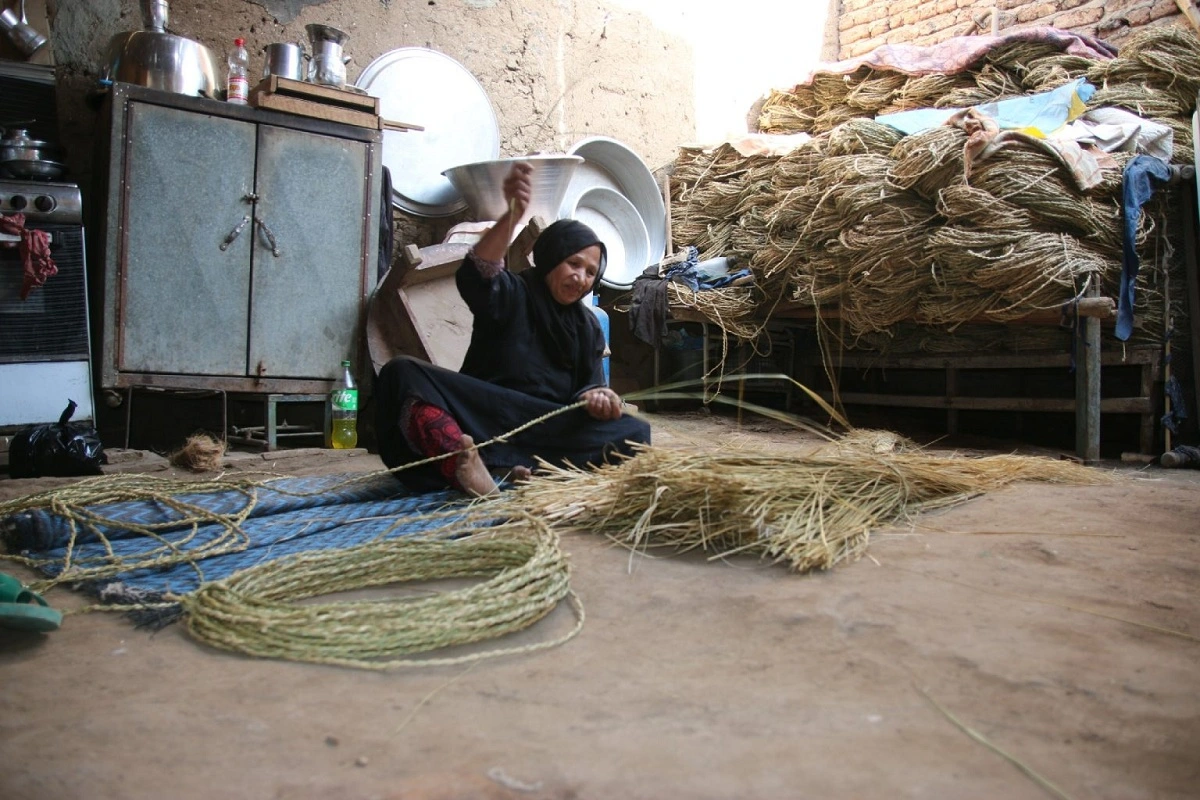
In an Egyptian village, 65-year-old Hajja Rahma still twists ropes from halfa grass by hand—a craft she learned from her father as a child. With harvest season approaching, her ropes are in demand. But her body is failing, and no one is coming to replace her.
By Amani Khairy
Some crafts refuse to die. Not because anyone is trying to save them, not because of museums or heritage lists or government programs, but simply because the people who know them keep working.
Hajja Rahma Sayed Gad Rabbo is one of those people. At 65, she still twists ropes from halfa grass—a tough, fibrous plant that grows along canal banks and field edges. She also weaves halfa mats, though demand for those has dwindled. The ropes, however, are another story.
As harvest season approaches, farmers need halfa ropes to bundle wheat and sugarcane. And so, despite the pain in her back, despite the cartilage problems that make every hour of work an ordeal, Hajja Rahma sits on the ground and twists.
Learned from Her Father, Forgotten, Then Remembered
“I was just a little girl when we learned from our father,” she says. All the children learned. But then life moved on. Hajja Rahma married, raised a family, and for thirty years, she barely touched halfa grass.
Then her daughter had children—five of them. The cost of living kept rising. Sugar, flour, everything. Her daughter needed help. So Hajja Rahma went back to the craft she had learned as a child.
“I stopped for about thirty years,” she says. “Then I went back to it for my daughter. She has five girls. I thought, ” Let me help her out a little. Get some flour, some sugar.”
The Harvest Season Rush
The demand for halfa ropes spikes in April and May, when the wheat and sugarcane are ready. Farmers and field workers need them for bundling.
Some farmers have switched to plastic twine. It’s cheaper. But those who know,those who have livestock,stick with halfa. “If an animal eats plastic, it can hurt them,” Hajja Rahma explains. “Halfa is natural. It won’t harm the cattle.”
The grass itself comes from a man who gathers it from the fields and canal banks. He brings it by tuk-tuk a bundle costs about ten pounds. She might take five bundles, or ten, depending on how much she needs. The transport adds another fifty pounds or so.
How to Make a Rope
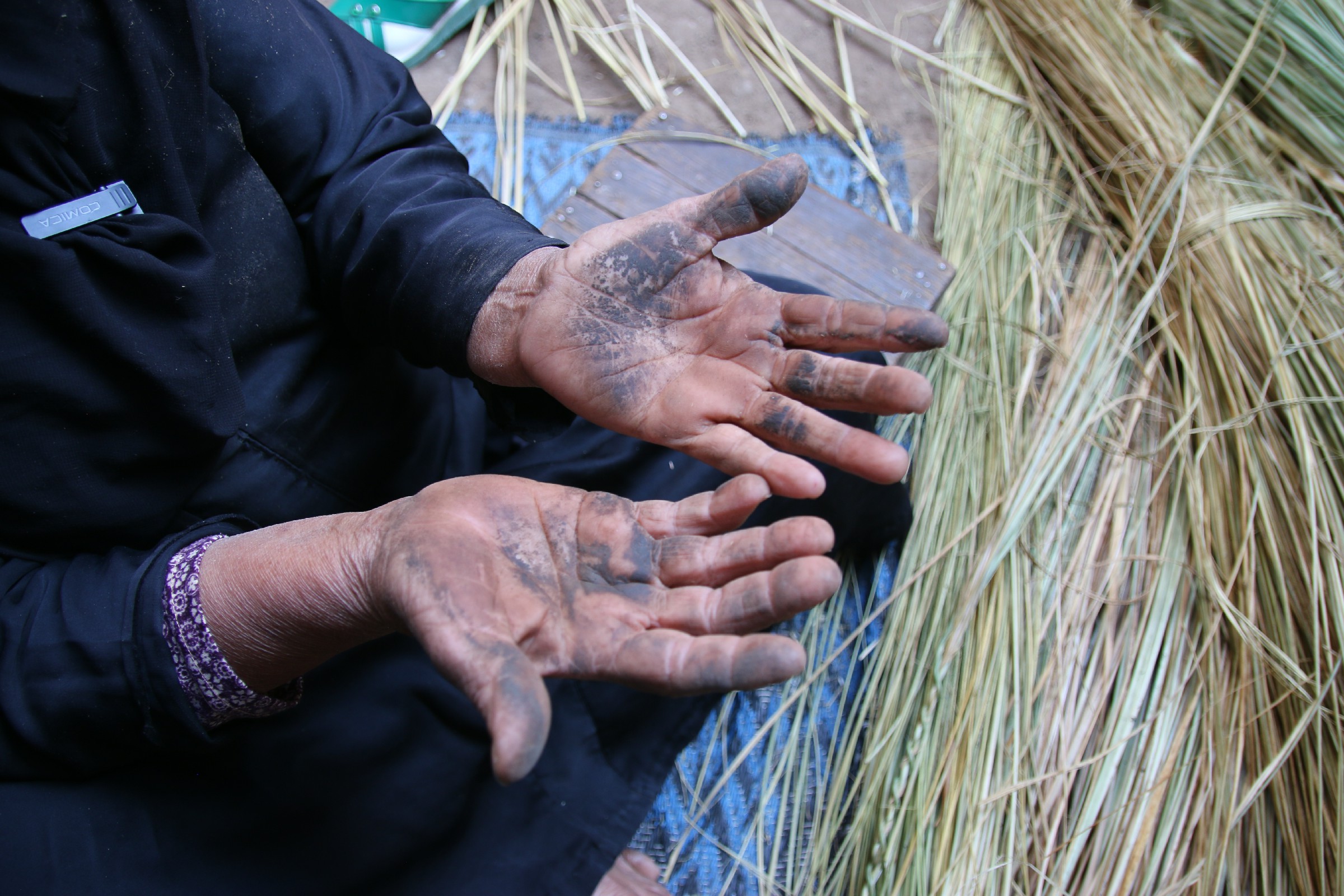
Before anything else, the halfa must soak. Seven days in water softens it, makes it pliable, saves the hands from too much pain. It also makes the finished rope stronger.
When the grass is ready, Hajja Rahma spreads it on the ground and sits down to work. She gathers several strands of the soaked grass, twists them together with her hands in a particular way, and joins them until they form a strong cord.
A single batch of ropes—twenty-six coils, each about a meter and a quarter long—takes roughly an hour to make.
Halfa Mats and Their Uses
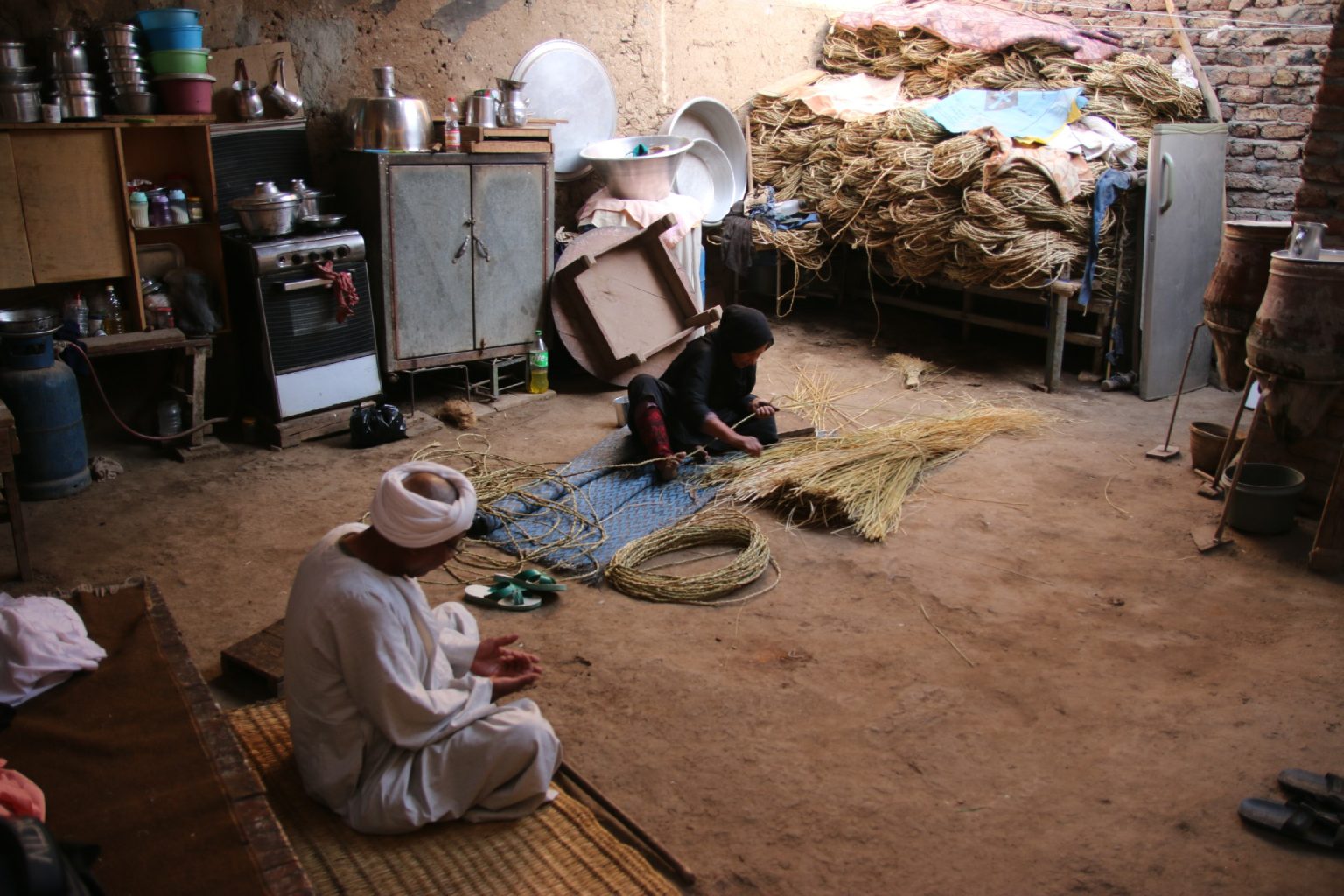
The mats take longer,several days each. These days, she mostly makes them on order. Demand has fallen compared to the past.
Most of her customers now are farmers. They use the mats to lay fruit on,mangoes, watermelons, because halfa can bear weight. Sometimes they use them to cover the fruit, protect it from the sun.
Occasionally, someone orders a mat for health reasons. “Some doctors recommend sleeping on halfa mats for back pain,” she says. The firm surface helps.
As for prices, two batches of rope go for about twenty-five pounds these days. Last year, eight batches would fetch around a hundred. She can’t make as much as she used to. The cartilage in her back is worn. The pain limits her to three small batches a day, if that.
“I have pain in my back, and my cartilage,” she says. “If I didn’t need the money, I wouldn’t work.”
A Craft with No Successor
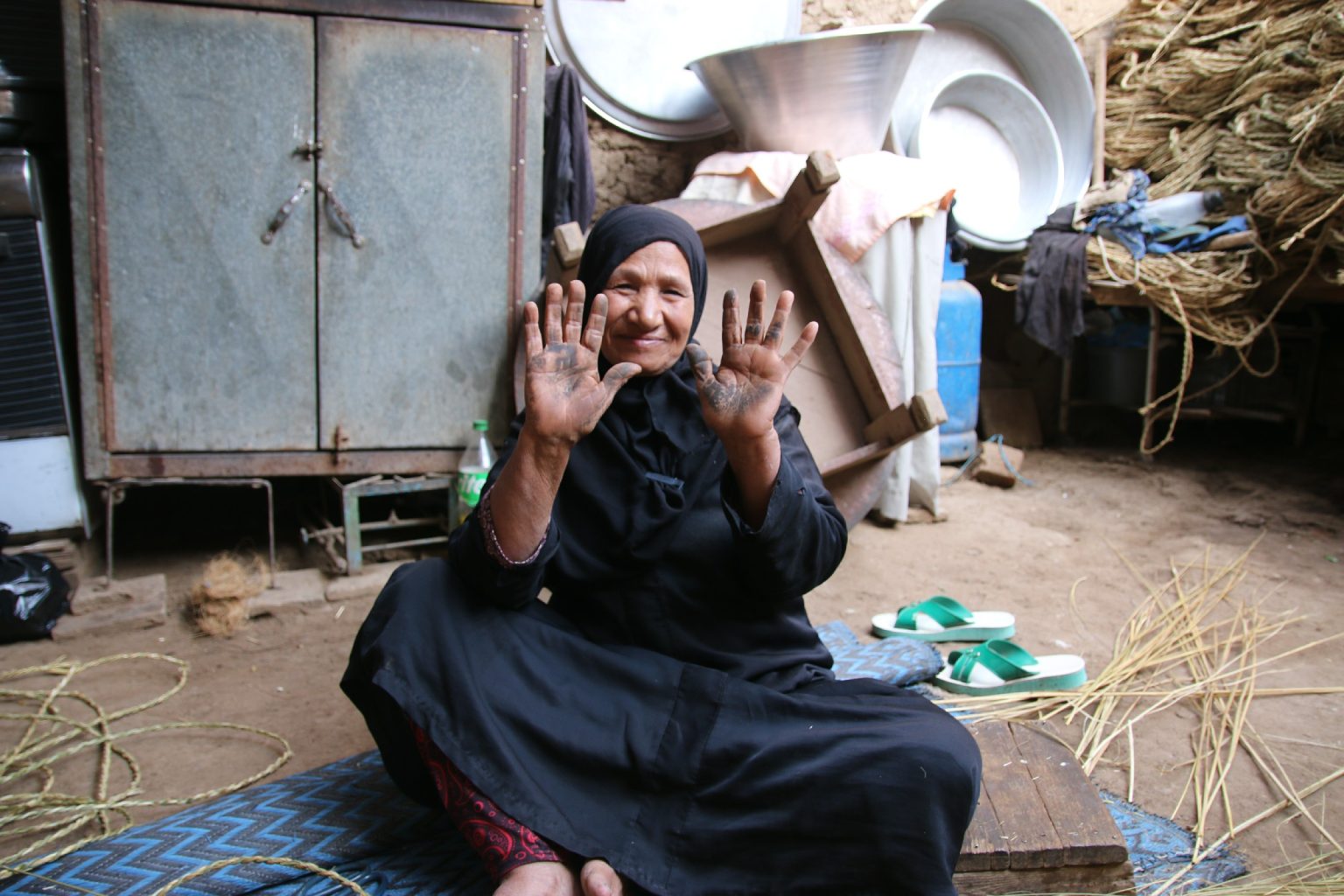
Hajja Rahma works alone. Her only daughter never learned the craft. Like so many young people, she chose a different path. So when the harvest season comes and demand spikes, the pressure falls entirely on one elderly woman with a bad back. The irony is that the knowledge is still there. It just hasn’t been passed on.
A Simple Wish
What she earns from rope twisting doesn’t cover everything. It barely covers anything, really. But it’s better than sitting idle. And the season is short,only April and May. This is her one chance at income for the year. Last year, rats got into her store. They destroyed a large batch of ropes—days of work, gone. Despite her pain, she had to gather what was left, salvage what she could, and try to sell it before the season ended. Ask her what she dreams of, and her answer is simple: “I swear, I want to visit the House of God. I hope God grants it to me. That would be something beautiful, something a person never forgets.”.
