


Discover the therapeutic wonders of the Assiut Valley Protectorate, a natural sanctuary where rare wildlife meets unique medicinal flora. From the magnetic, self-healing sands of Wadi Emo to its role as a vital “natural pharmacy,” explore how this Eastern Desert gem is redefining eco-tourism and psychological healing in Upper Egypt.
Many may not realize that Assiut possesses one of Egypt’s largest natural reserves. In reality, it is an artistic canvas where the aesthetic beauty of moun tains, sands, flora, and the indigenous wildlife of the “Assiut Valley” seamlessly blend. This valley encompasses a distinguished collection of sites that draw visitors from across various governorates.
The Eastern Desert
Dr. Ibrahim Mahmoud Ahmed Nafadi, Director of the Assiut Valley Protectorate and Professor in the Department of Botany and Microbiology at Assiut University’s Faculty of Science, states that the valley is situated in the western portion of Assiut’s Eastern Desert. It hosts 79 species of endangered wildlife, alongside unique medicinal plants used in treatments, rendering it a natural pharmacy for the people of Assiut.
In the heart of the Assiut desert, specifically within the Sahel Selim center, a different world lies hidden, one unlike any other. Here, nature mingles with a subtle magic among the sand dunes, which visitors utilize as a means of psychological therapy and recreation. The Assiut Valley Protectorate is regarded as one of the most significant natural reserves in Egypt. Spanning an area of 35 km, it serves as a sanctuary for the breeding of wild animals such as the Egyptian gazelle, mountain goats, and ostriches, as well as numerous reptiles. Furthermore, it aims to preserve the genetic resources of endangered plant life, particularly palms, medicinal plants, and certain ornamental flora.
The Declaration of the Protectorate
Nafadi adds that in 1989, the Assiut Valley was officially declared a natural protectorate following an eight-year research study conducted by the University of Arizona in the United States. This study involved several professors from the Faculties of Science and Agriculture at Assiut University and concluded with vital recommendations most notably the necessity of declaring the valley a protectorate due to its rare species. Dr. Abdel Moneim Maher submitted the proposal to the Ministry of Environmental Affairs, and it received official approval.
He points out the presence of agricultural researchers within the reserve who work to preserve its natural resources and the vegetation upon which these rare animals depend. Currently, work is underway on a proposal to establish a zoo modeled after “Africano” within the valley on a 100-acre plot. This project is intended to be a qualitative leap for tourism in the Assiut Governorate and Upper Egypt, featuring rare and endangered animal species.
Educational and Research Trips
The valley receives dozens of school and university trips, alongside researchers conducting field studies. Coordination with the protectorate administration is arranged in advance, with visits commencing in the lecture hall where visitors are introduced to the valley’s components. The tour includes a visit to the Pharaonic apiary, the mummification museum, and the caves that shelter rare animals, in addition to the “Wadi Emo” area, which is characterized by the sand dunes used for treatment.
Sands for treatment and recreation
Nafadi explains that the Wadi Emo area is one of the most prominent attractions for visitors. It is characterized by extremely fine, pure sand that is free of impurities and does not cling to clothing. These sands are distinguished by a black layer believed to possess magnetic properties used in therapy.
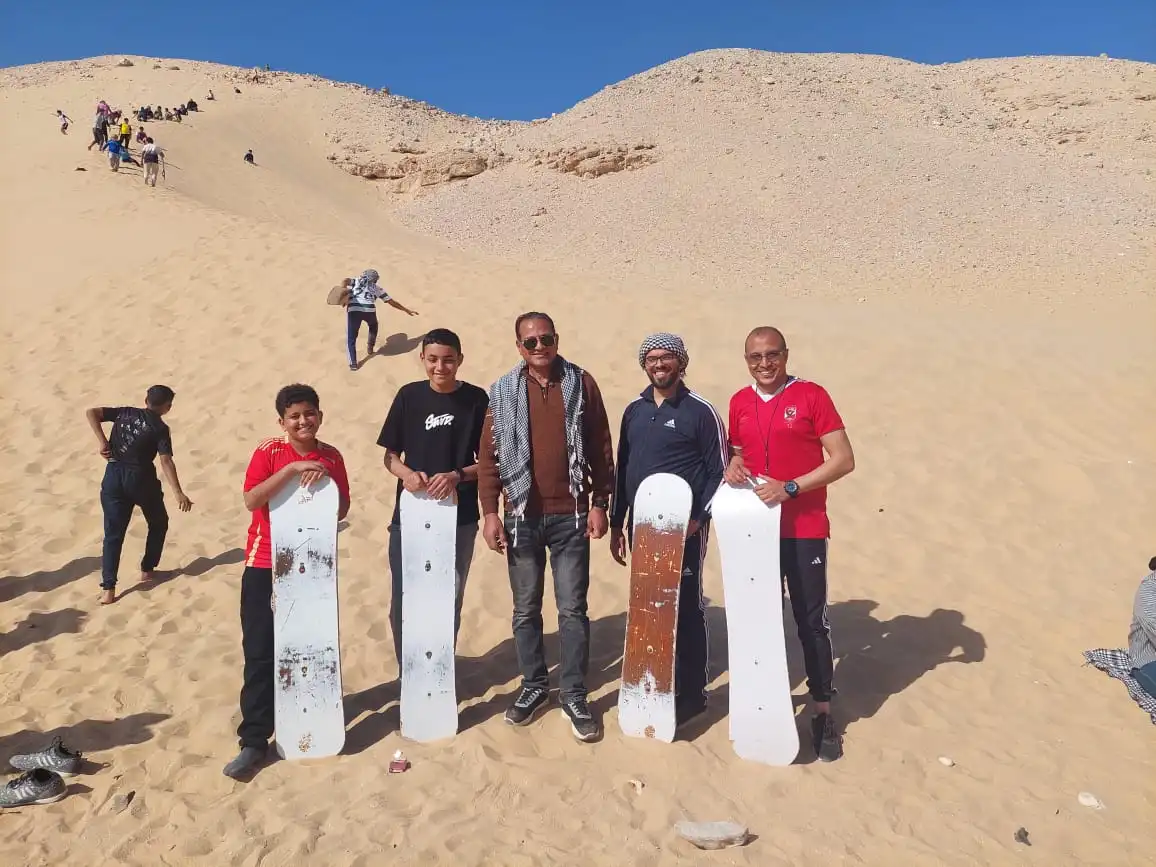
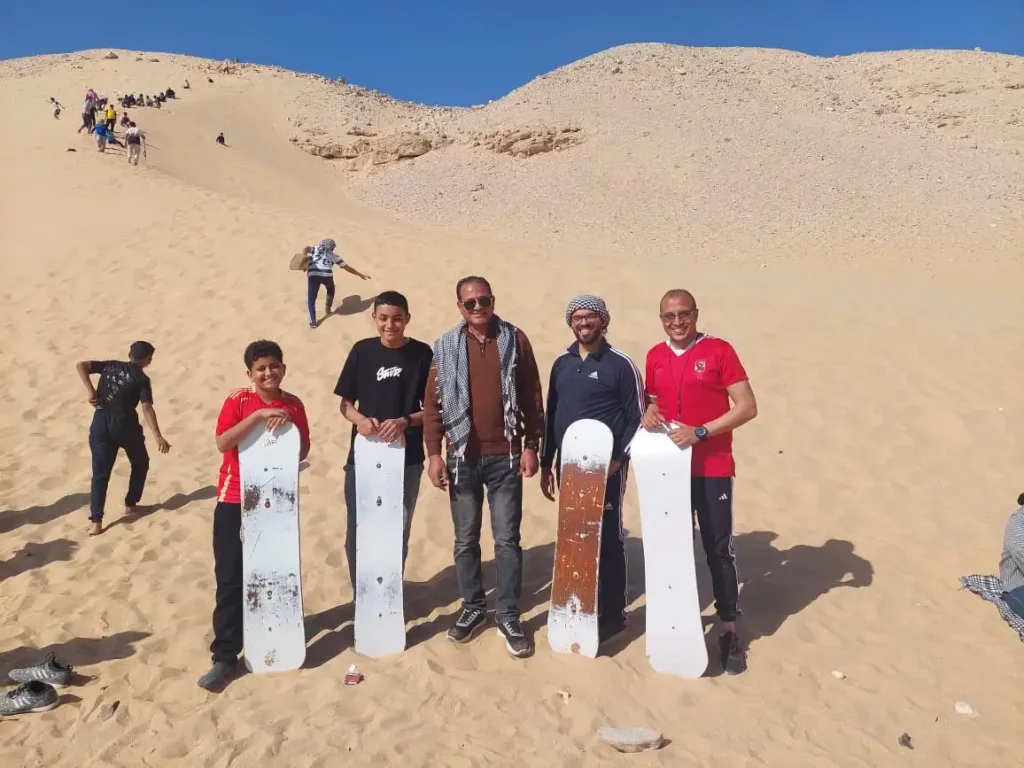
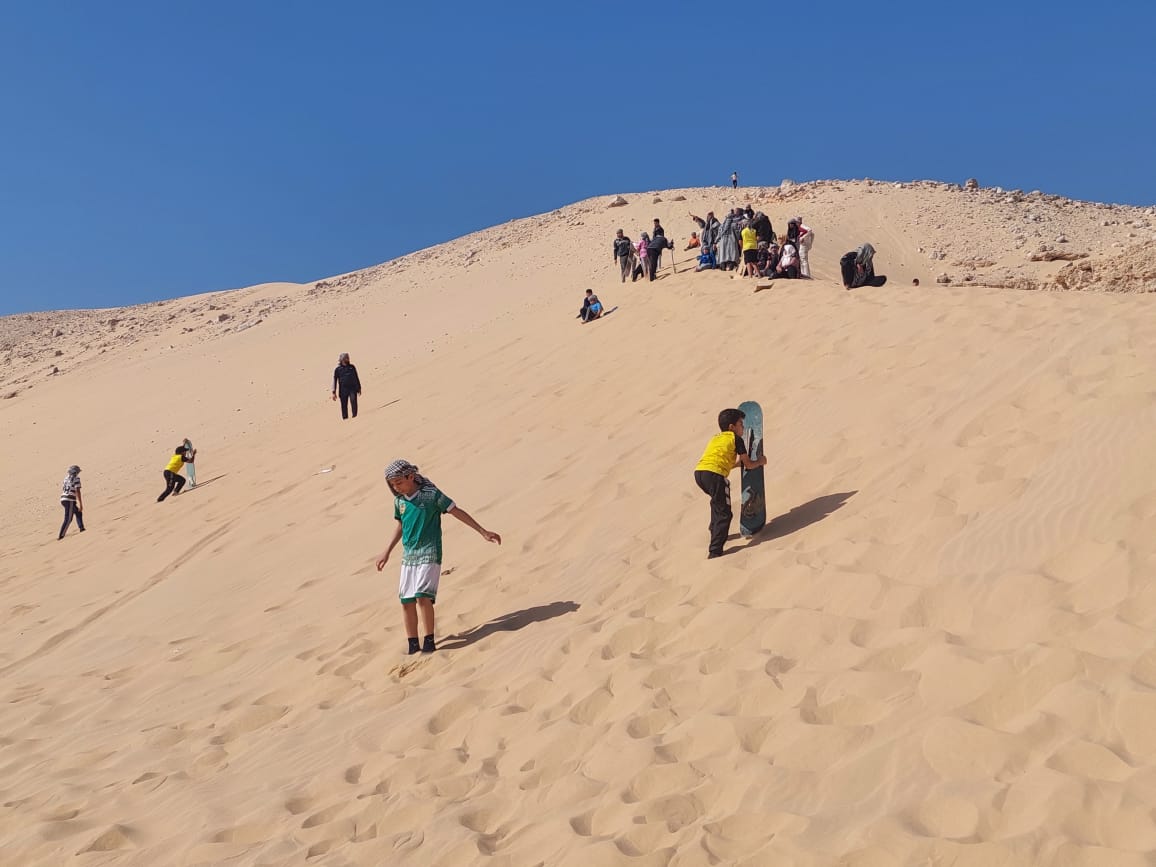
He adds that many visitors have attempted to transport this sand, but it loses its properties once removed from its natural site. Its benefit lies in its ability to discharge negative electrical charges from the body when walking barefoot or sitting for a duration, providing a sense of comfort and relaxation. The dunes are also used for recreational activities, most notably sandboarding using wooden boards a unique experience that attracts youth and students.
A Unique Natural Phenomenon
Nafadi continues: “The sand in this area is characterized by its horizontal movement. It reshapes itself automatically without any human intervention, returning to its original state as it was before being walked upon or used for sliding. After visitors play and glide across the dunes, the features change, and footprints and board tracks appear. However, within just one day, the sand returns to its initial state level, as if nothing had happened. This is due to the lightness of the grains, which are easily carried by the wind to level the surface once more. It is a stunning natural scene that reflects the specificity of this region, particularly in Wadi Emo.”
A visit to the dunes surrounding Wadi Emo within the Assiut Valley Protectorate is not merely a passing tour. Rather, it transforms into an exceptional, integrated experience that the visitor engages with through all their senses. The sands are as soft as if they were untouched and remarkably clean, surrounded by an aura of beauty and mystery especially given their use in psychological therapy and restoring physical balance. Consequently, the visitor feels a blend of pleasure, adventure, and the wonder of discovery. This has made the area a distinctive tourist destination, where visitors merge with the environment and become one with it.
