


Before electricity, before processed drinks, before supermarkets—how did Egyptians experience Ramadan? In the village of Qus, elders remember a time of handmade cannons, clay lanterns, and gatherings that lasted until dawn.
Ramadan was never just a month of fasting and prayer. In the old days, it was a season of its own—a time when social bonds were renewed, when streets and homes pulsed with simple rituals whose echoes have lasted a lifetime. From handmade toy cannons to lanterns that lit the alleyways, from nightly gatherings and Quran recitations to the distinctive foods prepared only during the holy month, life was built around small, meaningful details.
In this article, we travel back in time with the elders of Qus, a city in Upper Egypt’s Qena Governorate, to remember Ramadan as it once was.
The Ramadan Cannon
Ahmed Mohamed Hassan, 70, still remembers the anticipation. “As children, Ramadan felt like a grand, seasonal celebration. We waited for it all year.”
More than sixty years ago, when he was a boy, he would go to the blacksmith to have his Ramadan cannon made. “He would take a large iron nail and make a small hole in it for the sulfur,” Hassan explains. “Then he’d attach a handle. We’d strike it against a big stone, and it would make a sound like fireworks at the moment of the adhan [call to prayer].”
But the ritual went beyond the cannon itself. “Before the adhan, all the children of the alley would gather. The muezzin would play with us; he’d hide behind the minaret, and we’d search until we found him. Then he’d climb up and make the call to mark sunset. At that moment, we’d all start striking our cannons, boys and girls alike.”
A Lantern with a Candle
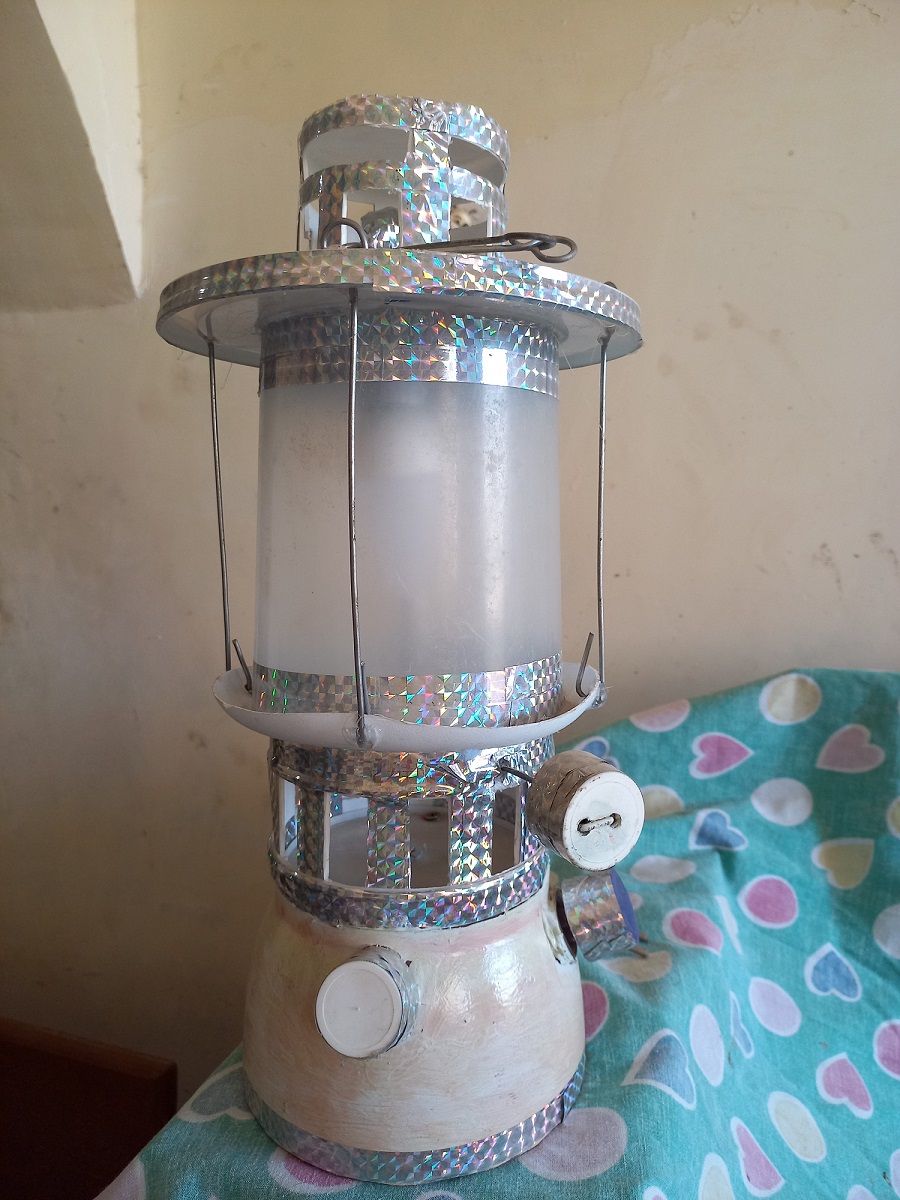
For Hassan, the lantern was as essential as the cannon. “We’d go to the tinsmith, who made them from glass and sheet metal. Sometimes we’d buy them ready-made,a lantern with a candle for no more than five piasters.”
In the early decades of the last century, electricity had not yet reached the city. “We lived in darkness,” he recalls. “The only light on the street near the old mosque was the municipal lantern, filled with kerosene to guide worshippers and passersby. It would run out just before dawn. We’d say, ‘The lantern has gone out.'”
Children would light their own lanterns at home and carry them to the mosque, adding their small flames to the glow outside. “For us, the lantern and the cannon were the most important things about Ramadan. No child in Qus could do without them.”
The “Na’ara” That Woke the Sleepers
Hag Ragab Tamerk, 80, describes another lost tradition: the na’ara, a kind of ancient horn or megaphone used to wake people for the pre-dawn meal.
“We would wake for suhur to the sound of the na’ara,” he says. “It stood in the heart of the city, and its voice carried everywhere.”
The courtyard of the Amri Mosque,or the square in front of the Abu Al-Abbas Mosque, would host large Ramadan gatherings. Legendary reciters like Sheikh Siddiq El-Minshawi and Abdel Basset Abdel Samad would come to lead the nights with Quranic chant. Aspiring young singers and reciters from the city would attend. People traveled from surrounding villages just to hear those voices.
Sweets and Foods of Another Era
Tamerk recalls the sweets that families waited all year to taste. “Every household made its own kanafa. A few made rawani, which was our version of cake. And little cookies for Eid at the end of the month.”
There was also the siniyet el-makhroot, a kind of layered pastry made with clarified butter, flour, fava beans, and sesame seeds. “The women would cut it with a knife, very precisely. It took skill, and it took time. Now, nobody makes it at home anymore.”
Another dish that has disappeared is al-tashsha,garlic fried in clarified butter, then boiled with water. “It was poor people’s food,” Tamerk says simply.
Three Decades, Three Words
Tamerk explains that his grandparents divided Ramadan into three ten-day periods, each with its own character. “The first ten were for marag, broth and meat. The second ten were for Khalg,having new clothes made. The last ten were for halg, the Eid cookies.”
Children would sing songs broadcast on the radio, repeat folk chants, and listen to stories. “We’d gather around our grandmothers and aunts, and they’d tell us tales from the old days. Stories full of wisdom and joy and imagination. They taught us lessons without lecturing. My grandmother would tell me a story about greed during Ramadan, or about lying, so that we would learn not to be greedy or dishonest.”
The Art of Making Kanafa
Zenab Ali Dareer, 77, remembers the communal effort that went into preparing traditional kanafa.
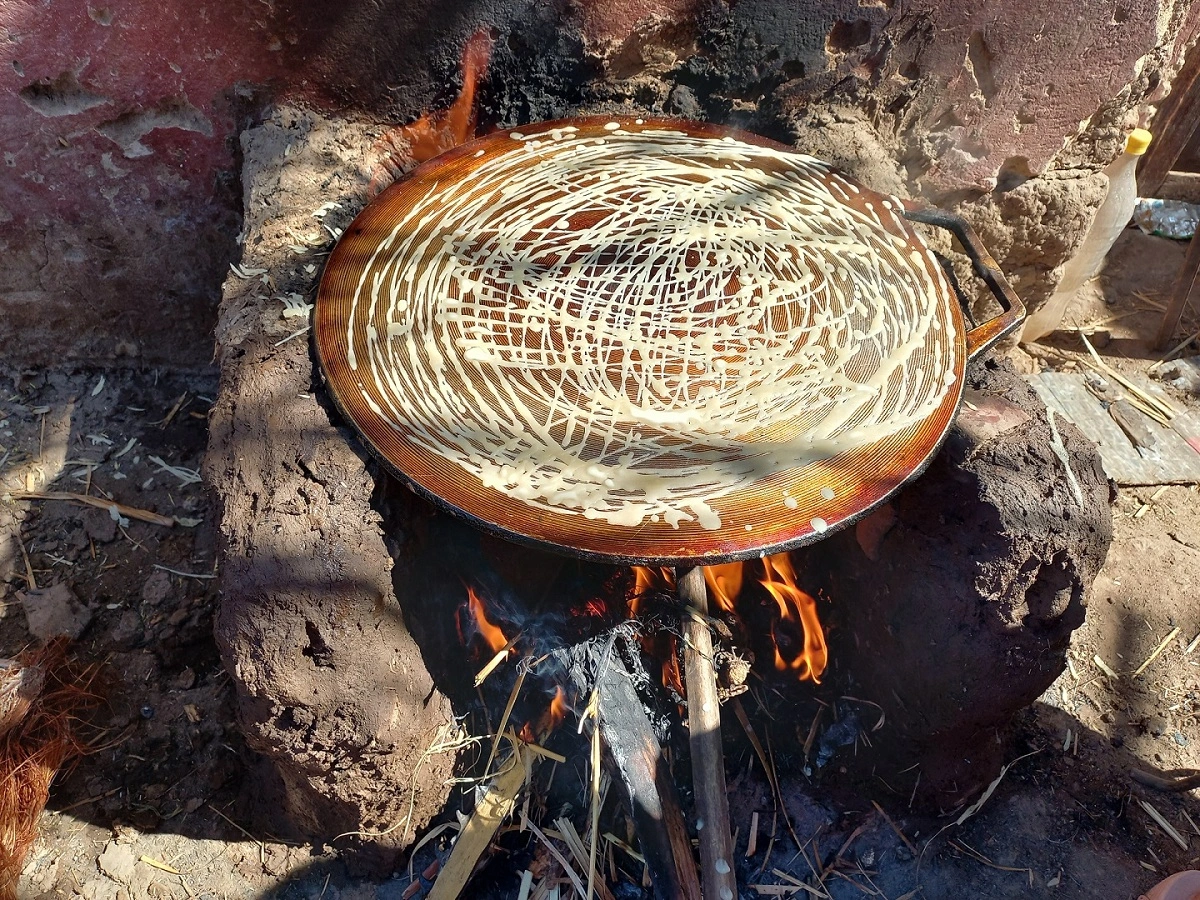
“We’d mix local flour with water, salt, eggs, and a little oil. Then we’d strain it through a tin sieve with tiny holes. We’d place a large tray over the fire and sprinkle the batter onto it until it cooked.”
The work brought people together. “The neighbors and the family would gather, and we’d make a large batch to distribute among ourselves. Everyone would eat it at iftar, sprinkled with sugar, as a sweet alongside the main meal.”
Dareer also recalls buying dried apricot sheets (qamar el-din) and figs, soaked in water until they dissolved into a drink. “They were much better than what’s made now.”
Dishes That Have Faded
She describes a dish called gilban, a type of pulse cultivated during the Nile flood before the High Dam was built. “We’d harvest the pods, boil them with an onion, add a little crushed maize, and let it cook. Then we’d mash it with a wooden tool and eat it at iftar.”
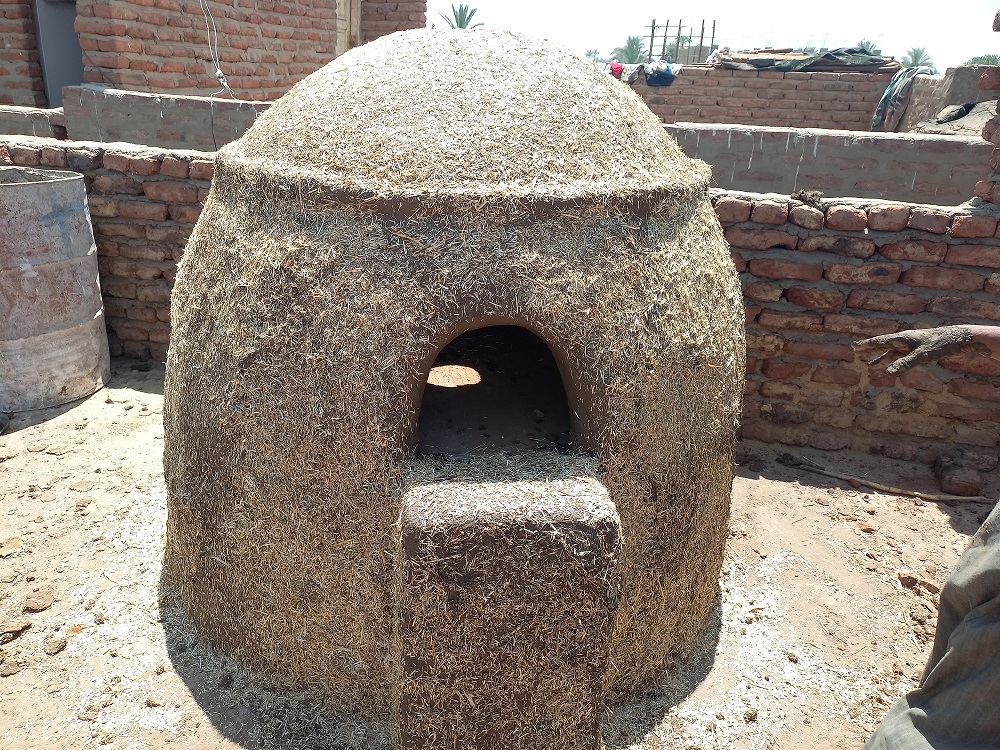
Green lentils were also cooked for the sunset or pre-dawn meals. Bread was made from barley and lentils, or baked in clay ovens under the sun, Raghif Shamsi.
Ramadan Gatherings
In the old days, Dareer explains, family gatherings were held in mandaras—reception rooms that every family maintained. After tarawih prayers, the household would gather for the evening.
“A sheikh or a reciter would come to read Quran or perform religious chants until just before suhur. We’d pay him a small fee,five pounds, or a measure of wheat, or some food—and he would stay with us for the whole month.”
The reciter needed no microphone. Listeners would gather around him, repeating the chants or verses. These gatherings served as substitutes for mosques, which were scarce in the villages at the time.
Preparing for Eid
New clothes for Eid were bought halfway through Ramadan. “We’d buy fabric from Qus or Luxor and take it to a seamstress with a small hand-cranked sewing machine,” Dareer recalls. “A child’s outfit cost just sixty piasters. We women, would buy silk dresses for a hundred and seventy, or cotton and linen for less.”
Women’s Work and Community
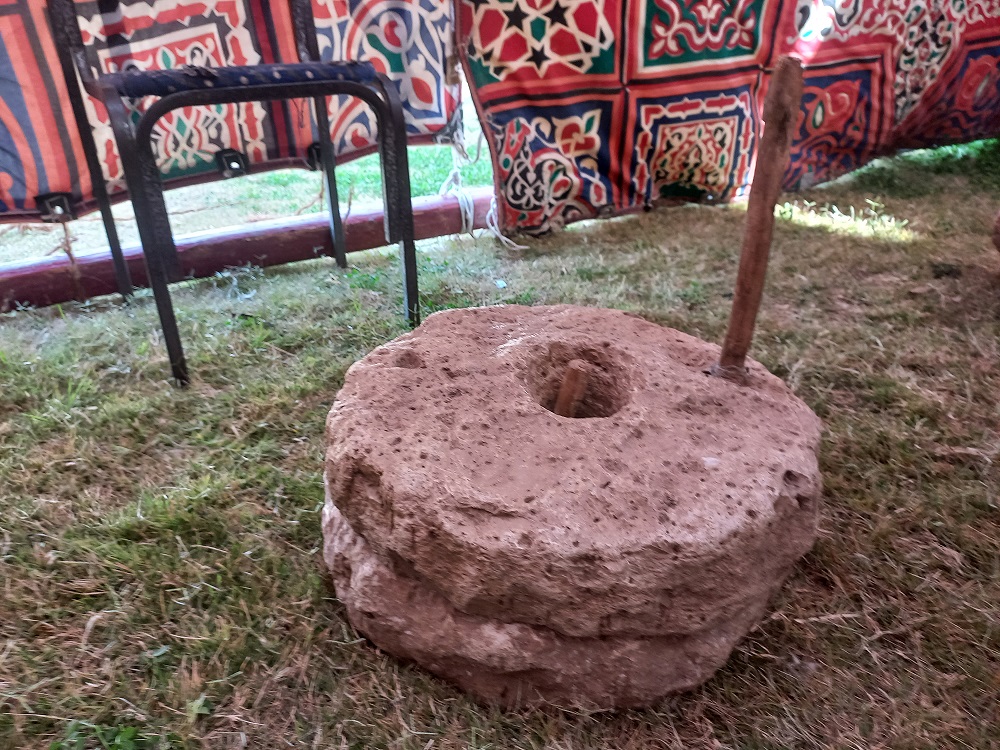
During the daylight hours of Ramadan, women would air their stores of wheat, sorghum, and maize. Then they would gather to grind them using ancient stone mills purchased from traders who brought them across the Nile from Naqada.
“Two women would sit facing each other to grind the grain,” Dareer explains. “Wheat for flour, maize for bread, sorghum for animal feed.”
Women would also gather in the street when harvesting large quantities of mulukhiya or gilban. “We’d share our news and our lives,” she says. “Then we’d meet again after tarawih prayers and stay together until suhur. We’d pray fajr, sleep, and wake in the morning to wash our clothes by hand—there were no washing machines then.”
Open Tables, Open Hearts
Every household would prepare a low table, a tabliya,with dates, zalabya (fried dough), lentils or gilban, and kanafa with clarified butter and sugar. They would carry it to the main street.
“Everyone in the neighbourhood would gather,” Dareer says. “Passersby would eat from what people offered. That’s how it was.”
Looking back, she sees a world that has changed completely. “The food and drink were simple. There was no electricity, no modern appliances, and not much fruit. Now everything is available—for rich and poor alike. But Ramadan then was different. It had a feeling that’s hard to describe.”