


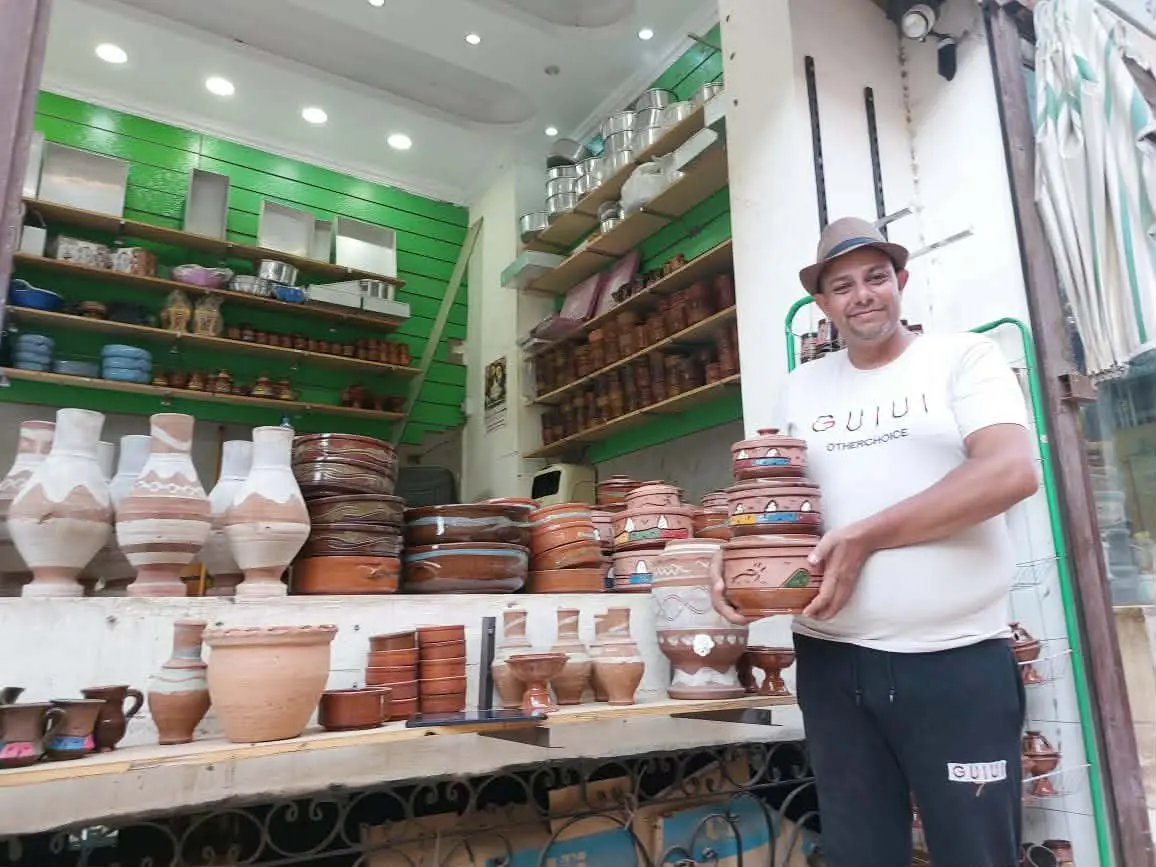
Across Minya governorate, families are rediscovering the magic of cooking in clay. From creamy Ramadan yogurt to golden kanafa, here’s why traditional pottery is making a comeback—and why it might be healthier, too.
As the holy month of Ramadan begins, many ancient traditions reassert their place on the Egyptian table. None is more beloved than cooking in clay pots or tawagen, which imparts a distinctive flavor that carries the taste of childhood and the scent of a slower, simpler time.
In Minya governorate, shops selling clay cookware have seen remarkable demand this year, as families return to using traditional pots and jars for preparing both savoury dishes and sweets.
Yoghurt for Suhur in Clay Jars
Hagga Safaa El-Sawy, a retiree from the Abu Qurqas district of Minya, explains why clay is essential for one particular Ramadan staple.
“Many housewives prepare suhur yoghurt in small clay pots,” she says. “It’s the best container for making yoghurt at home,simple, easy, and the result is better than anything you can buy in shops.”
Beyond yoghurt, clay’s ability to distribute heat slowly and evenly means food stays hot until the moment of the Maghrib call to prayer. “The clay holds the heat,” Safaa explains. “It gives dishes a soft texture, especially meat casseroles, potatoes, and okra. It adds a distinctive flavour and an appetising aroma that reminds you of how our mothers and grandmothers used to cook. It’s food worthy of the patience of those who have fasted all day.”
Family Gatherings Around the Kanafa Pot
Soad Khairy, a teacher, recalls one of her fondest Ramadan traditions: the family gathered around a clay pot of kunafa.
“Kunafa in a clay dish has a special character,” she says. “It’s the quintessential Ramadan dessert, and the clay pot makes the outside perfectly crispy. We brush the pot with clarified butter, layer the kanafa, and fill it with soft cream. It turns into golden strands soaked in cold syrup, and the whole family gathers around it on Ramadan nights.”
Upper Egyptian Classics in Clay
Hagga Zubaida Ali, an employee who stocked up on clay pots and jars before Ramadan, lists the dishes that take pride of place on her holiday table.
“Kishk, stuffed vegetables, and marag, all cooked in clay, these are the centrepieces of Ramadan gatherings in Upper Egypt,” she says. “They have a flavour all their own.”
She describes the distinctive Upper Egyptian dishes that fill her home during the holy month: cooked kishk, stuffed vegetables of all kinds, okra cooked until tender, and marag, a type of savoury pie filled with meat, onions, and broth, known locally as saliqa.
Then there’s Sokhaina, one of the most famous Upper Egyptian dishes, also cooked in clay. It’s made with tender beef, sliced onions, clarified butter, spices including salt, black pepper, and nutmeg, tomato juice, and two cups of broth. “These dishes have a taste in clay that you can’t replicate,” Zubaida insists. “Especially when served with betaw bread or aish shamsi.sun-baked bread. It gives everything the authentic flavour of the Egyptian countryside.”
Coffee and Coriander: Small Pots, Big Flavors
Mohamed Yehia, an employee, values clay for a different Ramadan ritual: coffee.
“Coffee brewed in clay has a distinctive taste,” he says. “It cooks slowly over a low flame, developing a rich surface,what we call the ‘face’ or crema of the coffee, that tastes like the coffee of Bedouin and desert camps. Clay is also safer than metal. It keeps the heat very low and steady, and it retains warmth for a long time.”
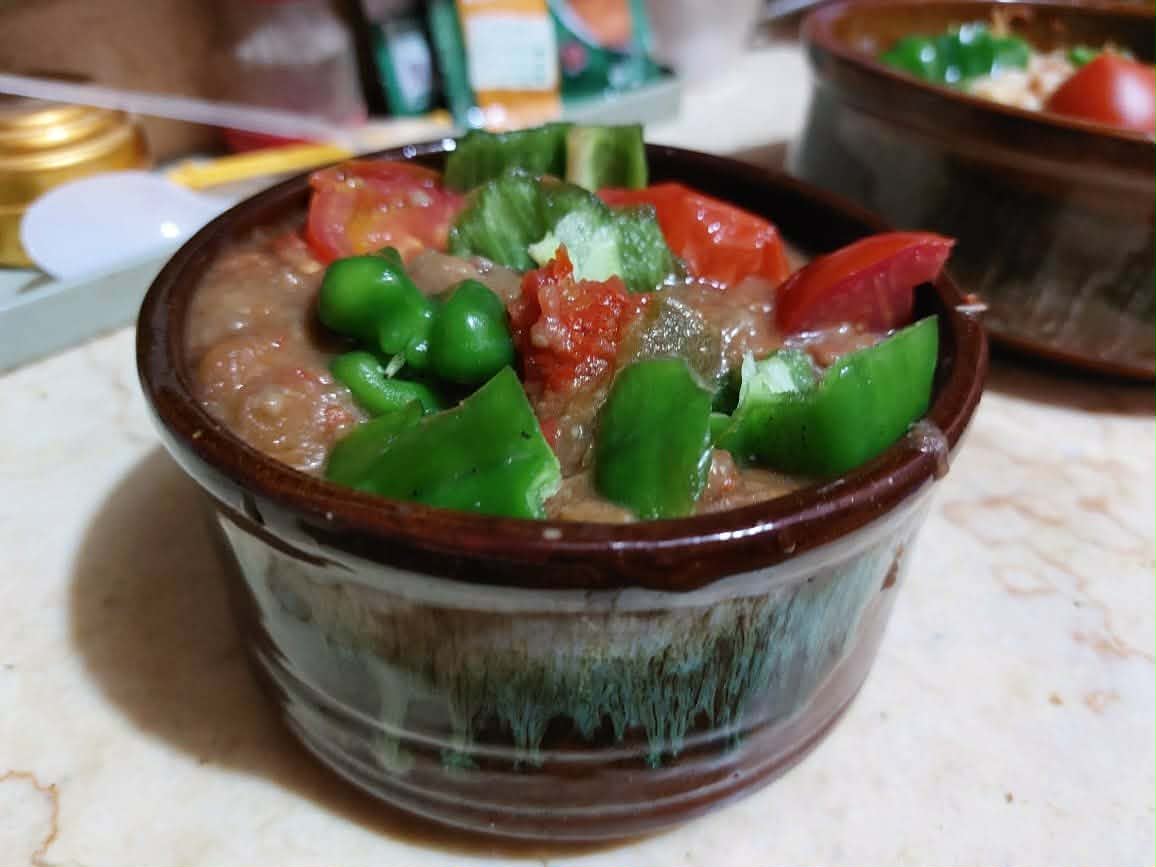
Om Roudi adds that her entire family now prefers clay cooking. “The fava bean pot with sauce.Foul bil-ta’liya is one of the most important suhur dishes we gather around,” she says. “It reminds all of us of our grandparents’ cooking, especially in winter.” Known locally as kuzbariyya or foul bil-ta’liya, this fava bean dish cooked in clay has a remarkable flavour, especially when eaten at suhur with betaw bread and tahini.
Natural Flavors, Natural Materials
Sofia, a seller of clay cookware, explains why the material produces such exceptional results.
“Cooking in clay has a distinctive taste that attracts lovers of natural flavors,” she says. “It’s because of clay’s properties that it distributes heat evenly throughout the vessel. Food cooks slowly, over gentle heat, which preserves its flavour. Clay also doesn’t react with food during cooking. It brings us back to authenticity, to the smell and taste of the good old days.”
The pots she sells are made from natural, healthy Aswan clay, left unglazed and free of the bright colors that sometimes indicate lead oxide, which can leach into food. They are handmade in the historic pottery workshops of Aswan. “These pots are ready for immediate use,” Sofia notes. “No additional firing needed. You can cook vegetables, meat, stuffed pigeon, and chicken. For desserts, there’s kanafa, rice pudding, Om Ali, and meat-stuffed kataif. And, of course, yoghurt for suhur.”
The Poor Man’s Refrigerator
Ahmed Hussein, an employee from the village of Saleh Pasha in Minya, emphasizes the continued importance of clay in rural life.
“Many people buy zeer large clay water jars,for drinking,” he says. “They keep water cool naturally. They’re the poor man’s refrigerator.”
He also notes the cultural significance of the Qenawi water jug, or qulla. “In the countryside, it’s a symbol of goodness and blessing. Women and young girls make sure to keep one in the home, always filled with water. They believe it brings blessings.” The zeer, meanwhile, serves a charitable function. “Many people set one up as a continuous act of charity, sadaqa jariya,for passersby to drink from, especially in summer.”
The Koolman: This Year’s Must-Have
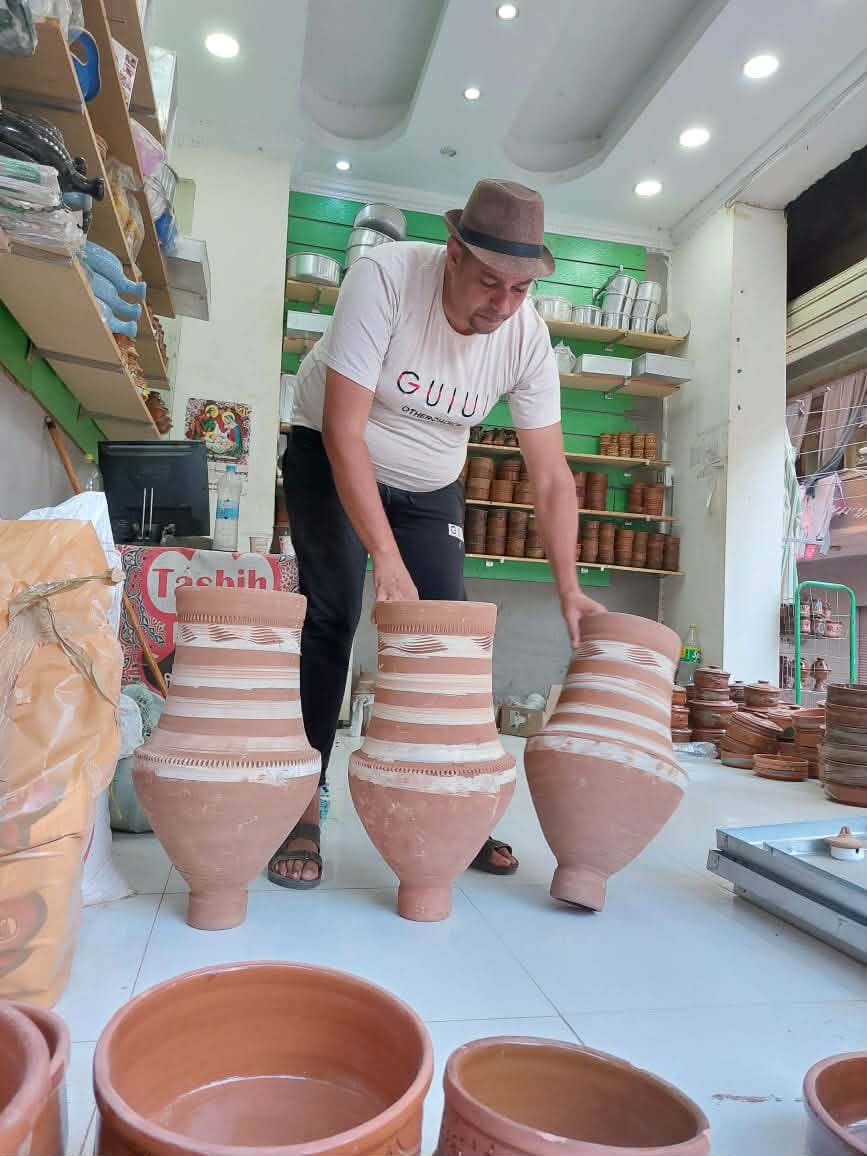
This year, one item in particular has captured the public’s attention: the koolman, a type of clay water jar.
Sameh Shiko, who owns a clay cookware shop and has launched an initiative called “Returning to Nature and Egyptian Heritage in Popular Dishes Cooked in Eco-Friendly Clay Pots,” explains the trend.
“Many people are buying clay koolmans this year,” he says. “It gives water a special taste and filters out impurities naturally. It’s a natural water purifier. It also keeps water cold for long periods without needing a refrigerator.”
The appeal, he suggests, is partly nostalgic. “People are buying zeer and qulla as part of reconnecting with the rituals of the good old days during Ramadan.” But there are practical reasons too. “Drinking water from these clay vessels has a special taste and smell. The clay itself imparts a subtle flavour that makes water more refreshing. Clay also helps retain the minerals and salts naturally present in water, which adds to the taste.”
Shiko explains the science behind the cooling effect. “Clay Koolmans, qulla, and zeer have a unique cooling property. They keep water cold even in high heat. The clay allows air and moisture to pass through, which facilitates natural cooling. As water evaporates from the surface, it draws heat from the water inside. This property is unique to clay; you don’t get it with plastic, glass, or metal.”
Clay also has antibacterial properties, he adds. “It helps purify water, making it safe to drink. The clay absorbs impurities, toxins, and excess salts from the water, leaving it delicious and pure.”
Prices for Every Pocket
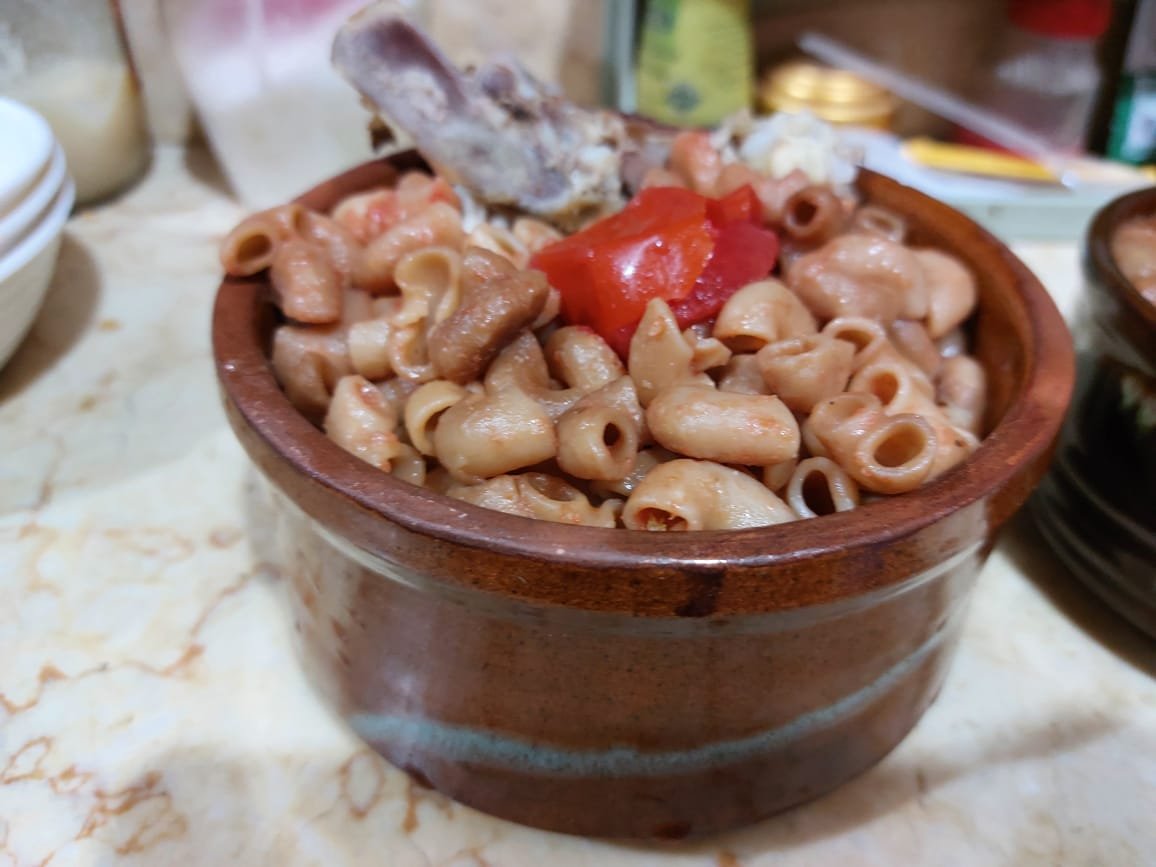
As for cost, Shiko says clay cookware remains accessible to most families. A clay koolman ranges from 50 to 100 Egyptian pounds, depending on size and craftsmanship. A set of cooking pots runs about 250 pounds. Individual pots are priced by size: large at 100 pounds, medium at 90, small at 70, and extra-small at 40. A covered casserole dish is 150 pounds for large, 120 for medium, and 115 for small. A covered pot for boiling meat is also 150 pounds. And a clay coffee pot.kanaka is just 50 pounds.
As the sun sets over Minya and families gather around tables filled with dishes cooked in clay, it becomes clear that this ancient material is more than just a cooking vessel. It is a bridge between generations, connecting the flavours of the past with the tables of the present, and reminding us that some traditions are worth preserving, one slow-cooked meal at a time.